Rajasthan CM Bhajan Lal hails Vande Bharat, Namo Bharat rail push
Synopsis
The Chief Minister's Office of Rajasthan on 22 June 2026 spotlighted Vande Bharat Express and Namo Bharat Rapid Rail as the dual engines of the state's rail modernisation, crediting both services with raising speed standards and reshaping urban connectivity under CM Bhajan Lal Sharma's government.
Key Takeaways
The Rajasthan CMO on 22 June 2026 publicly endorsed both Vande Bharat Express and Namo Bharat Rapid Rail as transformative rail initiatives for the state.
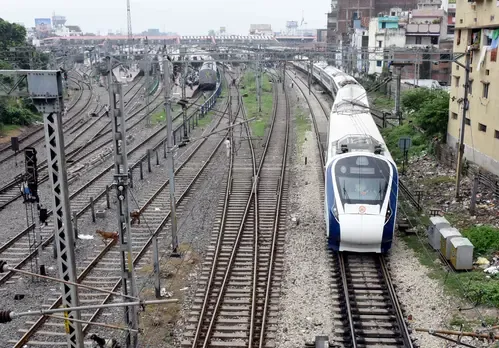
Vande Bharat Express , launched in 2019 , is India's first indigenously built semi-high-speed train and has expanded to routes across the country.
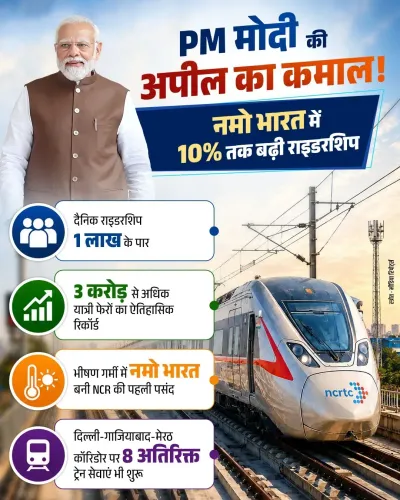
Namo Bharat is the branding for the Regional Rapid Transit System (RRTS) , designed for high-frequency urban and regional commutes, with central funding dating to 2013 .
CM Bhajan Lal Sharma has led Rajasthan since December 2023 and has aligned the state with central rail infrastructure priorities.
The post was tagged #आपणो_अग्रणी_राजस्थान ('Our Leading Rajasthan'), signalling a deliberate state branding effort around infrastructure delivery.
Further Namo Bharat corridor rollouts and new Vande Bharat routes in Rajasthan are expected in upcoming railway budget announcements.
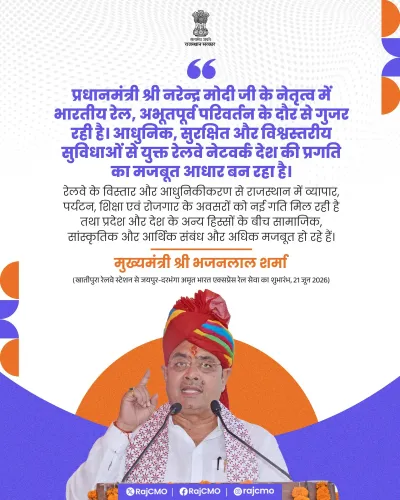
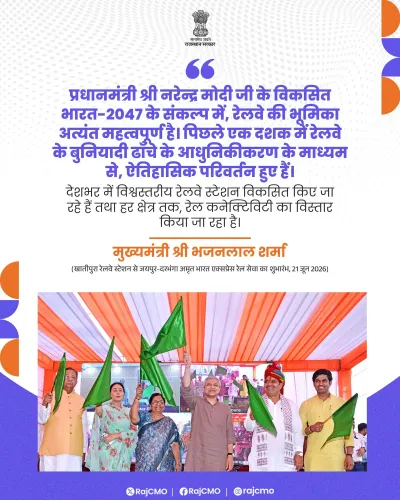
The Chief Minister's Office of Rajasthan on Monday, 22 June 2026 highlighted the twin pillars of India's rail modernisation drive — Vande Bharat Express trains and the Namo Bharat Rapid Rail — crediting both services with setting new benchmarks in speed, modernity, and urban connectivity for the state.
Context
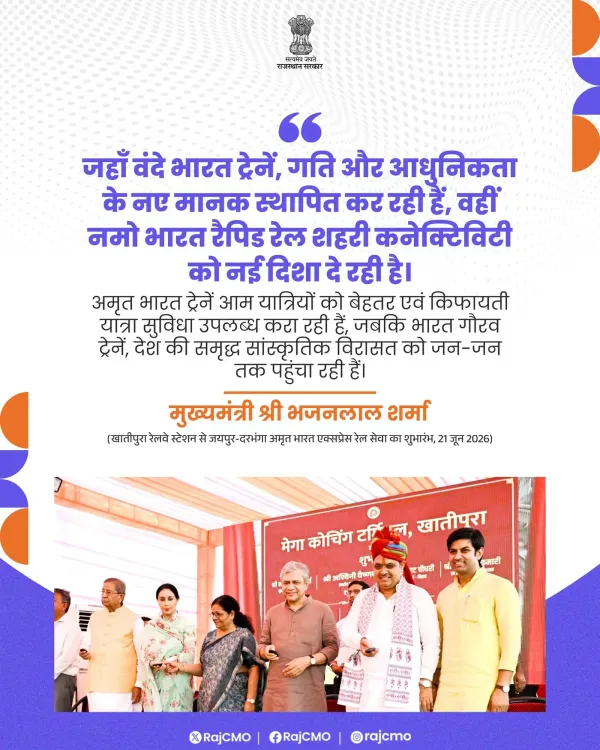
The post, shared under the hashtag #आपणो_अग्रणी_राजस्थान ('Our Leading Rajasthan'), states: 'Jahan Vande Bharat trainein, gati aur aadhunikta ke naye maanak sthapit kar rahi hain, wahin Namo Bharat Rapid Rail shahri connectivity ko nayi disha de rahi hai' — 'Where Vande Bharat trains are setting new standards of speed and modernity, Namo Bharat Rapid Rail is giving urban connectivity a new direction.' The message is addressed to Chief Minister Bhajan Lal Sharma, tagged as @BhajanlalBjp, signalling the state government's alignment with central rail infrastructure priorities.
Rajasthan, a large western Indian state with dispersed urban centres, has been integrating both services into its transport planning as the national government expands rail capacity across regions.
Policy Backdrop
Vande Bharat Express was first introduced in 2019 as India's first indigenously designed and manufactured semi-high-speed train, operated by Indian Railways. The service has since expanded to dozens of routes across the country, positioning itself as a flagship symbol of domestic rail technology.
Namo Bharat is the branding applied to the Regional Rapid Transit System (RRTS), a network of high-frequency, high-speed rail corridors designed to ease urban and peri-urban commutes. RRTS corridors began receiving central approval and funding from 2013 onward, targeting congested metropolitan regions. The National Rail Plan, released by the Ministry of Railways in 2020, laid out the broader modernisation roadmap within which both services operate.
Since 2014, the Government of India has pursued systematic rail modernisation through dedicated schemes combining technology indigenisation with multi-modal connectivity goals. States such as Rajasthan have aligned their urban planning frameworks with these central initiatives to strengthen inter-city and intra-regional links.
Stakeholders and Impact
Urban commuters and long-distance rail passengers in Rajasthan stand to benefit most directly from the expanded rollout of both services. Vande Bharat routes reduce travel time between major cities, while Namo Bharat corridors target the daily movement of workers and residents across shorter, high-density stretches.
CM Bhajan Lal Sharma, who has led the state government since December 2023 under the Bharatiya Janata Party, has consistently positioned Rajasthan as a proactive partner in central infrastructure schemes. The CMO's public communication on rail modernisation reinforces that positioning ahead of anticipated route and corridor announcements.
What's Next
Attention will now turn to the further rollout of Namo Bharat services on approved Rajasthan corridors and any new Vande Bharat route announcements expected in forthcoming railway budget cycles or state infrastructure plans. The CMO's emphasis on both services suggests active coordination between Jaipur and the central government on upcoming connectivity milestones.
As India's rail modernisation agenda deepens, Rajasthan's ability to absorb and publicise these investments will be a key measure of the state government's infrastructure delivery credentials heading into the next electoral cycle.
Point of View
The communication team is building a cohesive infrastructure narrative around a relatively new chief minister still consolidating his governance identity. The dual focus on Vande Bharat (speed, prestige) and Namo Bharat (urban utility) is deliberate: it appeals simultaneously to aspirational long-distance travellers and daily urban commuters, broadening the political dividend. This pattern — state governments co-branding central rail schemes — has become a standard feature of BJP-ruled states seeking to translate national infrastructure spending into state-level electoral credibility.
NationPress
22 Jun 2026
Frequently Asked Questions
What is Namo Bharat Rapid Rail?
Namo Bharat is the brand name for India's Regional Rapid Transit System (RRTS), a network of high-speed, high-frequency rail corridors designed to improve urban and regional connectivity. It is distinct from metro rail and long-distance trains, targeting shorter inter-city commutes.
What did the Rajasthan CMO post about Vande Bharat?
On 22 June 2026, the Rajasthan Chief Minister's Office posted that Vande Bharat trains are setting new standards of speed and modernity, while Namo Bharat Rapid Rail is giving urban connectivity a new direction in the state.
When was Vande Bharat Express first launched?
Vande Bharat Express was first launched in 2019 by Indian Railways as India's first indigenously designed semi-high-speed passenger train.
Who is the Chief Minister of Rajasthan in 2026?
Bhajan Lal Sharma is the Chief Minister of Rajasthan, serving since December 2023 under the Bharatiya Janata Party.
Will Namo Bharat Rapid Rail come to Rajasthan?
The Rajasthan government has signalled active alignment with Namo Bharat (RRTS) expansion plans. Specific corridor rollouts and route announcements for Rajasthan are expected in forthcoming railway budget cycles and state infrastructure plans, though exact operational timelines have not been officially confirmed.