CM Rekha Gupta Joins Rohini Jagannath Rath Yatra, Performs Chhera Pahara
Synopsis
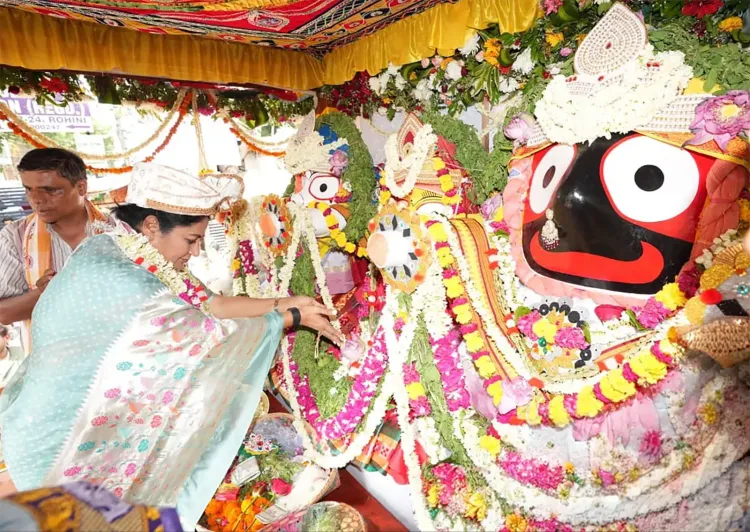
Delhi Chief Minister Rekha Gupta joined the Jagannath Rath Yatra at the Shri Jagannath Temple in Rohini on 16 July 2026, performing the ceremonial Chhera Pahara ritual and invoking the blessings of Lord Jagannath, Balabhadra, and Subhadra for all families.
Key Takeaways
Delhi Chief Minister Rekha Gupta participated in the Jagannath Rath Yatra at Shri Jagannath Temple, Rohini on 16 July 2026 .
She performed the Chhera Pahara ritual — the ceremonial sweeping of the chariot path — a tradition symbolising equality before the deity.
The CM described the Rath Yatra as 'a divine celebration of India's Sanatan cultural consciousness.' She offered prayers for the happiness, peace, prosperity, and good health of every family.
The event was held at a prominent Jagannath temple in Rohini , northwest Delhi, which draws large numbers of Odia and Bengali devotees settled in the capital.
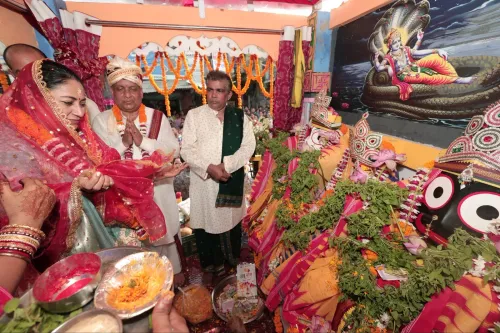
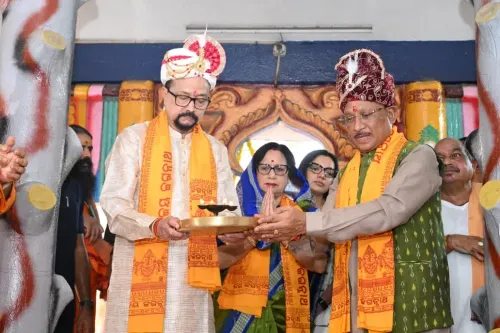
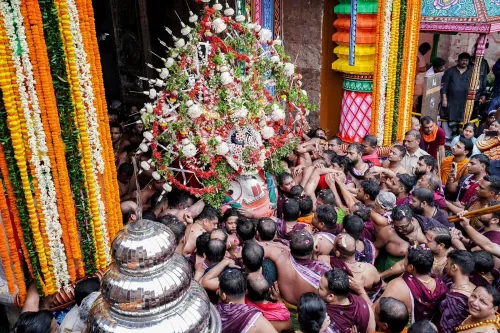
Delhi Chief Minister Rekha Gupta on Thursday, 16 July 2026, participated in the Jagannath Rath Yatra organised at the Shri Jagannath Temple in Rohini, northwest Delhi, and performed the sacred ritual of Chhera Pahara — the ceremonial sweeping of the chariot — as part of the annual chariot procession.
Context
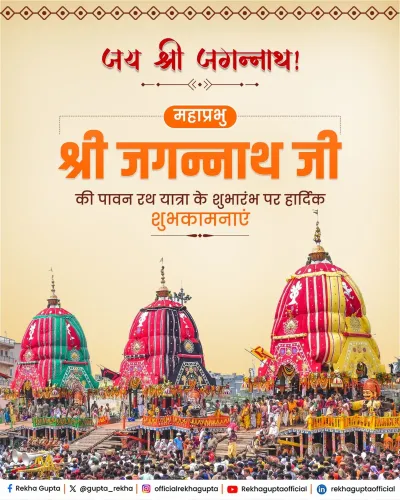
Taking to social media after the event, CM Rekha Gupta wrote: 'Jay Jagannath' — expressing gratitude for the 'divine fortune' of participating in the Pavana Rath Yatra and performing the Chhera Pahara tradition. She described the Rath Yatra as 'a divine celebration of India's Sanatan cultural consciousness,' adding that it inspires devotees 'to find joy in service, strength in dedication, and the supreme purpose of life in public welfare.'
The Chhera Pahara ritual, in which a senior dignitary sweeps the path before the chariots of Lord Jagannath, Lord Balabhadra, and Goddess Subhadra with a golden broom, symbolises the equality of all before the deity — regardless of social standing. Its performance by the Chief Minister of Delhi at a local temple carries both religious and symbolic weight.
Policy Backdrop
The Jagannath Rath Yatra is one of the oldest and most widely observed Hindu festivals in India, with its principal observance held annually at Puri in Odisha. Temple communities across the country, including in Delhi, organise their own local processions in parallel with the main Puri event.
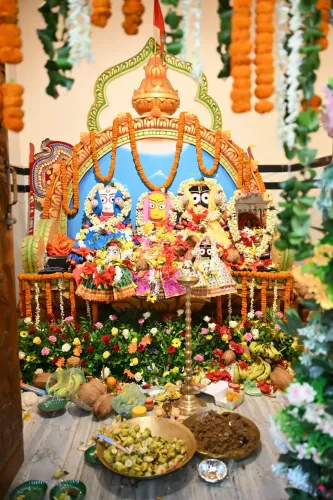
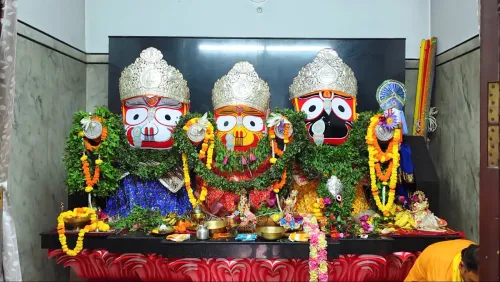
The Shri Jagannath Temple in Rohini is among the prominent Jagannath shrines in the capital, drawing large numbers of devotees — particularly from Odia and Bengali communities settled in Delhi. Local Rath Yatras in the capital have grown in scale and visibility over recent years, with civic participation becoming a regular feature.
Stakeholders and Impact
The event brought together Hindu devotees and Delhi residents from diverse backgrounds. CM Gupta prayed that 'every family be filled with happiness, peace, prosperity, good health, and spiritual energy' — a message directed at the broad community of worshippers present at the procession.
Indian political leaders across the spectrum regularly participate in prominent religious festivals, and BJP office-bearers have placed particular emphasis on public observance of Sanatan traditions in recent years. For Rekha Gupta, who assumed the office of Delhi Chief Minister in 2025, such participation at a temple event in the capital reflects the party's ongoing engagement with faith-based community gatherings in the city.
What's Next
The annual cycle of Jagannath Rath Yatra observances across Delhi's temple network is expected to continue growing in public participation. Civic authorities may in future formalise arrangements around crowd management and festival logistics for large processions in residential areas such as Rohini. The Chief Minister's visible participation is likely to encourage broader community turnout at such events in the coming years.
Point of View
Such public religious engagement helps consolidate the party's base among the capital's large Hindu devotee communities, including significant Odia and Bengali diaspora populations. The Chhera Pahara ritual carries particular symbolic force: by sweeping before the chariot, a head of government enacts humility before the divine, a gesture that resonates strongly in the cultural grammar of Bhakti traditions. As Delhi's temple festival calendar grows in scale, the Chief Minister's active presence at such events is likely to become a recurring feature of political-cultural life in the capital.
NationPress
15 Oct 2026
Frequently Asked Questions
What is Chhera Pahara and why did Delhi CM Rekha Gupta perform it?
Chhera Pahara is a sacred ritual in the Jagannath tradition in which a dignitary ceremonially sweeps the path before the chariots of Lord Jagannath, Balabhadra, and Subhadra with a golden broom, symbolising that all are equal before the deity. Delhi CM Rekha Gupta performed this ritual at the Shri Jagannath Temple in Rohini on 16 July 2026 as part of the local Rath Yatra observance.
Where is the Shri Jagannath Temple in Delhi that held the Rath Yatra?
The Shri Jagannath Temple that hosted the Rath Yatra participated in by CM Rekha Gupta is located in Rohini , a district in northwest Delhi. It is one of the prominent Jagannath shrines in the capital.
What is the significance of Jagannath Rath Yatra?
The Jagannath Rath Yatra is one of India's oldest Hindu festivals, celebrating the annual chariot procession of Lord Jagannath, Lord Balabhadra, and Goddess Subhadra. Its principal observance is held at Puri in Odisha, but temple communities across India, including in Delhi, organise their own local processions.
When did Rekha Gupta become Delhi Chief Minister?
Rekha Gupta became Chief Minister of Delhi in 2025, following the BJP's victory in the Delhi Assembly elections.
Why do politicians participate in Rath Yatra events?
Indian political leaders across parties regularly participate in prominent religious festivals as a way of engaging with cultural traditions and community gatherings. BJP leaders in particular have emphasised public observance of Sanatan traditions, and participation in events like the Rath Yatra allows elected representatives to connect with large numbers of devotees.