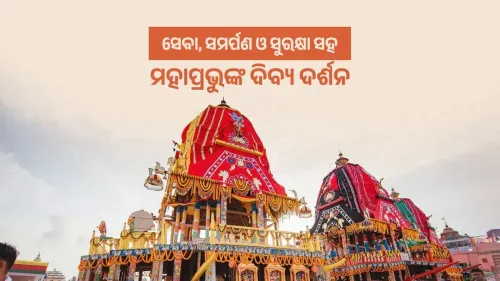
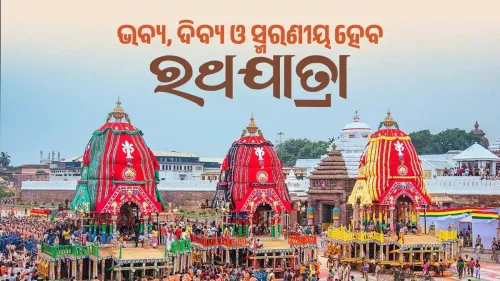
CM Majhi shares Chaturdha Murti's divine Pahandi at Puri Rath Yatra
Synopsis
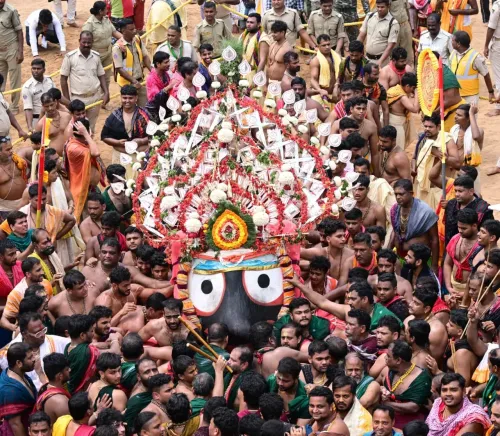
Odisha Chief Minister Mohan Charan Majhi shared images of the divine Pahandi procession of the Chaturdha Murti — Lord Jagannath, Balabhadra, Subhadra, and Sudarshana — at Puri's Shree Jagannath Temple, marking a key ritual moment in the annual Rath Yatra festival.
Key Takeaways
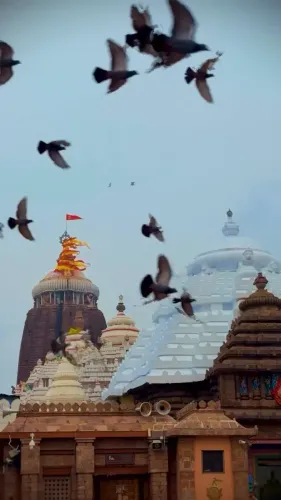
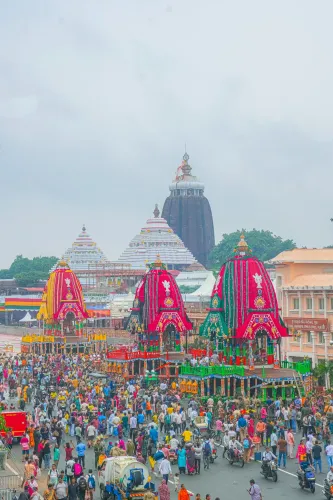
CM Mohan Charan Majhi posted four images of the Chaturdha Murti's Pahandi procession at Puri's Shree Jagannath Temple on 16 July 2026 .
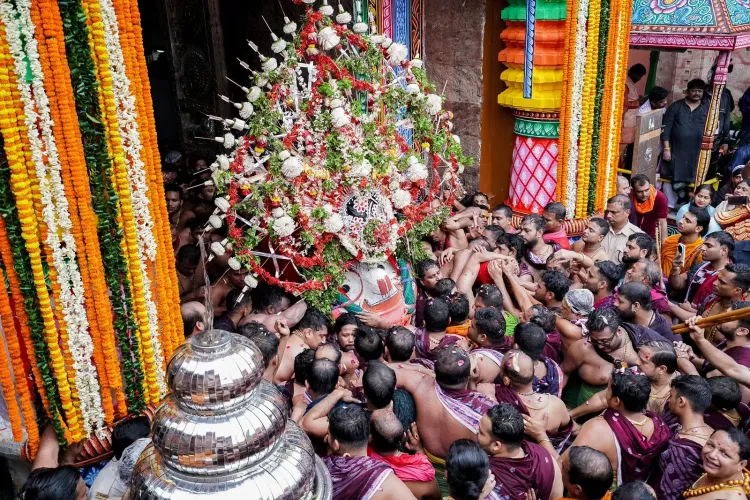
The Pahandi is the ceremonial procession in which the four deities — Lord Jagannath, Balabhadra, Subhadra, and Sudarshana — are carried from the sanctum to the chariots ahead of Rath Yatra .
The Shree Jagannath Temple is a 12th-century structure and one of the four Char Dham pilgrimage sites in Hinduism.
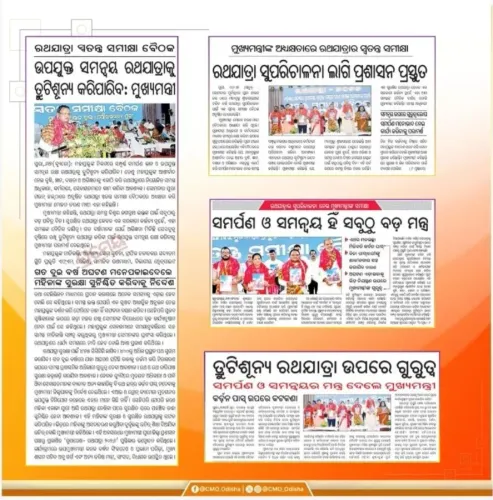
The Odisha government manages the Rath Yatra under the Shri Jagannath Temple Administration Act, 1955 , funding chariot construction, road work, and pilgrim infrastructure.
Majhi , in office since June 2024 , is the first person from the Scheduled Tribes community to serve as Odisha Chief Minister.
Odisha Chief Minister Mohan Charan Majhi on Thursday, 16 July 2026, shared images of the sacred Pahandi procession of the Chaturdha Murti at Puri's Shree Jagannath Temple, offering devotees a glimpse of the revered ritual that marks the beginning of the annual Rath Yatra festival.
Context
The post, captioned 'ଚତୁର୍ଦ୍ଧାମୂର୍ତ୍ତିଙ୍କ ଦିବ୍ୟ ପହଣ୍ଡି' ('The divine Pahandi of the Chaturdha Murti'), was accompanied by four images capturing the ceremonial procession. The Pahandi is the slow, rhythmic ritual in which the four sacred deities — Lord Jagannath, Balabhadra, Subhadra, and Sudarshana — are carried from the inner sanctum of the temple to the grand chariots waiting outside, to the accompaniment of specific chants and rituals.
The Rath Yatra, held annually during the month of Ashadha, is one of India's largest religious gatherings, drawing millions of pilgrims and devotees to Puri each year. The Shree Jagannath Temple, a 12th-century structure, is among the four sacred Char Dham pilgrimage sites in Hinduism.
Policy Backdrop
The Odisha state government has long held administrative and financial responsibility for the Rath Yatra under the Shri Jagannath Temple Administration Act, 1955. Successive administrations have sanctioned funds for chariot construction, road widening, and pilgrim facilities ahead of the festival each year.
Chief Minister Majhi, who took office in June 2024 as the first person from the Scheduled Tribes community to lead Odisha, has continued this tradition of state engagement with the Puri temple's annual calendar. The current BJP-led government has also signalled broader ambitions to develop Puri as a world heritage and spiritual tourism destination.
Stakeholders and Impact
The Pahandi ritual holds deep significance for temple servitors (sevayats), who follow centuries-old hereditary roles in conducting the procession, as well as for the millions of devotees who travel to Puri from across India and abroad. For pilgrims unable to witness the event in person, the Chief Minister's post offered a rare visual of the sacred ceremony.
The Rath Yatra also has substantial economic implications for Puri and surrounding regions, with local traders, hospitality businesses, and transport operators depending heavily on the annual influx of pilgrims. State authorities typically deploy large security and crowd-management arrangements for the duration of the festival.
What's Next
With the Pahandi complete, the grand chariot procession — the centrepiece of Rath Yatra — follows, with thousands of devotees pulling the massive wooden chariots of the three principal deities through Grand Road (Bada Danda) in Puri. State authorities will continue to manage the logistics of one of India's most attended religious events. Observers will also watch for any announcements from the Majhi government regarding infrastructure upgrades or changes to the Shree Jagannath Temple Administration in the forthcoming assembly session.
Point of View
Visible participation in the Puri temple's ritual calendar carries both devotional and political weight — reinforcing the party's Hindu cultural outreach while connecting to Odisha's distinct Jagannath tradition. The post also reflects the broader state strategy of leveraging Puri's religious prominence to drive heritage tourism and infrastructure investment. How the Majhi government translates this cultural visibility into concrete temple administration or infrastructure decisions will be the more consequential story to watch.
NationPress
15 Oct 2026
Frequently Asked Questions
What is the Pahandi ritual in Rath Yatra?
The Pahandi is the ceremonial, slow-paced procession in which the four sacred deities of Puri's Shree Jagannath Temple — Lord Jagannath, Balabhadra, Subhadra, and Sudarshana — are carried from the inner sanctum to the grand chariots outside, accompanied by specific chants and rituals, marking the formal start of the Rath Yatra procession.
Who are the Chaturdha Murti?
Chaturdha Murti is the collective term for the four sacred images worshipped at the Shree Jagannath Temple in Puri: Lord Jagannath, Balabhadra (his elder brother), Subhadra (his sister), and Sudarshana (the divine discus).
What did Odisha CM Mohan Charan Majhi post about Rath Yatra?
On 16 July 2026, CM Mohan Charan Majhi shared four images on X of the divine Pahandi procession of the Chaturdha Murti at Puri's Shree Jagannath Temple, captioning the post with the Odia phrase meaning 'The divine Pahandi of the Chaturdha Murti.'
When is Rath Yatra celebrated in Puri?
Puri's Rath Yatra is celebrated annually during the Hindu month of Ashadha, typically falling in June or July, and is one of India's largest religious gatherings, drawing millions of pilgrims each year.
Who is Mohan Charan Majhi?
Mohan Charan Majhi is a BJP politician who became Chief Minister of Odisha in June 2024, making history as the first person from the Scheduled Tribes community to hold the post.