CM Rekha Gupta Urges Delhi to Go Vocal for Local on Handloom Day
Synopsis
Delhi Chief Minister Rekha Gupta marked National Handloom Day on 7 August with a call to adopt indigenous handloom products, linking PM Modi's Vocal for Local campaign and the Atmanirbhar Bharat mission to the centuries-old Swadeshi tradition that the day commemorates.
Key Takeaways
National Handloom Day falls on 7 August each year, marking the 1905 Swadeshi Movement; it was first officially observed in 2015 .
Delhi CM Rekha Gupta extended greetings to weavers and artisans and urged citizens to embrace handloom products.
She credited PM Narendra Modi 's 'Vocal for Local' mantra with turning indigenous production into a mass movement.
The post connects handloom adoption to the Atmanirbhar Bharat Abhiyan , launched in May 2020 to boost domestic manufacturing.
State leaders amplifying central craft campaigns reinforces the handloom sector's place in mainstream economic and cultural policy.
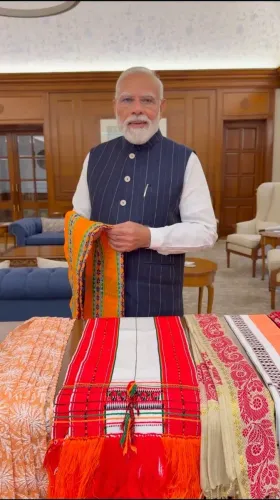
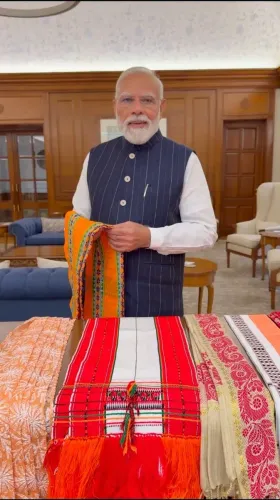
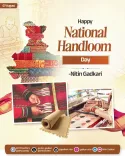
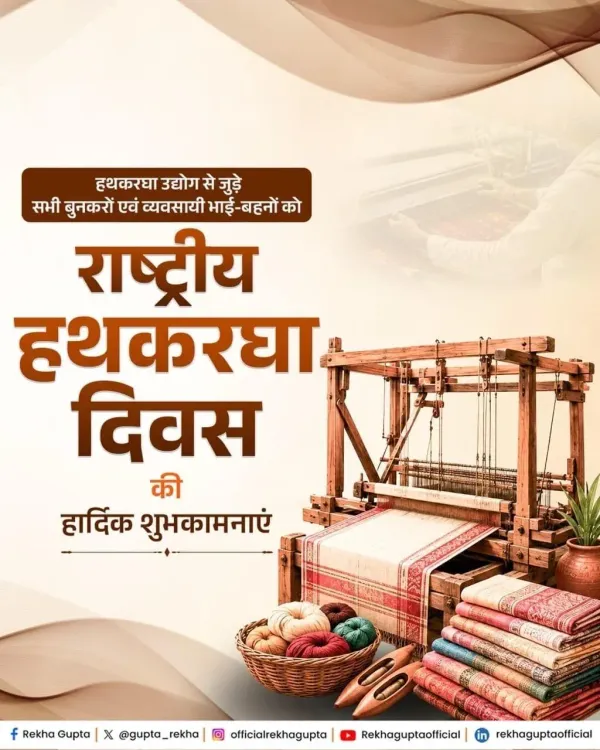
Every thread tells a story — and on National Handloom Day, 7 August, Delhi Chief Minister Rekha Gupta called on citizens to make that story an economic act of patriotism, urging Indians to embrace handloom products and strengthen the artisans who keep a centuries-old craft alive.
In her post, the Chief Minister extended warm wishes to weavers and craftspeople across the country — 'सभी परिश्रमी बुनकरों और हस्तशिल्पियों को हार्दिक शुभकामनाएं' ('heartfelt greetings to all hardworking weavers and artisans') — framing the handloom as 'the living identity of India's culture, tradition, and creativity.' She specifically invoked Prime Minister Narendra Modi's 'Vocal for Local' mantra, describing it as a force that has turned the idea of indigenous production into a mass movement.
A Day Rooted in the Swadeshi Movement
National Handloom Day is observed every year on 7 August — the date chosen deliberately to honour the 1905 Swadeshi Movement, when Indians first turned to homespun cloth as a form of political and economic resistance. The day was first officially observed in 2015, reviving that spirit as a celebration of craft rather than protest. Over a century later, the symbolism holds: choosing a handloom sari or dhurrie is still, in a quiet way, a statement about where money flows and whose hands it reaches.
Vocal for Local and Atmanirbhar Bharat: The Policy Thread
'Vocal for Local' rose to national prominence in 2020, when Prime Minister Modi championed it as part of India's economic response to the pandemic — the same period that saw the launch of the Atmanirbhar Bharat Abhiyan in May 2020. Together, the two drives repositioned domestic manufacturing — including the handloom and textile sector — not as a heritage obligation but as a competitive economic strategy. CM Gupta's post draws that line directly, linking the purchase of a handwoven product to the larger goal of a self-reliant India.
For India's handloom weavers — a community that sustains one of the world's largest cottage industries — political visibility on days like this matters. State leaders amplifying central campaigns creates a chain of reinforcement that keeps the sector in public conversation, even between policy announcements.
The kicker: when a Chief Minister asks you to buy local, she is also asking you to decide who prospers — and in India's handloom clusters, that decision lands directly in a weaver's household.
Point of View
Tying Vocal for Local and Atmanirbhar Bharat to the emotionally resonant heritage of handloom weaving. The Swadeshi framing is deliberate: it gives a modern consumption choice the moral weight of a historical movement. For the BJP, sustaining this messaging across central and state levels is as much about political identity as it is about textile policy — the handloom weaver becomes a symbol of the self-reliant India the party wants voters to associate with its governance.
NationPress
7 Aug 2026
Frequently Asked Questions
When is National Handloom Day celebrated in India?
National Handloom Day is celebrated on 7 August every year. The date marks the launch of the Swadeshi Movement in 1905, and the day was first officially observed in 2015.
What is the Vocal for Local campaign?
'Vocal for Local' is a campaign promoted by Prime Minister Narendra Modi that encourages Indians to buy and use domestically produced goods, supporting local artisans and reducing dependence on imports. It gained prominence in 2020 .
What is Atmanirbhar Bharat?
Atmanirbhar Bharat Abhiyan — meaning 'Self-Reliant India Mission' — was announced by PM Modi in May 2020 as an economic stimulus focused on strengthening domestic manufacturing, including the handloom and textile sectors.
What did Delhi CM Rekha Gupta say on National Handloom Day?
Delhi Chief Minister Rekha Gupta wished weavers and artisans on National Handloom Day, 7 August , called the handloom 'the living identity of India's culture and tradition,' and urged citizens to adopt handloom products to support local craftspeople and the Atmanirbhar Bharat mission.
Why is 7 August chosen for National Handloom Day?
7 August was chosen because it marks the date in 1905 when the Swadeshi Movement was formally launched in India, a moment when homespun cloth became a symbol of economic self-reliance and national identity.