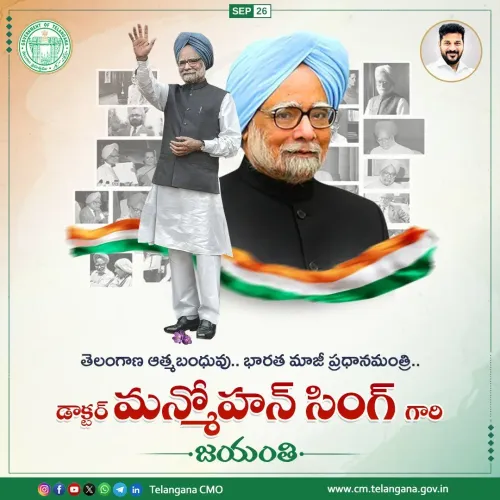
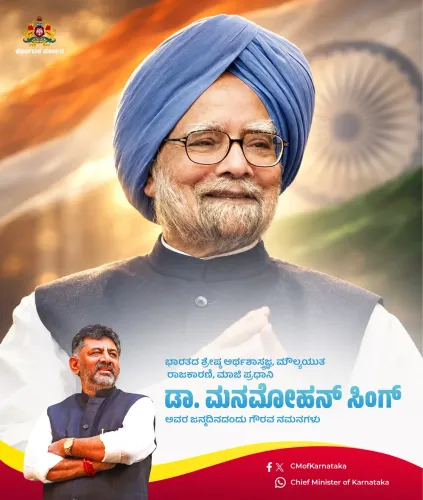
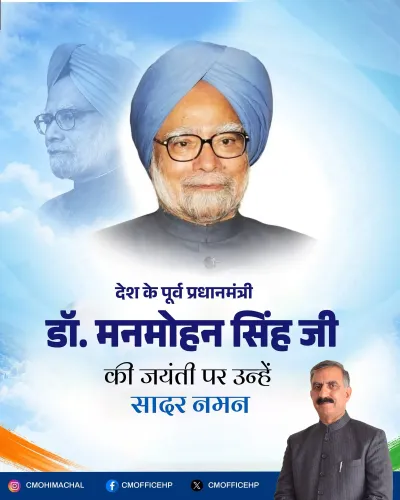
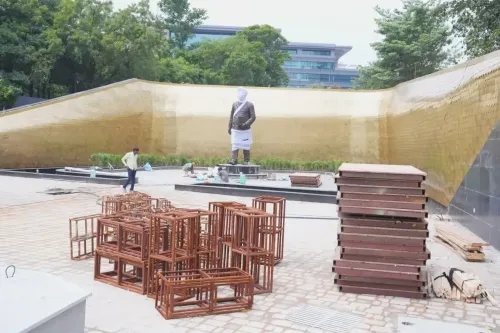
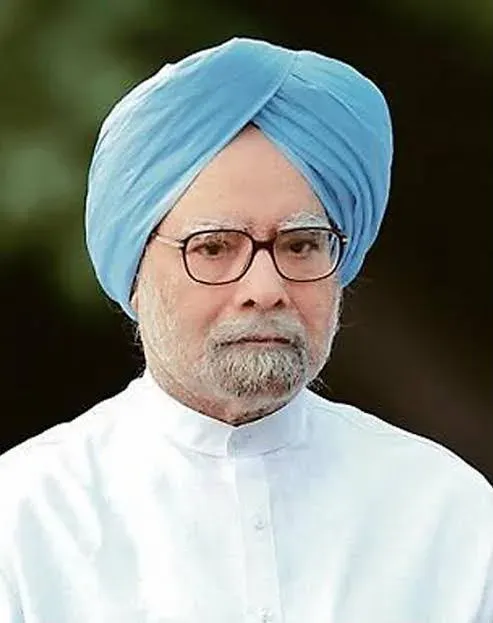
CM Revanth Reddy unveils Manmohan Singh statue at Wipro Circle
Synopsis
On Dr. Manmohan Singh's birth anniversary, Telangana CM Revanth Reddy unveils a statue at Hyderabad's Wipro Circle, linking the 1991 liberalisation architect's legacy to the city's IT boom and Telangana's 2014 statehood.
Key Takeaways
Revanth Reddy unveiled a statue of Dr.
Manmohan Singh at Wipro Circle, Hyderabad on 26 September 2026 , Singh's birth anniversary.
The location sits in Hyderabad's IT corridor, whose growth is directly tied to Singh's landmark 1991 economic liberalisation as Finance Minister.
Singh held five major public offices: Chief Economic Adviser ( 1971 ), RBI Governor ( 1982–85 ), Finance Minister ( 1991–96 ), and Prime Minister ( 2004–14 ).
During Singh's premiership, the UPA enacted MGNREGA, RTI, RTE and the National Food Security Act , converting welfare into enforceable rights.
The Andhra Pradesh Reorganisation Act, 2014 , creating Telangana, received presidential assent on 1 March 2014 — in the final months of Singh's second term as PM.
Revanth Reddy called Singh 'an architect of Modern India' and described the unveiling as 'a grateful state honours a humble, visionary son of India.'
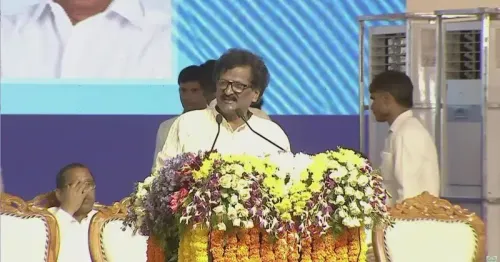
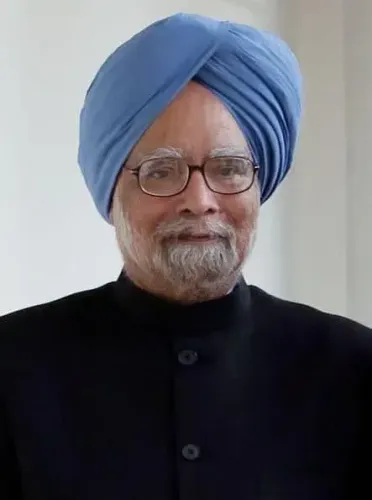
On what would have been his 93rd birth anniversary, the man who dismantled India's licence raj gets a permanent home in the city his reforms helped build. Telangana Chief Minister A. Revanth Reddy announced on Saturday, 26 September 2026, that he will unveil a statue of Dr. Manmohan Singh at Wipro Circle, in the heart of Hyderabad's IT corridor — a location whose very skyline is an argument for what the 1991 reforms made possible.
From licence raj to liberalisation: what Singh built
Revanth Reddy traced the arc of a career that spanned five decades of economic stewardship. Singh served as Chief Economic Adviser in 1971, then as Governor of the Reserve Bank of India from 1982 to 1985, before arriving at his most consequential moment: the Union Budget of 1991, presented as Finance Minister under Prime Minister P.V. Narasimha Rao. That single budget — slashing import duties, dismantling industrial licensing, opening the door to foreign investment — rewired the Indian economy and seeded the IT boom that would eventually cluster around Hyderabad's HITEC City. Wipro Circle sits inside that boom.
As Prime Minister from 2004 to 2014, Singh steered a second, quieter revolution: converting the promise of welfare into enforceable rights. The Mahatma Gandhi National Rural Employment Guarantee Act (MGNREGA) guaranteed work; the Right to Education Act guaranteed schooling; the Right to Information Act guaranteed accountability; and the National Food Security Act guaranteed subsidised grain. 'He was the Prime Minister who made work, food, education and information our rights,' Reddy wrote.
Telangana's own debt to Singh's prime ministership
For Telangana, the tribute carries an additional, inescapable meaning. The Andhra Pradesh Reorganisation Act, 2014 — the legislation that gave Telangana statehood on 2 June 2014 — received presidential assent on 1 March 2014, in the final months of Singh's second term. Revanth Reddy acknowledged it directly: 'During his tenure as PM, we could achieve our dream of a separate statehood for Telangana.' The CM called Singh 'a humble, visionary son of India' and described the statue unveiling as 'a grateful state' honouring that legacy.
Wipro Circle: a deliberate, symbolic address
The choice of location is anything but incidental. Wipro Circle sits on the main arterial road running through Hyderabad's IT corridor — an area that grew from a patch of scrubland into a global technology hub largely because foreign capital, software exports and private enterprise were set free after 1991. Placing Singh's statue here roots an abstract policy legacy in physical, visible consequence. Every commuter passing the roundabout will see a direct link between a finance minister's budget speech and the office towers around them.
Across India, 26 September is regularly marked by political leaders of multiple parties recalling Singh's liberalisation and the UPA's social legislation. In Telangana, that commemoration folds in the state's own origin story, making the anniversary — and now the statue — local as much as national.
Point of View
The Telangana Congress draws an unbroken line from a 1991 Finance Minister's budget to the state's present-day prosperity — and its own existence. The dual tribute (economic reformer plus Telangana's creator) lets the Congress reclaim ownership of both India's growth story and the statehood movement, countering narratives that credit only regional parties with delivering the separate state. With the Congress in power in Telangana and the anniversary commanding cross-party respect, the unveiling is low-risk symbolism with high long-term dividend — memorialising a leader whose reforms are now beyond partisan dispute.
NationPress
26 Sept 2026
Frequently Asked Questions
Why is 26 September significant for Dr. Manmohan Singh?
26 September is Dr. Manmohan Singh's birth anniversary. He was born on 26 September 1932 , and the date is marked annually across India by leaders recalling his contributions to economic liberalisation and social rights legislation.
Where is Wipro Circle in Hyderabad and why was it chosen for the statue?
Wipro Circle is a major roundabout on the arterial road through Hyderabad's IT corridor . It was chosen because the surrounding IT industry grew from the economic liberalisation Singh introduced as Finance Minister in 1991 , making the location a living symbol of his legacy.
What role did Manmohan Singh play in Telangana's formation?
The Andhra Pradesh Reorganisation Act, 2014 , which created Telangana as a separate state, received presidential assent on 1 March 2014 while Singh was Prime Minister. Telangana formally came into existence on 2 June 2014 during his tenure.
What were Manmohan Singh's major contributions as Finance Minister?
As Finance Minister under PM P.V. Narasimha Rao , Singh presented the Union Budget of 1991 , launching India's liberalisation, privatisation and globalisation programme — cutting import duties, ending industrial licensing and opening India to foreign investment.
What rights-based laws were passed during Manmohan Singh's tenure as PM?
During Singh's two terms as Prime Minister ( 2004–2014 ), Parliament enacted MGNREGA (right to work), the Right to Education Act , the Right to Information Act , and the National Food Security Act , enshrining food, work, education and information as legal entitlements.