CM Revanth Reviews 99-Day Praja Palana Programme
Synopsis
Chief Minister Revanth Reddy reviewed Telangana's 99-day Praja Palana - Pragati Pranalika programme on June 15, directing facial recognition attendance in schools and hospitals, solar panels on school rooftops, panchayat building construction, and district-level progress dashboards.
Key Takeaways
The Praja Palana - Pragati Pranalika programme ran for 99 days from March 16 to June 12, 2026 across Telangana.
CM Revanth Reddy chaired the state-level review at the Dr.
Ambedkar Telangana State Secretariat on June 15 , attended by the Chief Secretary, DGP, and senior officials.
The Chief Minister directed facial recognition attendance for all employees in education (schools to colleges) and health (PHCs to Osmania and Gandhi hospitals).
Panchayati Raj officials were ordered to list villages without gram panchayat buildings and plan new constructions; solar power plants are to be installed on all school rooftops.
A senior IAS officer will be deputed as Special Officer to each district for immediate district-level reviews, with progress reports to be made public.
Scheme beneficiary data by constituency, mandal, and village must be published on a public dashboard ; the Chief Secretary must report on officials who skipped mandatory field visits.
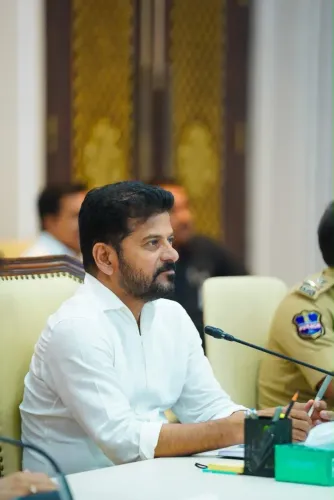
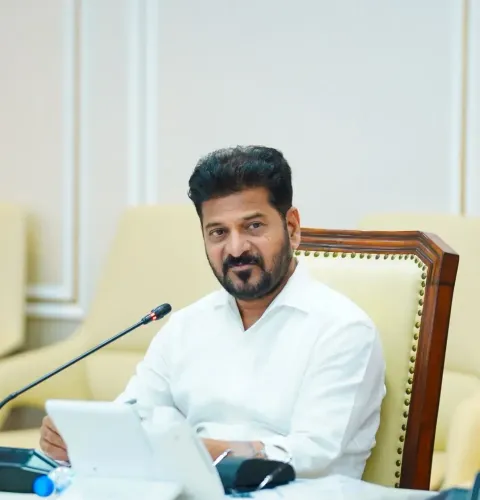
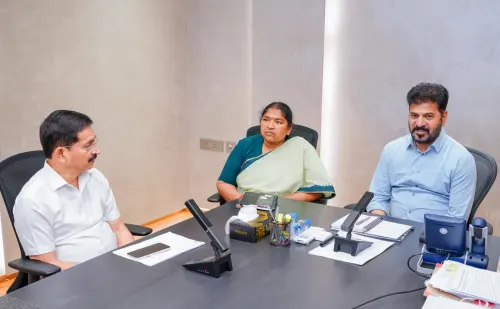
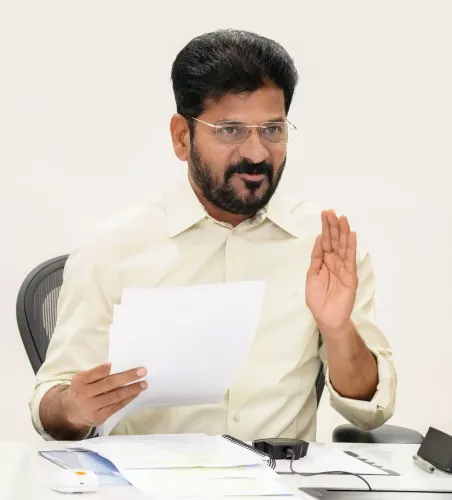
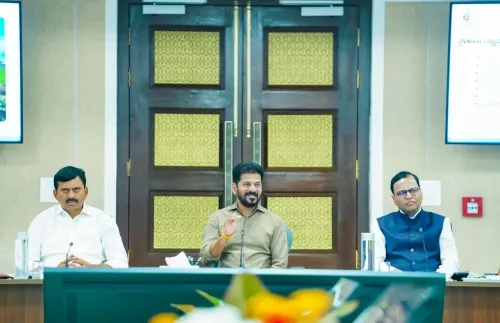
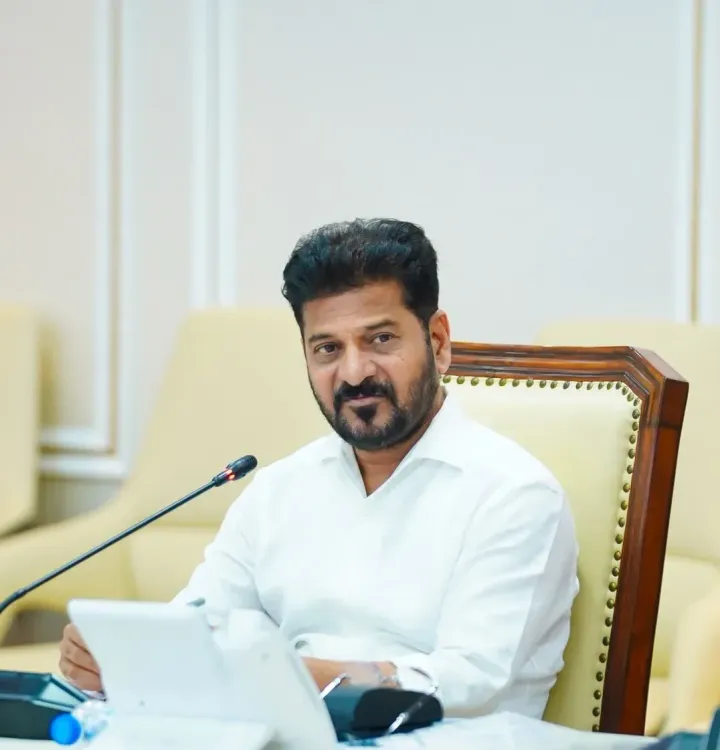
Chief Minister Revanth Reddy chaired a high-level review meeting at the Dr. B.R. Ambedkar Telangana State Secretariat on Monday, June 15, 2026, to assess the outcomes of the state government's Praja Palana - Pragati Pranalika programme, which ran for 99 days from March 16 to June 12. The Chief Minister's Office of Telangana announced that the initiative brought the government closer to citizens across the state.
Context
The Praja Palana - Pragati Pranalika programme was a structured, state-wide public governance and progress review exercise spanning 99 days. According to the Chief Minister's Office, CM Revanth Reddy stated that through this programme, 'ప్రజా ప్రభుత్వం ప్రజలకు మరింత చేరువైంది' ('the people's government came closer to the people'). The review meeting was attended by Rajya Sabha MP Vem Narender Reddy, Chief Secretary K. Ramakrishna Rao, Director General of Police CV Anand, and senior officials from various departments.
Departments submitted reports detailing activities undertaken from the district level down to the village level. The Chief Minister personally queried officials on outcomes achieved by each department through the programme.
Policy Backdrop
The Congress-led Telangana government, formed after the 2023 assembly elections, has consistently emphasised grassroots outreach as a governance priority. The Praja Palana concept traces back to the party's pre-election public engagement drives, where voter grievances and promises were recorded at the field level. The current 99-day programme operationalises that intent within government administration.
Indian states have periodically organised fixed-duration governance drives to push officials into field visits, collect grassroots feedback, and monitor welfare scheme delivery. Telangana's exercise adds a technology layer, with CM Revanth Reddy directing that facial recognition-based attendance be implemented across all levels of the education and health departments — from schools and colleges to Primary Health Centres (PHCs), Osmania Hospital, and Gandhi Hospital.
Key Directives Issued
The Chief Minister reminded officials that he had previously ordered all senior officers — from Principal Secretaries to District Collectors — to conduct monthly field visits. He directed the Chief Secretary to submit a report identifying officials and District Collectors who had not undertaken field visits as mandated.
Feedback from public representatives and citizens gathered during programme events must be recorded, and village-level problems identified during the exercise must be resolved by the concerned departments, the CM directed. All development works undertaken, foundation stones laid, and assets created during the 3-month period must be documented. Panchayati Raj officials were instructed to immediately prepare a list of villages still lacking a gram panchayat building and draw up an action plan for constructing new ones. The CM also directed that solar power plants be installed on the rooftops of all school buildings across the state.
On accountability and transparency, CM Revanth Reddy ordered that district-level reviews mirror the state-level assessment, with a senior IAS officer deputed from the state as a Special Officer for each district to oversee the process. District-wise progress reports are to be made public, and scheme beneficiary data — broken down by constituency, mandal, and village — must be hosted on a publicly accessible dashboard. The Planning Department was directed to submit a constituency-wise report on the progress of promises made by the Chief Minister during his district visits since assuming office.
What's Next
The immediate next step is district-level review meetings, each supervised by a specially deputed senior IAS officer. Public dashboards listing scheme beneficiaries and completed works at the village, mandal, and constituency level are expected to follow. The Chief Secretary has been tasked with identifying officials who did not comply with field-visit mandates — a signal that administrative accountability will be tightened in the coming weeks.
Point of View
Using the 99-day exercise as a baseline to measure bureaucratic compliance. The directive to the Chief Secretary to identify officials who skipped field visits — and to depute IAS officers as district-level watchdogs — suggests the CM is tightening the chain of command ahead of what could be a broader performance audit. The push for public dashboards and facial recognition attendance layers a technology-accountability argument onto what is otherwise a traditional governance drive, a pattern increasingly common among state governments seeking to demonstrate reform credentials. Whether these mandates translate into measurable service delivery improvements will depend on the quality and consistency of district-level follow-through.
NationPress
19 Sept 2026
Frequently Asked Questions
What is the Praja Palana Pragati Pranalika programme in Telangana?
Praja Palana - Pragati Pranalika is a 99-day state-wide public governance and progress review programme run by the Telangana government from March 16 to June 12, 2026, aimed at bringing officials closer to citizens and monitoring welfare scheme delivery at the grassroots level.
What did CM Revanth Reddy announce after the 99-day programme review?
CM Revanth Reddy directed district-level reviews supervised by specially deputed senior IAS officers, ordered facial recognition attendance in all schools and hospitals, instructed construction of gram panchayat buildings in villages lacking them, mandated solar panels on school rooftops, and asked for public dashboards listing scheme beneficiaries.
Where was the Praja Palana review meeting held?
The review meeting was held at the Dr. B.R. Ambedkar Telangana State Secretariat in Hyderabad on June 15, 2026.
Who attended the Praja Palana review meeting with CM Revanth Reddy?
Rajya Sabha MP Vem Narender Reddy, Chief Secretary K. Ramakrishna Rao, Director General of Police CV Anand, and senior officials from various state departments attended the review meeting.
Will Telangana implement facial recognition attendance in government schools and hospitals?
Yes, CM Revanth Reddy has directed that facial recognition-based attendance be implemented for all employees across education institutions — from schools to colleges — and health facilities from PHCs to Osmania and Gandhi hospitals, though the exact rollout timeline has not been specified.