CM Rio pitches CSR as Nagaland's development lever

Synopsis
Nagaland Chief Minister Neiphiu Rio has called on corporate and philanthropic partners to bring technology, expertise, and market connections — not just money — to eight state development priorities including healthcare, women-led enterprises, and agri value chains.
Key Takeaways
CM Neiphiu Rio posted a public CSR pitch on 27 October 2026 , listing eight development verticals for Nagaland.
Priorities include healthcare, education, skill development, women-led enterprises, agri value chains, tourism, and environmental sustainability .
Rio explicitly asked partners to bring 'knowledge, technology, expertise, and market connections' beyond financial resources.
The Companies Act, 2013 mandates qualifying Indian firms to spend on CSR, creating a national pool Nagaland seeks to attract.
Northeastern states face a structural disadvantage in drawing corporate CSR funds due to remote, hilly terrain and limited infrastructure.
Specific project commitments or MoUs are expected to be the next indicator at state investor forums or budget sessions.
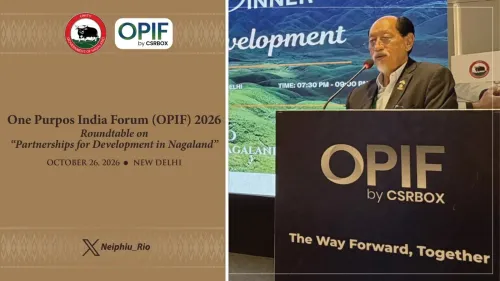
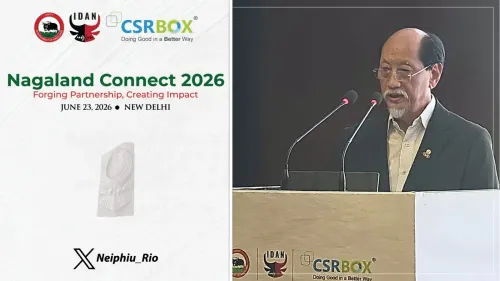
When Nagaland Chief Minister Neiphiu Rio laid out his state's development wishlist on Tuesday, 27 October 2026, he framed the pitch not as a plea for charity but as a strategic handshake — one where corporate partners bring 'knowledge, technology, expertise, and market connections' alongside their rupees.
What Rio is asking for — and why it goes beyond cheques
The Chief Minister's message, posted on X, spelled out eight priority verticals: healthcare, education, skill development, women-led enterprises, agriculture value chains, tourism, and environmental sustainability. The list is not new — every successive Nagaland administration has recited some version of it — but Rio's framing signals a shift in appetite. He is explicitly asking companies not just to fund projects but to bring in their ecosystems: supply chains, training pipelines, and market linkages that outlast a single CSR cycle.
That is a more demanding ask, and a more promising one. A pharma company opening a rural health camp is useful; a pharma company that also trains local health workers and sets up a cold-chain for medicines is transformative. Rio appears to understand the difference.
The Companies Act hook — and Nagaland's geography problem
The legal scaffolding already exists. The Companies Act, 2013 mandates CSR spending by qualifying Indian firms, generating a national pool of funds that states have competed to attract ever since. For most large corporates, directing those funds to metro-adjacent or industrialised states is the path of least resistance. Nagaland — hilly, remote, infrastructure-light — has historically struggled to convert that national CSR pool into local projects.
That geography problem is precisely why Rio's emphasis on 'technology and expertise' matters. Digital-first interventions in ed-tech or agri-tech platforms, for instance, can reach dispersed hill communities in ways that brick-and-mortar infrastructure cannot. If the Chief Minister can credibly offer corporates a plug-and-play deployment environment for such solutions, the pitch becomes harder to refuse.
Women-led enterprises and agri value chains: the two bets
Among the eight verticals, two stand out as structurally significant for Nagaland. Women-led enterprises tap into a long tradition of Naga women's market networks — Kohima's Naga Mothers' Association and its affiliated trading women are a real, organised constituency, not a development cliché. Agriculture value chains address the gap between what Nagaland's hill farmers grow and what they are paid; the state's organic produce and heritage crops command premium prices in urban markets but rarely reach them efficiently. Both sectors offer corporates a story — impact metrics, brand association, market-building — that makes CSR investment attractive on multiple levels.
Whether any specific commitments or memoranda follow this public framing will be the test. The state's next investor forum or budget session will be the moment to watch.
Point of View
Which sits outside most large companies' natural operational orbits, the pitch is strategic: by emphasising agri value chains and women-led enterprises, Rio is offering corporates both impact metrics and a market-building story, making the investment case more durable than a one-off philanthropy cheque. The real test is institutional follow-through — whether the state creates a single-window CSR facilitation mechanism or structured investment forums where these verticals are matched with specific corporate programmes. Without that, even a well-crafted public appeal risks remaining aspirational.
NationPress
27 Oct 2026
Frequently Asked Questions
What are Nagaland CM Neiphiu Rio's CSR priorities?
CM Rio has listed eight priorities for CSR and philanthropic partnerships: healthcare, education, skill development, women-led enterprises, agriculture value chains, tourism, and environmental sustainability.
What is CSR under the Companies Act 2013 in India?
The Companies Act, 2013 requires qualifying Indian companies — those meeting certain profit or net-worth thresholds — to spend a prescribed portion of their profits on corporate social responsibility activities, creating a nationally mandated pool of development funding.
Why does Nagaland struggle to attract CSR investment?
Nagaland's remote, hilly geography and limited infrastructure make it less accessible for companies whose CSR programmes favour metro-adjacent or industrialised regions. The state has consistently sought to overcome this by emphasising its unique organic agriculture, heritage tourism, and community networks.
What are women-led enterprises in Nagaland?
Nagaland has a long tradition of women-run market networks, including those associated with community bodies in Kohima and other towns. These enterprises are seen as a ready constituency for CSR investment in micro-finance, skill training, and market-linkage programmes.
What should we watch for after Rio's CSR appeal?
Analysts will look for formal follow-through at the state's next investor summit or budget session, where specific memoranda of understanding or project commitments from corporate partners would confirm whether Rio's public pitch translates into on-ground investment.