CM Rio urges Centre for special grants under 16th Finance Commission

Synopsis
Nagaland CM Neiphiu Rio has publicly urged the Centre to provide annual Special Grants for the full 16th Finance Commission award period, warning of a serious fiscal crisis after Revenue Deficit Grants were discontinued. The appeal highlights the state's structural dependence on central transfers.
Key Takeaways
CM Neiphiu Rio on June 12, 2026 called on the Centre to provide annual Special Grants under the 16th Finance Commission award period.
Nagaland has lost access to Revenue Deficit Grants with the transition from the 15th to the 16th Finance Commission cycle.
The 15th Finance Commission had recommended Revenue Deficit Grants to 14 states , including Nagaland, for 2021–26 .
Revenue Deficit Grants are constitutionally provided under Article 275 to cover post-devolution revenue shortfalls.
Nagaland's narrow own-revenue base and special constitutional status under Article 371A have historically made it a recipient of enhanced central fiscal support.
The 16th Finance Commission's final recommendations and the Union Finance Ministry's response will determine whether the state's request is accommodated.
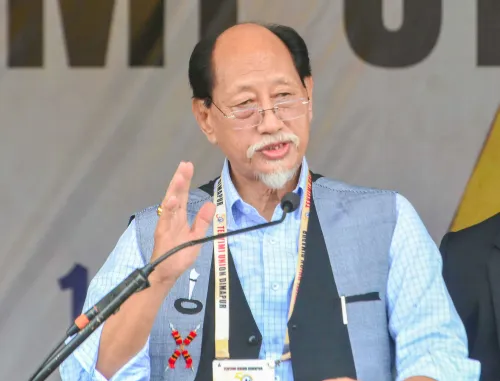
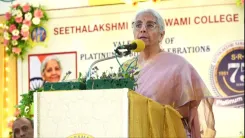
Nagaland Chief Minister Neiphiu Rio on Friday, June 12, 2026, publicly called on the Centre to provide annual Special Grants to the state throughout the award period of the 16th Finance Commission, citing a serious fiscal challenge arising from the discontinuation of Revenue Deficit Grants.
Context
Nagaland has long depended on central transfers to bridge the gap between its limited own-source revenues and its expenditure requirements. The state has received Revenue Deficit Grants under successive Finance Commission awards, including those recommended by the 15th Finance Commission for the period 2021–26. With the transition to the 16th Finance Commission award period beginning 2026-27, the continuation of such grants is no longer guaranteed.
CM Rio stated that the discontinuation of these grants represents 'a serious fiscal challenge' for the state, and earnestly requested that the Centre provision annual Special Grants for the entire duration of the 16th Finance Commission award period.
Policy Backdrop
Revenue Deficit Grants are provided under Article 275 of the Constitution, enabling the Centre to transfer funds to states whose post-devolution revenues fall short of assessed expenditure needs. Nagaland, like several other Northeastern states, has qualified for such grants in multiple Finance Commission cycles owing to its narrow tax base and elevated administrative costs.
The 15th Finance Commission had recommended post-devolution revenue deficit grants to 14 states, including Nagaland, covering 2021–26. Finance Commissions periodically reassess these transfers, weighing equity considerations against incentives for states to expand their own revenue mobilisation. The transition between commission periods typically triggers fresh negotiations on whether gap-filling grants should be continued, restructured, or replaced by alternative mechanisms.
Nagaland also holds special constitutional status under Article 371A, which protects customary Naga law and practices. This status, combined with the state's geographic remoteness and post-conflict development challenges, has historically informed its treatment in fiscal federalism frameworks.
Stakeholders and Impact
The state government's ability to fund essential services — including health, education, and infrastructure — is directly linked to the quantum of central transfers it receives. A reduction or discontinuation of deficit grants without a compensatory mechanism could constrain Nagaland's development expenditure at a critical juncture.
Other Northeastern states with similarly narrow revenue bases are likely watching this development closely, as the 16th Finance Commission's approach to deficit grants will set a precedent for the entire region. CM Rio's public appeal signals that the state government is actively lobbying for its fiscal interests ahead of the Commission's final recommendations being operationalised.
What's Next
The immediate focus will be on the 16th Finance Commission's final report and any subsequent orders from the Union Finance Ministry on special or gap-filling grants for deficit states. CM Rio's public statement adds political weight to what are typically administrative representations, potentially encouraging other similarly placed states to raise coordinated demands.
Should the Centre respond favourably and institute annual Special Grants, it would provide Nagaland with a degree of fiscal predictability through the commission's award period. The outcome will be a key indicator of how the Centre balances fiscal consolidation at the national level with the developmental imperatives of smaller, revenue-constrained states.
Point of View
Not merely administrative requests. The discontinuation of Revenue Deficit Grants, if uncompensated, could expose the structural fragility of states with limited own-revenue capacity — a tension the 16th Commission will need to resolve. How the Centre responds will signal its appetite for fiscal consolidation versus its commitment to balanced regional development.
NationPress
26 Oct 2026
Frequently Asked Questions
Why is Nagaland asking for special grants under the 16th Finance Commission?
Nagaland is asking for special grants because the Revenue Deficit Grants it received under the 15th Finance Commission for 2021–26 have been discontinued under the new 16th Finance Commission cycle, creating a fiscal gap the state says it cannot bridge through its own revenues.
What are Revenue Deficit Grants in India?
Revenue Deficit Grants are central transfers provided under Article 275 of the Constitution to states whose revenues, even after tax devolution, fall short of their assessed expenditure requirements. Finance Commissions identify eligible states and recommend grant amounts for their award period.
What is the 16th Finance Commission?
The 16th Finance Commission is a constitutional body tasked with recommending how central taxes should be shared between the Union and states, and what grants should be provided, for the award period beginning 2026-27 .
How dependent is Nagaland on central government transfers?
Nagaland has a narrow own-tax base and limited commercial activity, making it heavily dependent on central transfers — including tax devolution and grants — to fund state expenditure. This structural dependence has been recognised in successive Finance Commission awards.
Which other states could be affected by changes to Revenue Deficit Grants?
Several Northeastern states and other smaller states with limited own-revenue capacity that qualified for Revenue Deficit Grants under the 15th Finance Commission could face similar fiscal pressures if the 16th Finance Commission does not recommend continuation of such grants.