CM Manik Saha Expands Tripura's Primary Healthcare Network
Synopsis
Tripura CM Dr. Manik Saha inaugurated an Urban Polyclinic at A.D. Nagar and five Ayushman Arogya Mandir buildings on September 24, 2026. With 1,110 such centres now operational, the state reports an 80 percent drop in hospital referrals — from 555 in 2023 to 161 in 2026.
Key Takeaways
Urban Polyclinic at A.D.
Nagar , Agartala, inaugurated by CM Dr.
Manik Saha on September 24, 2026 , to expand outpatient services in urban areas.
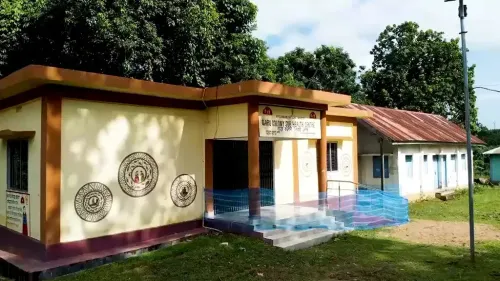
New Ayushman Arogya Mandir buildings virtually inaugurated at Radhanagar, Dhaleswar, Jagaharimura, Ujan Abhoynagar, and Ramakrishna Shivalaya Ashram .
Tripura now has around 1,110 Ayushman Arogya Mandirs operational across the state.
Hospital referral cases have fallen by roughly 80 percent — from 555 in 2023 to 161 in 2026 .
Tripura's network is part of the national Ayushman Bharat programme, which targets 1.5 lakh Health and Wellness Centres nationwide.
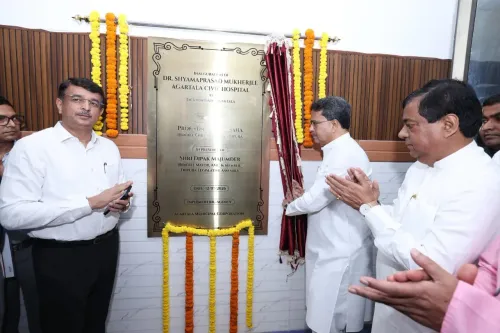
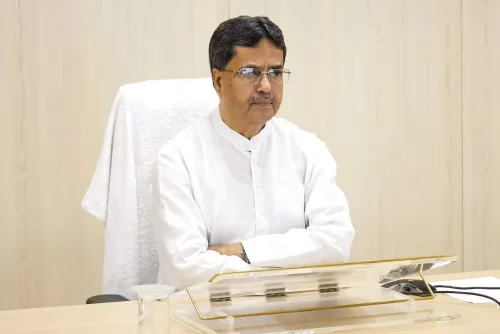
A new urban polyclinic and five upgraded health centres opened in Tripura on Thursday, September 24 — and the numbers behind them tell a story of a state quietly rewriting how its citizens experience illness. Tripura Chief Minister Dr. Manik Saha inaugurated the Urban Polyclinic at A.D. Nagar in Agartala and virtually launched new buildings for Ayushman Arogya Mandirs at Radhanagar, Dhaleswar, Jagaharimura, Ujan Abhoynagar, and Ramakrishna Shivalaya Ashram.
The Chief Minister shared the milestone on social media, noting that around 1,110 Ayushman Arogya Mandirs have now been inaugurated across the state — each one designed to deliver primary care without sending patients on long journeys to district hospitals.
From 555 referrals to 161: a four-year turnaround
The headline figure in Dr. Saha's post is striking. Hospital referral cases — the clearest proxy for whether a primary care system is actually working — have dropped by roughly 80 percent since the network began scaling. In 2023, the state recorded 555 referral cases. That fell to 495 in 2024, then 366 in 2025, and by 2026 the count stands at just 161.
The trajectory is not accidental. When a community health centre can manage hypertension, diabetes, maternal care, and basic diagnostics on-site, the pressure on tertiary facilities drops — and so does the financial and logistical burden on patients. That is precisely the logic that drove the original Ayushman Bharat programme, launched by the central government in 2018, which set a national target of creating 1.5 lakh Health and Wellness Centres to shift care from overburdened hospitals to the sub-district level.
Tripura's Ayushman Arogya Mandirs and the national decentralisation push
States across India have rebranded and expanded these centres under local names; Tripura calls its network Ayushman Arogya Mandirs. The approach — getting preventive screenings, essential medicines, and outpatient consultations into neighbourhoods rather than hospital queues — is now showing measurable outcomes in Tripura's own data, aligning with the broader national pattern of decentralised primary care delivering results at the community level.
The new Urban Polyclinic at A.D. Nagar takes that logic into a dense urban pocket of Agartala, targeting outpatient demand in areas where residents previously had few alternatives to the district hospital. It is the kind of facility that turns a half-day hospital errand into a neighbourhood visit.
Dr. Saha framed today's inaugurations as part of a deliberate commitment to 'bringing healthcare services to people's doorsteps' — and with over a thousand Ayushman Arogya Mandirs now operational, Tripura's primary care footprint has grown into one of the more tangible metrics his government can point to. The referral curve, still falling, will be the one number that settles whether that footprint is doing the job.
Point of View
Which has leaned heavily on infrastructure delivery as its electoral identity since 2018, a functioning primary care network is both a public-health win and a visible counter-narrative to opposition critiques about development. The Ayushman Arogya Mandir rollout also reinforces New Delhi's decentralisation-of-care doctrine, giving state governments a co-ownership stake in a central flagship. The harder test now is quality and staffing: a thousand buildings are only as good as the clinicians inside them.
NationPress
24 Sept 2026
Frequently Asked Questions
What is an Ayushman Arogya Mandir?
An Ayushman Arogya Mandir is Tripura's state-level name for Health and Wellness Centres under the central Ayushman Bharat programme, designed to provide preventive and primary care services at the community level, reducing the need for hospital referrals.
How many Ayushman Arogya Mandirs are there in Tripura?
As of September 2026, around 1,110 Ayushman Arogya Mandirs have been inaugurated across Tripura, according to Chief Minister Dr. Manik Saha.
What is the Urban Polyclinic at A.D. Nagar?
The Urban Polyclinic at A.D. Nagar is a new outpatient health facility in Agartala, inaugurated by CM Dr. Manik Saha on September 24, 2026, to bring multi-specialty consultations closer to urban residents.
Why have hospital referrals dropped in Tripura?
Tripura attributes an approximately 80 percent drop in hospital referrals — from 555 cases in 2023 to 161 in 2026 — to the expansion of Ayushman Arogya Mandirs, which handle primary care locally and reduce the need to send patients to larger hospitals.
What is the Ayushman Bharat programme?
Ayushman Bharat is a central government health programme launched in 2018 with a target of creating 1.5 lakh Health and Wellness Centres across India to shift primary and preventive care from hospitals to the community level.