CM Himanta Hits Out at 'Anarchy' After West Karbi Anglong Vote
Synopsis
Assam Chief Minister Himanta Biswa Sarma used a Ravana metaphor to declare West Karbi Anglong's voters had rejected 'anarchy', framing a local electoral outcome as a broader mandate for democratic order and BJP's Northeast consolidation strategy.
Key Takeaways
CM Himanta Biswa Sarma posted on November 8, 2026 claiming West Karbi Anglong voters rejected what he termed 'anarchy.' The post used a ten-headed Ravana metaphor to frame the opposition as a multi-faced destabilising force.
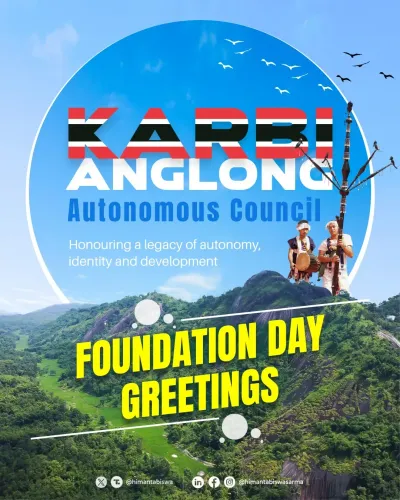
West Karbi Anglong falls under the Karbi Anglong Autonomous Council framework, making it a strategically significant political battleground.
The hashtag #SaveDemocracyRemoveAnarchy signals a coordinated BJP political messaging push around local election results.
The post aligns with NEDA 's broader strategy of consolidating BJP-allied power in autonomous council territories across the Northeast since 2016 .
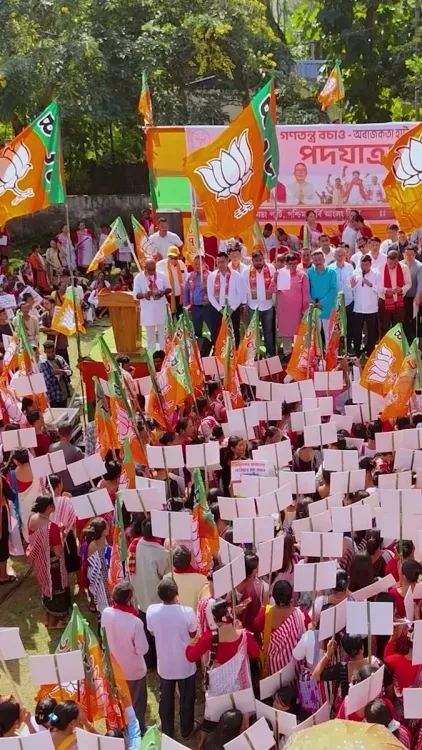
A sharp political message landed from Assam Chief Minister Himanta Biswa Sarma on Sunday, November 8, 2026 — invoking the mythological ten-headed Ravana as a metaphor for what he called the many faces of anarchy, and declaring that the voters of West Karbi Anglong had seen through every one of them.
The 'Ten Heads of Anarchy' Metaphor
Sarma's post pulled no punches: 'Anarchy may come with ten heads, but the people of Assam have the clarity to see through every one of them.' The Ravana allusion — ten heads, each masking a different deception — is a pointed rhetorical choice, casting the opposition not merely as a political rival but as a shape-shifting threat to democratic order. The hashtag #SaveDemocracyRemoveAnarchy anchored the post squarely in electoral territory.
The framing is consistent with the BJP's long-running narrative in Assam: that the state's post-2021 political era represents a clean break from instability, and that any challenge to the ruling dispensation is, by definition, a challenge to democratic stability itself.
West Karbi Anglong's Signal
West Karbi Anglong, a district in central Assam falling under the Karbi Anglong Autonomous Council framework, has historically been a contested zone — politically and, in earlier decades, in terms of insurgent activity. That Sarma specifically names this district as 'standing strong' suggests a result or mandate from the area that he is claiming as a democratic endorsement of the ruling alliance.
The district's demographic and political complexity makes any consolidation there significant. For NEDA — the North-East Democratic Alliance that Sarma convenes — holding ground in autonomous council territories is as strategically important as winning assembly seats. These councils govern land, culture, and local administration for tribal communities, making them high-stakes political battlegrounds.
BJP's Northeast Consolidation Play
Since 2016, the BJP and its NEDA allies have systematically expanded their footprint across Northeast India, flipping states and councils that were once Congress strongholds or fragmented among regional parties. Sarma has been the architect of much of this consolidation — combining aggressive electoral mobilisation with a governance narrative built around stability and development.
Sunday's post fits that larger arc precisely. A win, or a strong performance, in West Karbi Anglong becomes not just a local result — it becomes a data point in the BJP's claim that the Northeast has permanently recalibrated its politics. The opposition, unnamed but unmistakably targeted, is cast as the avatar of the disorder voters have rejected.
The people of West Karbi Anglong have delivered their verdict — now every opposition party in the region will have to decide how to answer it.
Point of View
He elevates what could be a routine council vote into a moral referendum — a tactic that has worked repeatedly in BJP's Northeast consolidation since 2016. The opposition's challenge is structural: Sarma controls both the governing narrative and the hashtag, leaving rivals to fight on terrain he has already defined. What to watch is whether this signals an impending broader electoral push in Karbi Anglong's autonomous council cycle, or is targeted messaging ahead of a larger Assam political realignment.
NationPress
8 Nov 2026
Frequently Asked Questions
What did Himanta Biswa Sarma say about West Karbi Anglong?
CM Sarma declared that West Karbi Anglong 'stands strong,' claiming its voters rejected anarchy and affirmed Assam's democratic values, using the hashtag #SaveDemocracyRemoveAnarchy.
What is the Karbi Anglong Autonomous Council?
The Karbi Anglong Autonomous Council is a self-governing body in central Assam that manages land rights, cultural affairs, and local administration for the Karbi tribal community and surrounding areas, including West Karbi Anglong district.
What is NEDA and why is West Karbi Anglong important to it?
NEDA is the North-East Democratic Alliance, a BJP-led political coalition convened by Himanta Biswa Sarma. Autonomous council territories like West Karbi Anglong are strategically vital because they govern tribal regions and represent key electoral battlegrounds in the Northeast.
What does the 'ten heads' metaphor mean in Sarma's post?
Sarma alluded to the mythological demon king Ravana, who is depicted with ten heads, to describe the opposition as a many-faced force of anarchy — suggesting it disguises its true nature but can still be seen through by informed voters.
What is the BJP's political track record in Assam since 2021?
The BJP-led alliance won a majority in the 2021 Assam Legislative Assembly elections, bringing Himanta Biswa Sarma to power as Chief Minister. Since then, the party has pursued consolidation in autonomous councils and local bodies across the state and broader Northeast region.