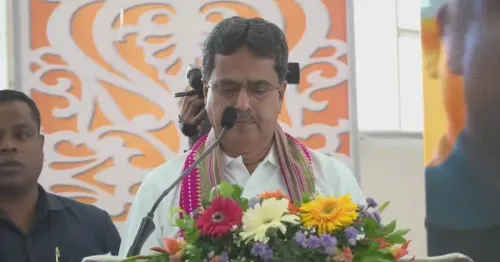
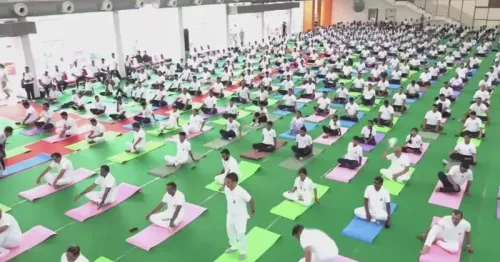
CM Manik Saha joins Yoga Day event at Hapania
Synopsis
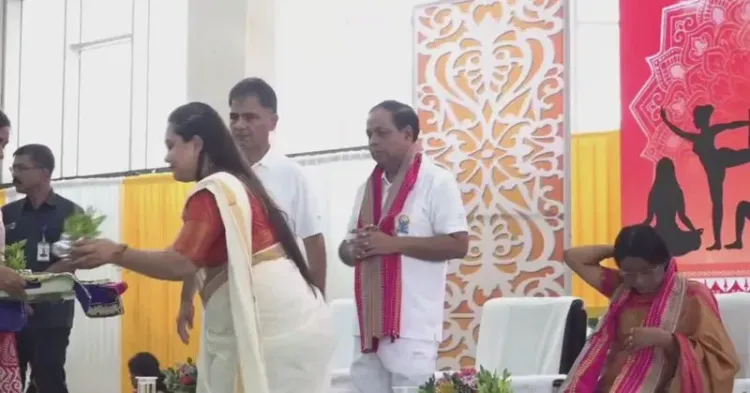
Tripura Chief Minister Dr. Manik Saha joined the International Yoga Day programme at Hapania near Agartala on 21 June 2026, participating in the annual global observance coordinated through India's AYUSH ministry and observed by state governments nationwide since 2015.
Key Takeaways
Tripura Chief Minister Dr.
Manik Saha participated in the International Yoga Day programme at Hapania , near Agartala, on 21 June 2026 .
International Yoga Day has been observed on 21 June every year since 2015 , following a 2014 UN General Assembly resolution proposed by India.
The Ministry of AYUSH coordinates national-level Yoga Day observances and provides thematic guidelines to state governments.
Hapania is a major public event venue on the outskirts of Agartala , the capital of Tripura.
Tripura has been governed by the BJP since 2018, with Dr.
Manik Saha as Chief Minister since May 2022 .
Post-event focus will be on potential state announcements around AYUSH budget allocations or yoga infrastructure expansion.
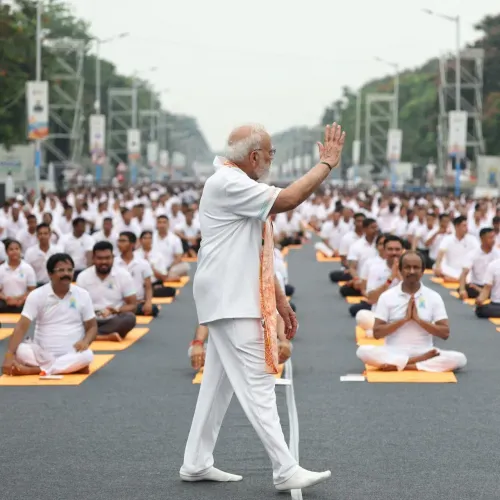
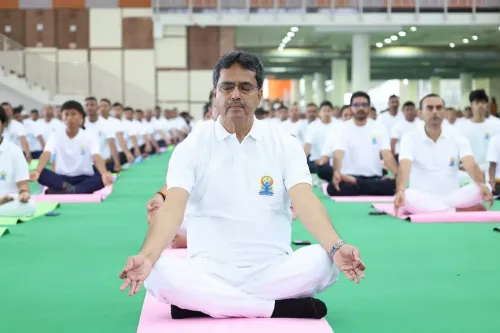
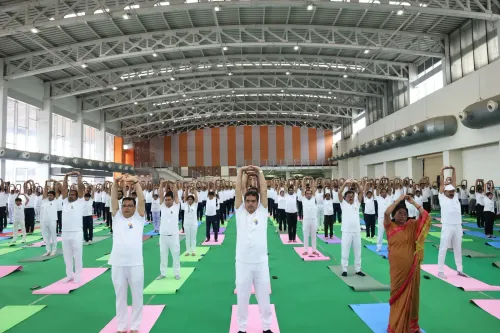
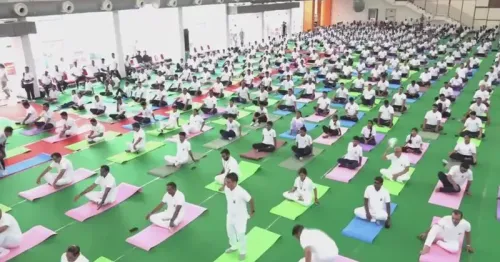
Tripura Chief Minister Dr. Manik Saha participated in the International Yoga Day programme at Hapania, near Agartala, on 21 June 2026, joining thousands of practitioners across the country in marking the global observance of yoga.
Context
International Yoga Day is observed every year on 21 June following a 2014 United Nations General Assembly resolution, proposed by India, that designated the date as a global day of wellness. The first nationwide observance was held in 2015, and the day has since become a fixture in the Indian government's public health calendar. Chief ministers and senior officials across states routinely lead or attend state-level events as part of this annual tradition.
Hapania, an open ground on the outskirts of Agartala, is a frequently used venue for large public and government gatherings in Tripura. Its selection for the Yoga Day programme reflects the state government's intent to host a high-visibility, mass-participation event.
Policy Backdrop
The Union government's Ministry of AYUSH coordinates Yoga Day observances at the national level, providing thematic guidelines and outreach material to state governments each year. Since 2014, the BJP-led central government has woven yoga promotion into its broader public health and soft-power messaging, positioning the practice as both a wellness tool and a marker of India's cultural heritage.
Tripura has been governed by the BJP since 2018, and Dr. Manik Saha has served as Chief Minister since May 2022. State-level participation in nationally designated days forms a consistent part of the administration's public engagement calendar.
Stakeholders and Impact
The immediate beneficiaries of state-organised Yoga Day events are residents who participate in guided sessions, gaining access to structured wellness programming in a public setting. For the state government, such events serve as visible demonstrations of alignment with central health and cultural priorities. Yoga practitioners, AYUSH practitioners, and civil society groups invested in preventive health form the broader stakeholder community.
Mass public events of this nature also carry outreach value in a state like Tripura, where public health infrastructure continues to expand. Embedding wellness practices into large-scale civic gatherings is seen as a low-cost, high-visibility public health intervention.
What's Next
Attention will now turn to whether the Tripura government follows the Yoga Day event with concrete policy steps — such as updates to the state AYUSH department's budget allocations or announcements on yoga infrastructure in schools and community centres. Annual observances of this kind often serve as platforms for state governments to announce wellness-linked schemes or partnerships, making the post-event period one to watch.
Point of View
But the significance lies less in the attendance itself and more in what follows. For the Tripura government, the Hapania event is an opportunity to signal both cultural alignment with the central BJP agenda and a commitment to preventive public health in a northeastern state still building out its wellness infrastructure. Dr. Manik Saha's visible participation reinforces his administration's positioning within the broader national narrative that the BJP has built around yoga since 2014. Whether the event translates into measurable state-level policy action — on AYUSH funding, school yoga programmes, or community health outreach — will be the more meaningful indicator of intent.
NationPress
20 Sept 2026
Frequently Asked Questions
Why is International Yoga Day celebrated on 21 June?
International Yoga Day is celebrated on 21 June because the UN General Assembly designated this date in 2014 following a proposal by India. The first global observance was held on 21 June 2015.
What is Hapania and where is it located?
Hapania is an area near Agartala, the capital of Tripura, frequently used as a venue for large public and government events in the state.
Who is Dr. Manik Saha?
Dr. Manik Saha is the Chief Minister of Tripura and a BJP leader who assumed office in May 2022. He is also a dentist by profession.
Which ministry coordinates Yoga Day events in India?
The Ministry of AYUSH coordinates International Yoga Day observances at the national level, providing guidelines and outreach support to state governments each year.
How long has Tripura been governed by the BJP?
Tripura has been governed by the BJP since 2018, when the party ended over two decades of Left Front rule in the state.