CM Manik Saha inaugurates new Kali temple in Bishalgarh
Synopsis
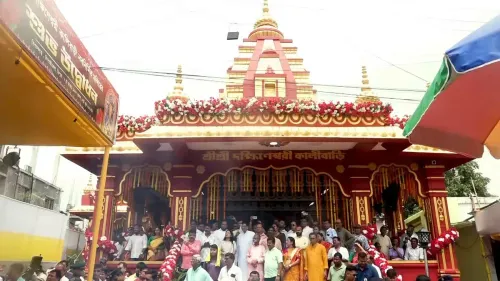
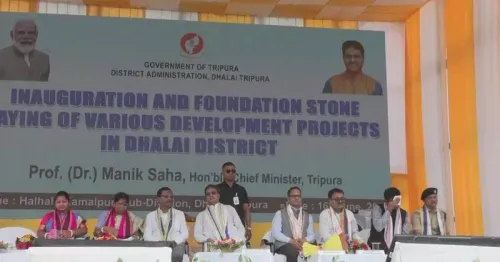
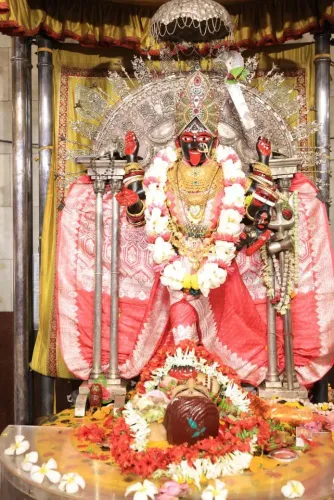
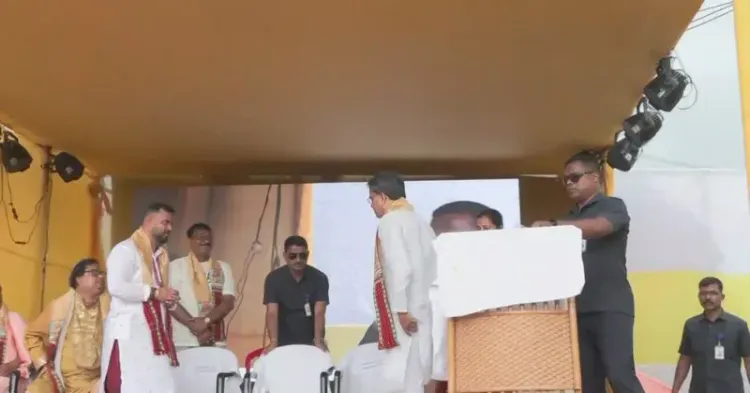
Tripura Chief Minister Dr. Manik Saha addressed the inauguration of the newly constructed Sri Sri Dakshineswari Kali Temple in Bishalgarh on 17 June 2026, reinforcing the state government's push to preserve religious heritage and develop religious tourism across Tripura.
Key Takeaways
Manik Saha , Chief Minister of Tripura, addressed the inauguration of the newly constructed Sri Sri Dakshineswari Kali Temple in Bishalgarh on 17 June 2026 .
The temple is located in Bishalgarh , Sepahijala district , a town known for its historic shrines and religious tourism potential.
The Tripura government has been undertaking temple renovation and reconstruction projects since 2018 as part of its heritage and tourism agenda.
The inauguration is expected to boost religious tourism and provide economic benefits to local communities in Sepahijala district.
Further temple and heritage infrastructure projects under the state tourism budget are anticipated in the coming months.
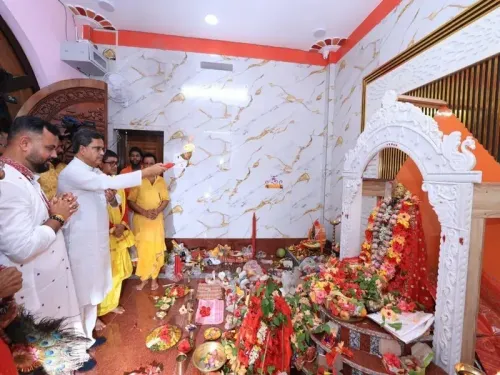
Tripura Chief Minister Dr. Manik Saha on Wednesday, 17 June 2026 addressed the inaugural ceremony of the newly constructed Sri Sri Dakshineswari Kali Temple in Bishalgarh, Sepahijala district, marking a significant moment for the region's religious and cultural heritage.
Context
In a post on X, Dr. Saha wrote in Bengali: 'বিশালগড়ে শ্রী শ্রী দক্ষিণেশ্বরী কালী মন্দিরের নবনির্মিত মন্দিরের উদ্বোধনী অনুষ্ঠানে বক্তব্য রাখছি' — meaning, 'I am delivering a speech at the inauguration ceremony of the newly constructed Sri Sri Dakshineswari Kali Temple in Bishalgarh.' The Chief Minister's personal presence at the event underscores the state government's emphasis on religious heritage as a pillar of its cultural policy.
Bishalgarh, a town in Sepahijala district of Tripura, is home to several historic temples and is considered an important centre for religious tourism in the state. The Sri Sri Dakshineswari Kali Temple is a traditional Kali shrine that holds deep significance for local devotees.
Policy Backdrop
Since 2018, the Tripura government has undertaken multiple temple renovation and reconstruction projects as part of a broader heritage and tourism development agenda. These efforts are aimed at preserving the state's religious landmarks while simultaneously boosting footfall in the religious tourism sector.
BJP-ruled Tripura has consistently prioritised the restoration of Hindu religious sites, positioning cultural identity and heritage conservation as key governance themes. This approach aligns with similar initiatives pursued by BJP governments in other northeastern states, where religious tourism is seen as an economic opportunity alongside its cultural dimension.
Stakeholders and Impact
Local devotees of Bishalgarh and the surrounding areas of Sepahijala district stand to benefit most directly from the newly constructed temple, which provides a dedicated and renovated space for worship. The reconstruction is expected to draw pilgrims from across Tripura and neighbouring regions.
The state's tourism sector is another key stakeholder. A refurbished temple at a historically significant site can anchor religious tourism circuits, generating economic activity for local vendors, hospitality services, and transport operators in the region.
What's Next
Attention will now turn to the rollout of additional temple and heritage projects listed under the state's tourism budget, as well as any related infrastructure announcements — such as road connectivity or pilgrim facilities — that may accompany this inauguration. The Tripura government's pipeline of cultural restoration work will be closely watched by both religious communities and the tourism industry in the coming months.
Point of View
Where religious site restoration doubles as both identity politics and economic policy. The event fits a pattern visible across BJP-governed northeastern states: leveraging heritage conservation to consolidate cultural credibility while building a religious tourism economy. For Tripura specifically, such inaugurations serve as visible proof-points of delivery in a state where the party has worked hard to entrench itself since 2018. The broader implication is that temple reconstruction projects are likely to remain a recurring feature of the state's governance calendar ahead of future electoral cycles.
NationPress
16 Sept 2026
Frequently Asked Questions
Which temple did Tripura CM Manik Saha inaugurate in Bishalgarh?
Tripura Chief Minister Dr. Manik Saha inaugurated the newly constructed Sri Sri Dakshineswari Kali Temple in Bishalgarh, Sepahijala district, on 17 June 2026.
Where is Bishalgarh located in Tripura?
Bishalgarh is a town in Sepahijala district of Tripura. It is known for its historic temples and is considered an important religious tourism destination in the state.
What is the Tripura government's policy on temple renovation?
Since 2018, the Tripura government has undertaken multiple temple renovation and reconstruction projects as part of a broader heritage preservation and religious tourism development agenda.
How does the Dakshineswari Kali Temple inauguration benefit local people?
The newly constructed temple is expected to serve local devotees with a dedicated worship space, attract pilgrims from across the region, and boost economic activity for vendors, hospitality, and transport operators in Bishalgarh.
What are the next steps after the Bishalgarh temple inauguration?
Focus will shift to additional temple and heritage projects in the state tourism budget, along with potential infrastructure announcements such as improved road connectivity and pilgrim facilities in Sepahijala district.