CM Sai: 6,000 Panchayats Now Have Atal Digital Service Centres
Synopsis
Chhattisgarh CM Vishnu Deo Sai says 6,000 gram panchayats now run Atal Digital Service Centres offering income, caste, and residence certificates at one location. The state is also expanding cooperative societies to ensure timely delivery of fertilisers and seeds to farmers.
Key Takeaways
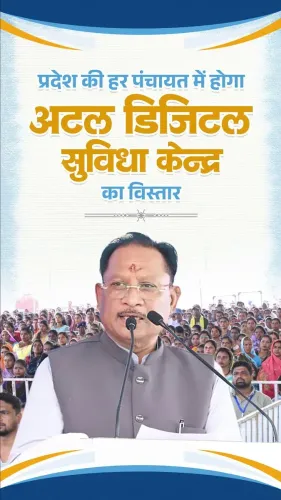
6,000 gram panchayats in Chhattisgarh are now operating Atal Digital Service Centres .
Citizens can obtain income, caste, and residence certificates from a single centre at the panchayat level.
The state is expanding cooperative societies to improve supply of fertilisers, seeds, and agricultural inputs to farmers.
The initiative is named after former Prime Minister Atal Bihari Vajpayee and aligns with the national Digital India programme.
The dual approach targets both rural citizens seeking government certificates and farmers needing timely agricultural inputs.
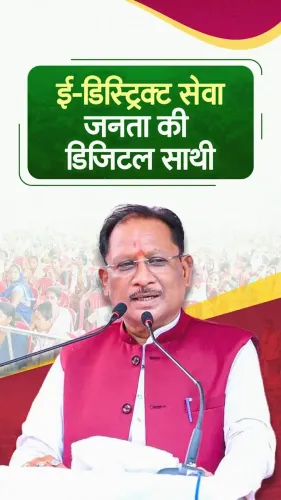
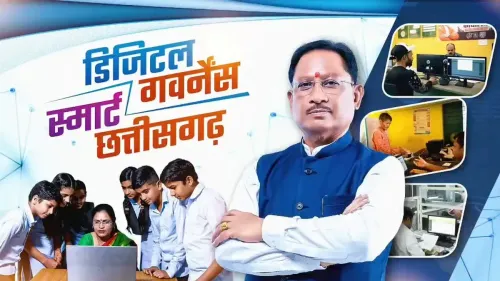
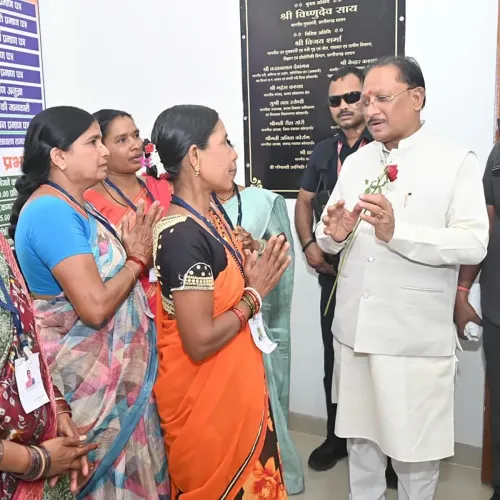
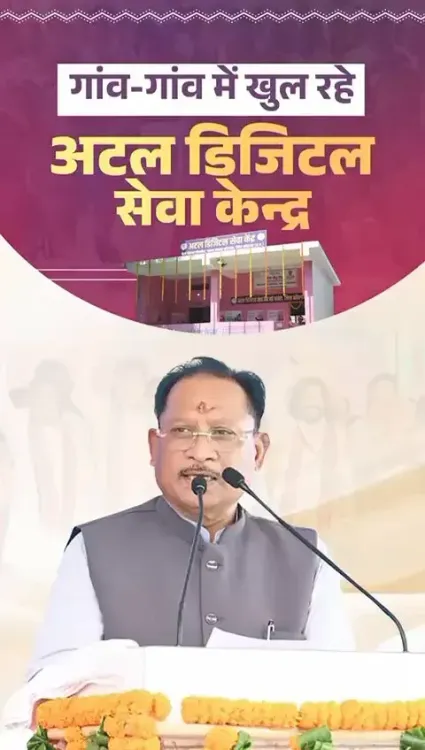
Chhattisgarh Chief Minister Vishnu Deo Sai announced on 2 July 2026 that the state is operating Atal Digital Service Centres across its gram panchayats, with 6,000 village panchayats now offering digital certificates and other services from a single location. The Chief Minister also said cooperative societies are being expanded across the state to ensure timely supply of fertilisers, seeds, and agricultural inputs to farmers.
Context
In his post, CM Sai stated — 'प्रदेश की पंचायतों में हम अटल डिजिटल सेवा केन्द्र संचालित कर रहे हैं' ('We are operating Atal Digital Service Centres in the panchayats of the state') — and noted that citizens can now obtain income certificates, caste certificates, and residence certificates at a single point. The centres are named after former Prime Minister Atal Bihari Vajpayee, continuing a pattern of BJP-led state governments branding e-governance infrastructure after the late leader.
The announcement covers two distinct governance tracks: digital service delivery to rural citizens, and cooperative-led agricultural input supply. Both are being pursued simultaneously under the current state administration.
Policy Backdrop
The Atal Digital Service Centre initiative sits within the broader Digital India programme launched by the central government in 2015, which aimed to extend common service centres and e-governance infrastructure to every gram panchayat in the country. Chhattisgarh had earlier implemented Common Service Centre and e-Panchayat initiatives from around 2010 under the National e-Governance Plan.
The state's push to expand cooperative societies follows a pattern visible across BJP-governed states, where agricultural cooperatives are used to improve last-mile delivery of inputs and reduce farmers' dependence on private traders. The central government has also reinforced this approach through the Ministry of Cooperation, established in 2021.
Stakeholders and Impact
Chhattisgarh has a large rural and tribal population, making last-mile access to government services a persistent administrative challenge. The consolidation of multiple certificate services — income, caste, and residence — at a single panchayat-level centre reduces the need for citizens to travel to block or district headquarters, which can be significant in remote and forested areas of the state.
For the farming community, the expansion of cooperative societies is intended to address the recurring problem of delayed or inadequate supply of fertilisers and seeds during critical agricultural seasons. Timely access to inputs directly affects sowing decisions and eventual crop yields, making cooperative reach a practical concern for rural livelihoods.
What's Next
The state government's stated goal appears to be saturation coverage — extending Atal Digital Service Centres to all gram panchayats beyond the current 6,000. Budget allocations for further cooperative expansion and any targets for new cooperative society registrations will be indicators of how far the programme scales in the coming months. Progress on both fronts is likely to feature in the state's governance reporting ahead of the next assembly session.
Point of View
Signalling an intent to present the BJP government's Chhattisgarh tenure as comprehensively pro-rural. The Atal Digital Service Centre branding reinforces the party's ideological lineage while tapping into the Digital India infrastructure that has given state governments a ready framework for panchayat-level e-governance. The cooperative expansion thread is notable because it mirrors a central policy push since 2021 and positions the state as aligned with New Delhi's rural economy agenda. Together, the two tracks suggest the administration is building a governance narrative around last-mile delivery ahead of potential electoral scrutiny.
NationPress
2 Jul 2026
Frequently Asked Questions
What is an Atal Digital Service Centre in Chhattisgarh?
An Atal Digital Service Centre is a state government facility at the gram panchayat level in Chhattisgarh that provides digital services including income certificates, caste certificates, and residence certificates from a single location, named after former Prime Minister Atal Bihari Vajpayee.
How many panchayats in Chhattisgarh have digital service centres?
According to Chief Minister Vishnu Deo Sai, 6,000 gram panchayats in Chhattisgarh currently have Atal Digital Service Centres operational as of July 2026.
What services are available at Atal Digital Service Centres?
The centres offer income certificates, caste certificates, and residence certificates, along with various other digital government services, all from a single point at the village panchayat level.
How is Chhattisgarh helping farmers through cooperatives?
The Chhattisgarh government is expanding cooperative societies across the state to ensure timely availability of fertilisers, seeds, and other essential agricultural resources to farmers, reducing dependence on private traders.
Who is Vishnu Deo Sai and which party does he belong to?
Vishnu Deo Sai is the Chief Minister of Chhattisgarh and a leader of the Bharatiya Janata Party (BJP). He has been Chief Minister since December 2023.