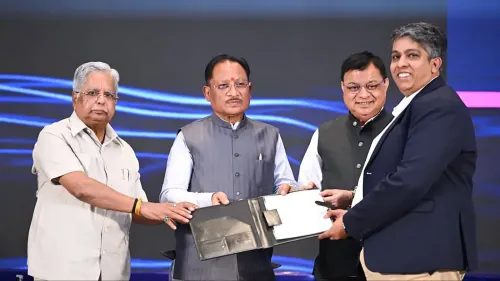
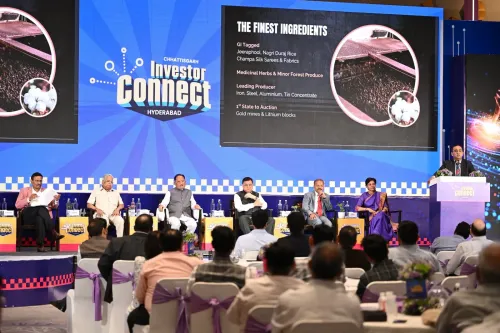
CM Sai Announces Ease of Doing Business Law for Chhattisgarh
Synopsis
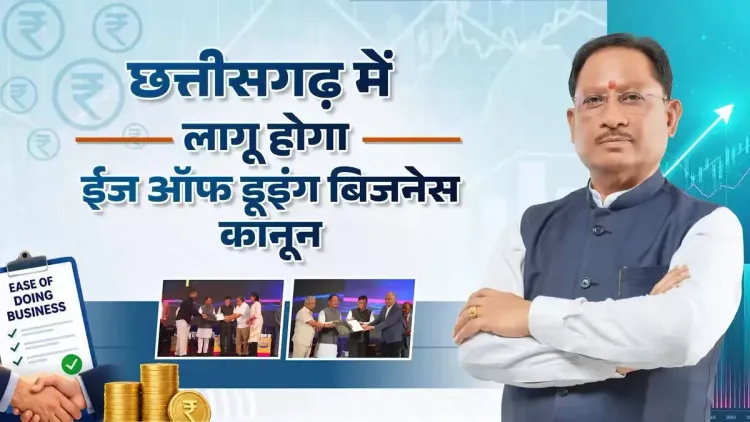
Chhattisgarh Chief Minister Vishnu Deo Sai announced on 10 July 2026 that his government is introducing an Ease of Doing Business law to simplify regulatory processes, attract investment, and create jobs for the state's youth under the Viksit Chhattisgarh vision.
Key Takeaways
CM Vishnu Deo Sai announced a dedicated Ease of Doing Business law for Chhattisgarh on 10 July 2026 .
The legislation aims to make regulatory processes simpler, more transparent, and time-bound for investors.
The move is framed as part of the Viksit Chhattisgarh development vision of the BJP-led state government.
The reform aligns with the national DPIIT Business Reform Action Plan framework active since 2015 .
Key stakeholders include domestic and foreign investors , existing industries, and Chhattisgarh's youth seeking formal employment.
The next milestone is the bill's introduction and passage in the Chhattisgarh Legislative Assembly .
Chhattisgarh Chief Minister Vishnu Deo Sai announced on 10 July 2026 that his government is bringing a dedicated Ease of Doing Business law for the state, aimed at making Chhattisgarh the most trusted and investment-friendly destination for industry in the country.
Context
Posting on X, CM Sai stated — 'छत्तीसगढ़ को उद्योगों के लिए सबसे भरोसेमंद और निवेश-अनुकूल राज्य बनाने की दिशा में हमारी सरकार निरंतर कार्य कर रही है' ['Our government is continuously working towards making Chhattisgarh the most trusted and investment-friendly state for industries']. He said the proposed legislation would make regulatory processes 'simpler, more transparent, and time-bound,' and would provide investors with a better business environment.
The Chief Minister added that rising investment would give new momentum to industries, expand employment opportunities for youth, and strengthen the resolve of a 'developed Chhattisgarh' — Viksit Chhattisgarh.
Policy Backdrop
The announcement fits within a national framework that dates to 2014, when the Government of India launched the Ease of Doing Business programme under the Department for Promotion of Industry and Internal Trade (DPIIT). Since 2015, DPIIT has published annual Business Reform Action Plans that assess and rank state governments on how effectively they implement investment-friendly regulatory measures.
Chhattisgarh, a mineral-rich state in central India, has in recent years sought to diversify its industrial base beyond mining and primary processing. The BJP-led government that came to power after the 2023 state elections under CM Sai has positioned industrial growth and youth employment as central planks of its governance agenda.
Codifying ease-of-doing-business norms into a standalone state law — rather than relying solely on administrative orders — is a legislative step that would give the reform framework greater permanence and legal enforceability.
Stakeholders and Impact
The primary beneficiaries of the proposed law are domestic and foreign investors looking to set up manufacturing or services operations in Chhattisgarh. Simplified, time-bound approvals reduce compliance costs and uncertainty, which are frequently cited as deterrents to investment in tier-2 states.
For Chhattisgarh's youth, the government argues that increased industrial investment translates directly into formal employment. The state has a significant young population, and job creation in industry is seen as a key metric for the administration's performance ahead of future electoral cycles.
Existing industries operating in the state would also benefit from clearer and faster regulatory processes, potentially lowering their cost of doing business and encouraging capacity expansion.
What's Next
The immediate milestone to watch is the introduction and passage of the proposed legislation in the Chhattisgarh Legislative Assembly. The exact provisions, timeline, and nomenclature of the bill have not yet been made public. Following enactment, the state industries department would be expected to publish implementation rules and subsequently report on investment inflows and employment figures to gauge the law's impact.
If enacted, the law could improve Chhattisgarh's standing in DPIIT's annual state rankings, reinforcing the broader pattern of competitive federalism where states vie to attract capital through regulatory simplification.
Point of View
A state whose economy has historically leaned on mineral extraction, this signals an ambition to diversify into manufacturing and services. How quickly the bill is tabled, and whether it includes enforceable timelines with penalties for bureaucratic delay, will determine whether the announcement translates into measurable change.
NationPress
10 Jul 2026
Frequently Asked Questions
What is the Ease of Doing Business law announced by Chhattisgarh CM Vishnu Deo Sai?
It is a proposed state legislation announced by Chief Minister Vishnu Deo Sai on 10 July 2026 that seeks to make regulatory approvals for businesses in Chhattisgarh simpler, more transparent, and time-bound, creating a better environment for investors.
How will the Chhattisgarh Ease of Doing Business law help investors?
The law is intended to reduce regulatory complexity and waiting times for approvals, lower compliance costs, and give investors greater certainty — making Chhattisgarh more competitive in attracting domestic and foreign investment.
What is Viksit Chhattisgarh that CM Sai referred to?
Viksit Chhattisgarh, meaning 'Developed Chhattisgarh,' is the overarching development vision of the BJP-led state government under CM Sai, centred on industrial growth, youth employment, and economic modernisation.
How does this Chhattisgarh law relate to the central government's Ease of Doing Business programme?
The central government's Ease of Doing Business programme, run by DPIIT since 2014, ranks states on regulatory reforms through annual Business Reform Action Plans. Chhattisgarh's proposed legislation is a state-level effort aligned with this national framework.
When will the Chhattisgarh Ease of Doing Business law be passed?
The bill has not yet been introduced in the Chhattisgarh Legislative Assembly. CM Sai's announcement on 10 July 2026 confirmed the government's intent, but the exact timeline and provisions of the legislation are yet to be made public.