CM Sai approves VB-G Ram Ji Yojana, 125-day job guarantee
Synopsis
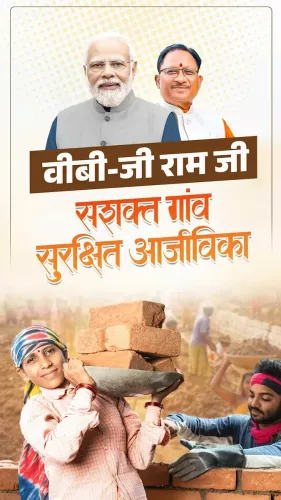
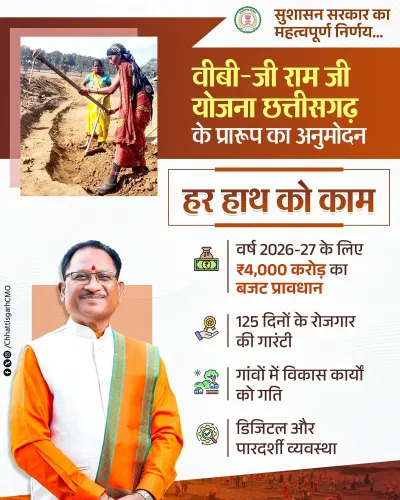
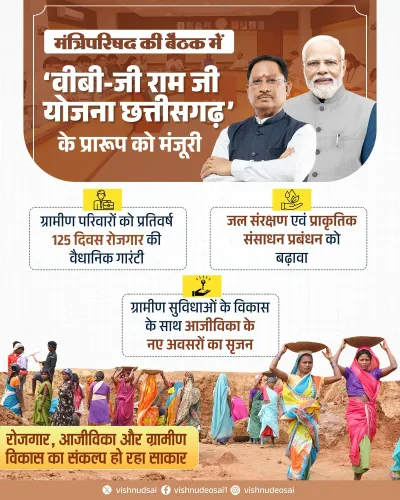
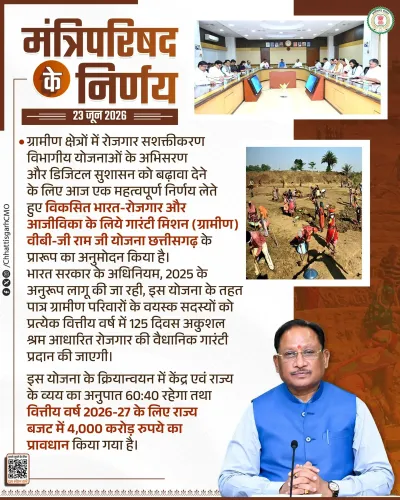
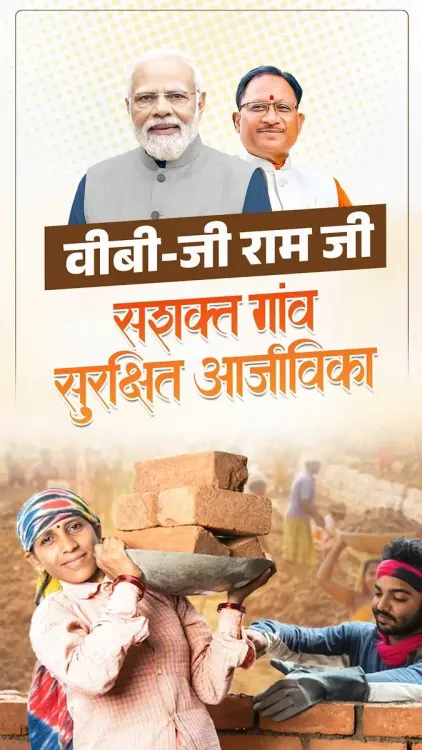
Chhattisgarh CM Vishnu Deo Sai approved the draft of VB-G Ram Ji Yojana on 24 June 2026, promising eligible rural households 125 days of annual employment — 25 days beyond the MGNREGA floor — to strengthen village economies and curb distress migration.
Key Takeaways
Chhattisgarh CM Vishnu Deo Sai announced approval of the draft framework of VB-G Ram Ji Yojana on 24 June 2026 .
The scheme guarantees eligible rural households 125 days of employment per year , extending 25 days beyond MGNREGA's 100-day floor .
The stated goals are livelihood empowerment, a stronger rural economy, and building self-reliant villages.
The approval is of the draft ( praaroop ); budgetary allocation and operational rollout are pending.
The scheme is expected to benefit seasonal agricultural labourers and reduce distress migration from the state.
Implementation will likely involve gram panchayats and integration with existing MGNREGA job-card infrastructure.
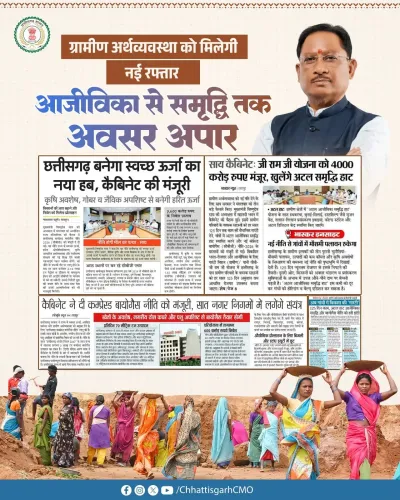
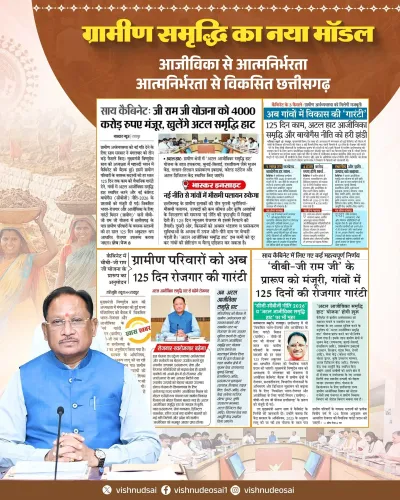
Chhattisgarh Chief Minister Vishnu Deo Sai announced on Wednesday, 24 June 2026 that his government has approved the draft framework of the VB-G Ram Ji Yojana, Chhattisgarh, a state scheme designed to guarantee eligible rural households 125 days of employment every year, extending beyond the floor set by the central rural jobs programme.
Posting on X, CM Sai said — 'ग्रामीण विकास को नई ऊर्जा, रोजगार को नई गारंटी' ['New energy for rural development, a new guarantee of employment'] — and described the approval as 'an important initiative towards livelihood empowerment in villages.' He added that the scheme reflects the government's resolve that 'every hand gets opportunity and every village sees development.'
Context
The announcement positions VB-G Ram Ji Yojana as a state-level supplement to the Mahatma Gandhi National Rural Employment Guarantee Act (MGNREGA), which since 2005 has mandated a minimum of 100 days of wage employment per rural household per year. By guaranteeing 125 days, Chhattisgarh would offer 25 additional days of work security beyond the national floor, targeting families who exhaust their MGNREGA entitlement before the agricultural season resumes.
Chhattisgarh is a central Indian state with a large rural population dependent on agriculture, forests, and seasonal labour. Distress migration — workers leaving villages for urban construction sites during lean agricultural months — has long been a structural challenge in the state.
Policy Backdrop
Indian states have periodically layered state-funded employment guarantees on top of the MGNREGA framework to address local agrarian conditions. The BJP government in Chhattisgarh, which came to power in December 2023 under CM Sai, has made rural self-reliance a stated priority. The approval of the scheme's draft — praaroop — indicates the policy has cleared cabinet-level scrutiny and is moving toward formal notification and implementation.
The scheme's name references Ram Ji, carrying cultural resonance in a state with a significant tribal and agrarian electorate. The framing of 'suśāsan' (good governance) as the government's resolve is consistent with the BJP's broader messaging on welfare delivery since the 2023 assembly election.
Stakeholders and Impact
The primary beneficiaries are eligible rural households across Chhattisgarh's villages — particularly those in rain-fed agricultural zones and forest-fringe communities where off-season income is scarce. An extended employment guarantee of 125 days could provide a meaningful income buffer and reduce the compulsion to migrate seasonally.
Village economies stand to gain through increased local spending power, and gram panchayats are likely to be the implementing units, creating demand for local infrastructure and public works. Labour contractors and urban employers in sectors that rely on seasonal migrant workers from the state could see a tighter supply pool if the scheme achieves its stated goals.
What's Next
The approval of the draft framework is the first formal step; the scheme must still receive a budgetary allocation, operational guidelines, and beneficiary registration infrastructure before any household can claim the 125-day entitlement. Observers will watch the next Chhattisgarh state budget session for funding details and the rollout timeline. Integration with existing MGNREGA job cards and works lists will be a key administrative challenge. The pace of pilot implementation and early beneficiary numbers will determine whether the scheme translates from policy approval into on-ground impact for rural families.
Point of View
The state signals fiscal ambition on rural employment at a time when agrarian distress and seasonal migration remain live political vulnerabilities. The scheme fits a wider pattern of BJP-governed states deploying state-funded welfare layers to consolidate rural voter bases ahead of future electoral cycles. The real test, however, lies in budgetary commitment and ground-level delivery — outcomes that will define whether this remains a policy announcement or becomes a measurable livelihood intervention.
NationPress
24 Jun 2026
Frequently Asked Questions
What is VB-G Ram Ji Yojana in Chhattisgarh?
VB-G Ram Ji Yojana is a Chhattisgarh state government scheme whose draft was approved by CM Vishnu Deo Sai in June 2026. It aims to guarantee eligible rural households 125 days of employment per year to strengthen village economies and reduce distress migration.
How is VB-G Ram Ji Yojana different from MGNREGA?
MGNREGA guarantees a minimum of 100 days of wage employment per rural household per year at the national level. VB-G Ram Ji Yojana is a state-level scheme that extends this to 125 days, adding 25 extra days of employment security funded by the Chhattisgarh government.
Who will benefit from the VB-G Ram Ji Yojana?
Eligible rural households in Chhattisgarh are the primary beneficiaries, particularly those in rain-fed agricultural zones and forest-fringe communities who face income gaps during lean agricultural months.
Has VB-G Ram Ji Yojana been implemented yet?
As of 24 June 2026, the government has approved the draft framework of the scheme. Budgetary allocation, operational guidelines, and beneficiary registration are still pending before the scheme can be rolled out on the ground.
What did CM Vishnu Deo Sai say about the scheme?
CM Sai described the approval as 'an important initiative towards livelihood empowerment in villages,' stating the government's resolve that 'every hand gets opportunity and every village sees development.'