CM Sai reaffirms Mahatari Vandan Yojana pledge for Chhattisgarh women
Synopsis
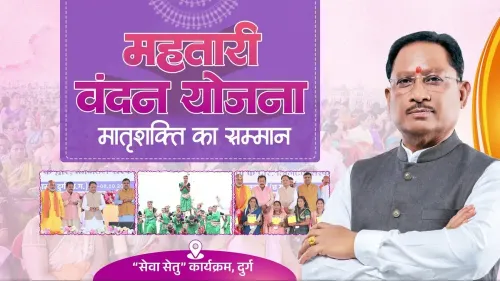
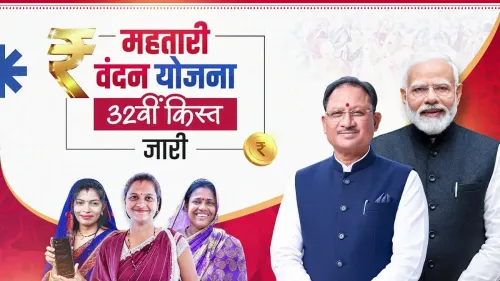
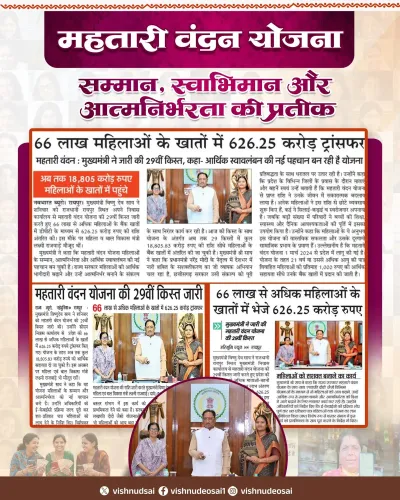
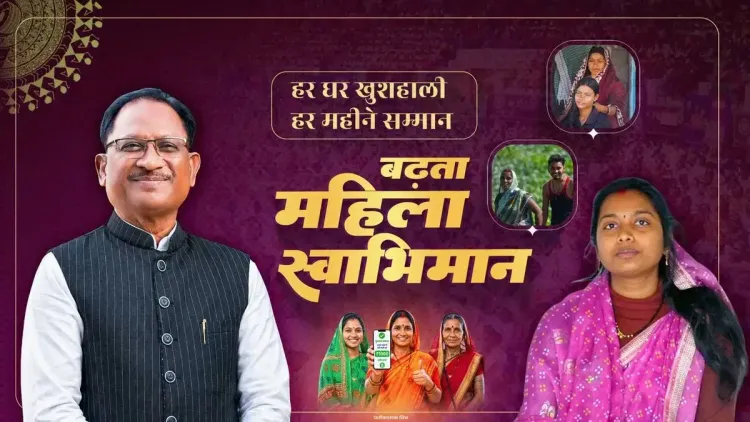
Chhattisgarh Chief Minister Vishnu Deo Sai reaffirmed his government's Mahatari Vandan Yojana on 26 October 2026, calling the ₹1,000 monthly cash transfer a source of self-confidence and economic independence for lakhs of women across the state.
Key Takeaways
Mahatari Vandan Yojana provides a monthly direct cash transfer of ₹1,000 to eligible women in Chhattisgarh .
The scheme was launched by the BJP government after its December 2023 assembly election victory under CM Vishnu Deo Sai .
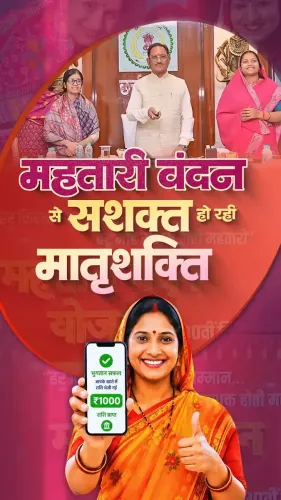
Money reaches beneficiaries via direct benefit transfer , deposited directly into bank accounts.
CM Sai framed the scheme around aatmavishwas (self-confidence) and independent decision-making, not poverty alleviation alone.
The initiative is part of a broader national trend of state governments rolling out monthly cash transfers targeted at women.
Future enrollment figures and budget allocations in the next state fiscal statement will be key indicators of the scheme's scale and sustainability.
A monthly payment of ₹1,000 may sound modest on a spreadsheet — but for millions of women across Chhattisgarh, it has quietly become something larger: a first foothold in financial independence. Chhattisgarh Chief Minister Vishnu Deo Sai took to X on Monday, 26 October 2026, to reaffirm his government's commitment to the Mahatari Vandan Yojana, framing the scheme not as a handout but as a source of confidence and self-determination for the state's women.
In his post, CM Sai wrote, 'हमारी माताओं-बहनों को अपनी छोटी-छोटी जरूरतों के लिए किसी पर निर्भर न रहना पड़े' — ('Our mothers and sisters should not have to depend on anyone for their small, everyday needs') — and described the ₹1,000 monthly transfer as having given lakhs of women both economic support and the power to make their own decisions. 'The growing confidence in their lives and the smile on their faces is the greatest success of this scheme,' he added, signing off with a characteristic personal touch: 'Your Vishnu Bhaiya is always with you.'
What Mahatari Vandan Yojana actually does
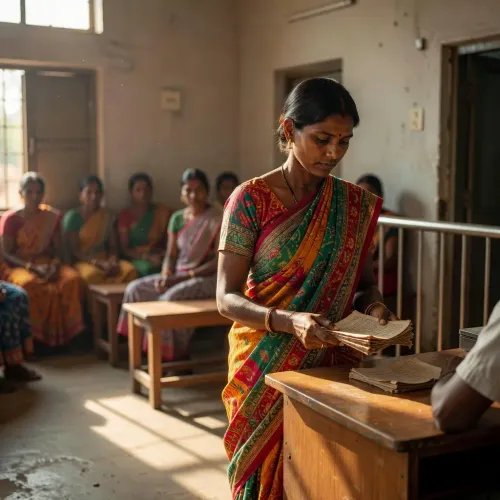
Launched by the BJP government in Chhattisgarh after its assembly election victory in December 2023, the Mahatari Vandan Yojana channels a direct monthly cash transfer of ₹1,000 to eligible women in the state. The mechanism is a direct benefit transfer — money deposited straight into a beneficiary's bank account, bypassing intermediaries. The scheme targets household-level economic needs: the kind of recurring, small expenditure — medicine, school supplies, a bus fare — that can quietly erode a woman's agency when she must ask someone else to fund it.
The design philosophy is deliberate. By giving women a predictable, personally owned income stream, the scheme aims to shift the balance of decision-making at the household level. CM Sai's post underscores that intent explicitly, calling the transfers a source of self-reliance, not just subsidy.
Chhattisgarh inside a national wave of women's cash transfers
The Mahatari Vandan Yojana sits inside a broader pattern that has swept Indian state politics in recent years. From Madhya Pradesh to Karnataka to Maharashtra, state governments across the political spectrum have introduced targeted monthly cash transfers for women — partly as welfare policy, partly as a calculated electoral signal. The amounts vary; the logic is consistent: direct, unconditional cash in a woman's hand reshapes both her economic reality and her bargaining power within the household.
What distinguishes the Chhattisgarh scheme rhetorically is the explicit framing around aatmavishwas — self-confidence — rather than poverty alleviation alone. CM Sai is not positioning this as charity; he is positioning it as empowerment infrastructure. That framing matters in a state where large sections of the female workforce are engaged in agriculture and informal labour, with limited access to formal credit or savings products.
The political arithmetic behind 'Vishnu Bhaiya'
The personal register of the post — 'your Vishnu Bhaiya' — is not accidental. The BJP's communication strategy in Chhattisgarh has leaned into CM Sai's identity as a tribal leader from the Jashpur region, projecting him as an accessible, community-rooted figure. The hashtag #CG_सुशासन_सरकार ('CG Good Governance Government') reinforces the broader governance brand the party has cultivated since taking office.
Whether the scheme's disbursement machinery is keeping pace with its ambitions — enrollment numbers, banking penetration in remote districts, budget headroom — will be the real measure. That data, when it surfaces in the next state fiscal statement, will either validate the political story CM Sai is telling or complicate it.
For now, the message from Raipur is unambiguous: the ₹1,000 keeps flowing, and the government intends to keep it that way. The smile stays — that much, at least, is the promise.
Point of View
The BJP in Chhattisgarh is attempting to reframe a cash transfer as an empowerment initiative, insulating it from the usual 'freebies' critique. The personal 'Vishnu Bhaiya' sign-off deepens a carefully cultivated tribal-roots identity that the party has made central to its Chhattisgarh narrative since December 2023. The scheme also positions the state government as running parallel to, and competitive with, similar transfers announced by opposition-ruled states — a signal that women voters are now a priority battleground across the ideological spectrum. The real policy test, however, lies in disbursement data and budget headroom, neither of which this post addresses.
NationPress
26 Oct 2026
Frequently Asked Questions
What is Mahatari Vandan Yojana in Chhattisgarh?
Mahatari Vandan Yojana is a Chhattisgarh state government scheme that provides a monthly cash transfer of ₹1,000 directly to eligible women, aimed at supporting their economic independence and everyday needs.
Who launched the Mahatari Vandan Yojana?
The scheme was launched by the BJP government in Chhattisgarh after its assembly election victory in December 2023, under Chief Minister Vishnu Deo Sai.
How is the ₹1,000 monthly amount sent to beneficiaries?
The payment is made through direct benefit transfer, meaning the ₹1,000 is deposited directly into each beneficiary's bank account every month.
What did CM Vishnu Deo Sai say about Mahatari Vandan Yojana?
On 26 October 2026, CM Sai said the ₹1,000 monthly payment has given lakhs of women not only economic support but also the confidence and power to make their own decisions, calling their growing self-confidence the scheme's greatest success.
Is Mahatari Vandan Yojana only for Chhattisgarh women?
Yes, the Mahatari Vandan Yojana is a Chhattisgarh state-specific scheme targeting eligible women residents of the state; it is separate from any central government scheme.