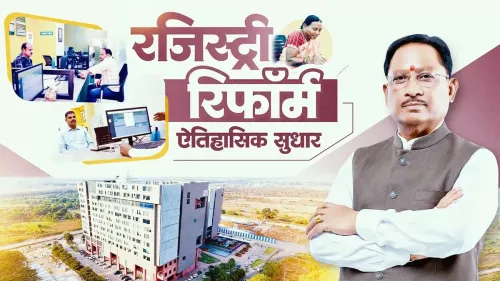
CM Sai Pushes Digital Land Reforms in Chhattisgarh
Synopsis
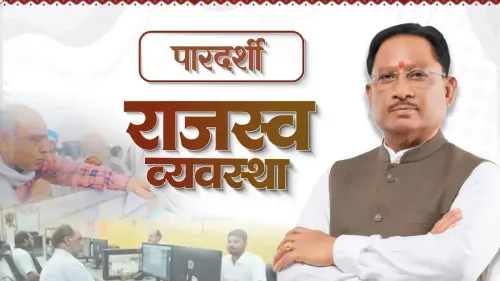
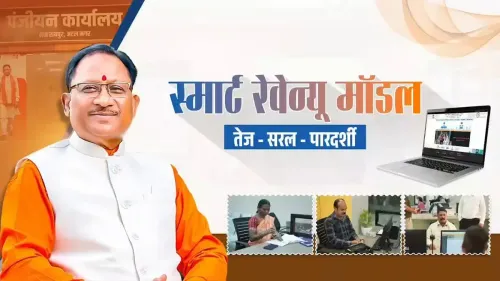
Chhattisgarh Chief Minister Vishnu Deo Sai on 11 July 2026 spotlighted auto-mutation and auto-diversion as digital tools transforming the state's land revenue administration, framing them as pillars of transparent, people-centric governance under the current BJP government.
Key Takeaways
CM Vishnu Deo Sai on 11 July 2026 publicly championed two digital revenue tools: auto-mutation (automatic land ownership record update) and auto-diversion (automatic land-use reclassification).
The reforms aim to make revenue services simpler, more transparent, and time-bound for ordinary citizens and farmers in Chhattisgarh .
India's land-record digitisation push dates to the National Land Records Modernisation Programme of 2008 , expanded under Digital India from 2015 .
Automated systems reduce citizen dependence on local revenue officials, limiting delays and discretionary decision-making.
Chhattisgarh's BJP government, in office since December 2023 , is positioning these measures as part of a broader good-governance agenda.
Performance data and integration with central land platforms remain areas to watch for independent verification of impact.
Chhattisgarh Chief Minister Vishnu Deo Sai on Saturday, 11 July 2026, highlighted the state government's push to make revenue services simpler, more transparent, and time-bound for ordinary citizens, spotlighting two digital tools — auto-mutation and auto-diversion — as central to that effort.
Context
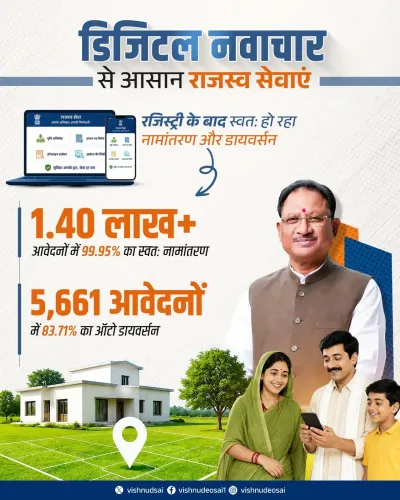
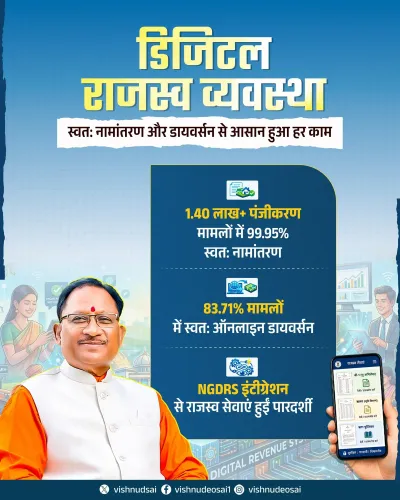
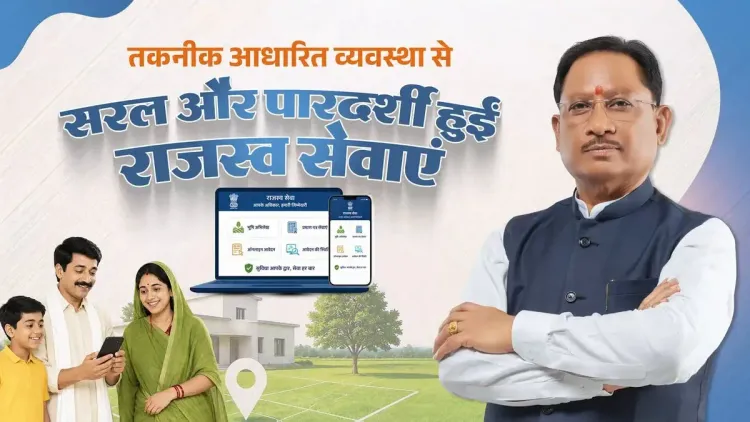
In his post, CM Sai wrote that his government is 'निरंतर कार्य कर रही है' ('continuously working') to reform revenue services for the common person. He specifically named auto-mutation (स्वतः नामांतरण) — the automatic updating of land ownership records — and auto-diversion (स्वतः भूमि उपयोग परिवर्तन) — the automatic conversion of land-use classification — as systems that have made land-related processes 'simpler, faster, and more reliable than before.' He concluded that Chhattisgarh is setting a new example of people-centric administration through technology and good governance.
Policy Backdrop
The push for digitising land records in India dates to the National Land Records Modernisation Programme launched in 2008, which aimed to computerise revenue records, reduce disputes, and improve transparency across states. This was later subsumed into the broader Digital India programme launched in 2015, which incentivised states to move public services online and reduce citizen dependence on physical bureaucratic channels.
Across India, automated mutation and land-use change systems have been adopted by multiple states to cut processing times and curtail the discretionary powers of local revenue officials — a long-standing source of delay and corruption complaints. Chhattisgarh's current measures under the BJP government that took office in December 2023 continue this national pattern of technology-enabled revenue administration.
Stakeholders and Impact
The primary beneficiaries of these reforms are landowners and farmers across Chhattisgarh, who historically faced lengthy waits and multiple visits to revenue offices for routine processes such as transferring land ownership after inheritance or sale, or changing how a parcel of land is classified for use. Automated systems reduce the need for intermediaries and limit opportunities for rent-seeking at the local administration level.
For the state government, the digital push also creates a more auditable record of land transactions, which can help reduce litigation and boundary disputes — a persistent challenge in rural Chhattisgarh, where a significant share of the population depends on agriculture and forest land.
What's Next
Observers will watch whether Chhattisgarh publishes performance dashboards or audit data to substantiate gains from these digital tools — a step that would allow independent assessment of processing times and citizen uptake. Potential integration with central land-record platforms could further streamline cross-departmental verification. Budget allocations in upcoming state finance cycles will signal how deeply the government intends to invest in expanding this automation across all revenue subdivisions.
Point of View
Associating the BJP's Chhattisgarh administration with technology-driven efficiency ahead of any future electoral cycle. By naming specific technical systems — auto-mutation and auto-diversion — rather than speaking in generalities, the communication signals an intent to be held to measurable outcomes, which raises the political stakes if implementation lags. The framing sits squarely within the national BJP narrative of 'good governance' through digital public infrastructure, mirroring messaging used in other BJP-governed states. Whether the state follows through with transparent performance data will determine if this remains a messaging moment or becomes a verifiable policy milestone.
NationPress
10 Oct 2026
Frequently Asked Questions
What is auto-mutation of land records in Chhattisgarh?
Auto-mutation, or swatah namaantaran , is a digital system that automatically updates land ownership records in government databases when a transfer — such as inheritance or sale — occurs, removing the need for citizens to manually apply and follow up at revenue offices.
What is auto-diversion of land use in Chhattisgarh?
Auto-diversion, or swatah bhoomi upayog parivartan , automatically reclassifies the official land-use category of a parcel — for example from agricultural to residential — through a digital process, reducing paperwork and discretionary delays.
What has CM Vishnu Deo Sai said about land record reforms?
On 11 July 2026 , CM Sai posted on X that his government is continuously working to make revenue services simpler, transparent, and time-bound, citing auto-mutation and auto-diversion as key achievements in that direction.
How does Chhattisgarh's land digitisation fit into national policy?
It builds on the National Land Records Modernisation Programme launched in 2008 and the Digital India programme from 2015 , both of which pushed states to computerise land records and move revenue services online.
Who benefits from auto-mutation and auto-diversion in Chhattisgarh?
Primarily landowners and farmers across the state, who previously had to visit revenue offices multiple times for routine processes; the systems also help reduce corruption and disputes by creating auditable digital records.