CM Sai Highlights 99.95% Auto-Mutation in Chhattisgarh Land Reforms
Synopsis
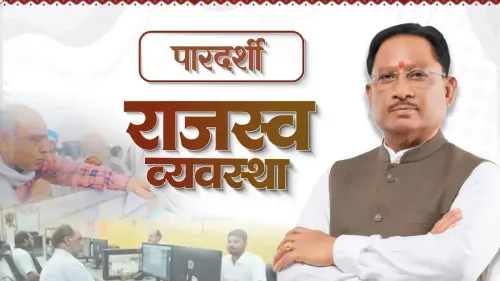
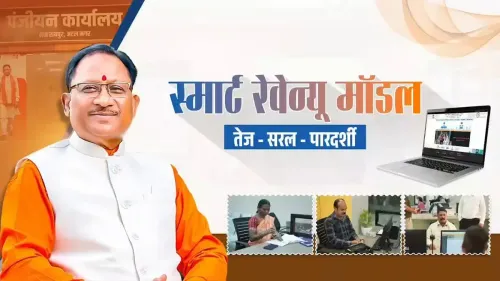
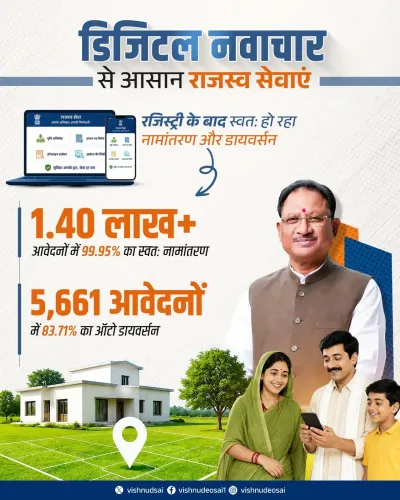
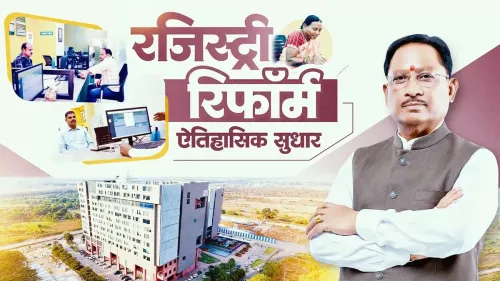
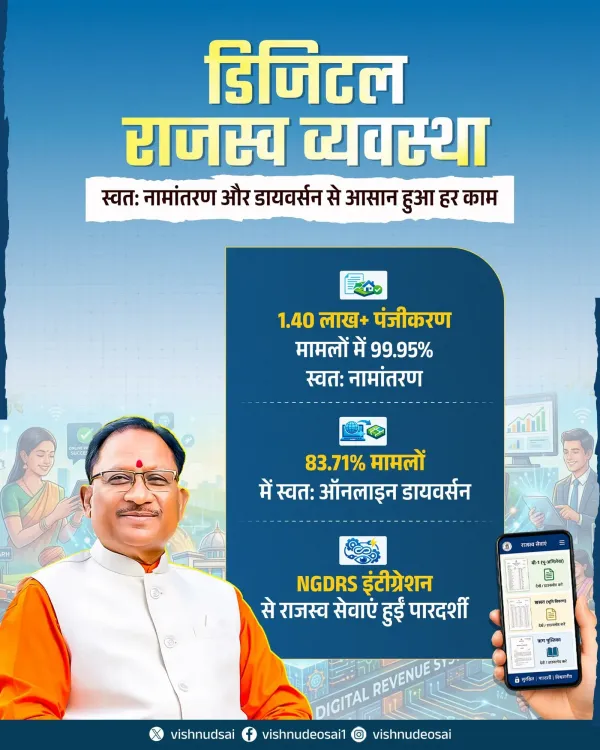
Chhattisgarh Chief Minister Vishnu Deo Sai on 9 July 2026 announced that the state has achieved 99.95% automatic land mutation post-registration and 83.71% automatic online land diversion, positioning the reforms as a major step in simplifying revenue services for landowners and farmers.
Key Takeaways
CM Vishnu Deo Sai announced on 9 July 2026 that Chhattisgarh has achieved 99.95% automatic mutation immediately after property registration.
The state has also reached 83.71% automatic online land diversion , reducing the need for physical visits to revenue offices.
The reforms are part of a long-running digitisation drive under the Bhuiyan project and the Union government's Digital India Land Records Modernization Programme .
Key beneficiaries include farmers, landowners , and small entrepreneurs who previously faced delays and paperwork in mutation and land-use conversion.
Analysts will monitor whether the automation leads to a reduction in land dispute litigation in Chhattisgarh's district courts.
Chhattisgarh Chief Minister Vishnu Deo Sai on Thursday, 9 July 2026, announced that the state has achieved 99.95 per cent automatic mutation following property registration and 83.71 per cent automatic online land diversion, citing the milestones as evidence of the state government's push to simplify and digitise revenue services for citizens.
Context
Posting in Hindi on X, CM Sai wrote: 'जनता की सुविधा, सुशासन की प्राथमिकता' ('Public convenience, the priority of good governance'), adding that revenue services were being made 'continuously simpler, faster and more transparent.' He specifically noted that mutation — the transfer of land ownership in official records — now takes place automatically and immediately after registration, and that the land diversion process has become 'easier than before.'
The post highlighted that citizens now benefit from 'less paperwork, less waiting, and fast, convenient services from home,' framing the reforms as a direct reduction in bureaucratic friction for ordinary landowners and farmers.
Policy Backdrop
Chhattisgarh's land record digitisation traces back to the Bhuiyan project, launched around 2008, which computerised cadastral maps and enabled online access to revenue records across the state. The project was aligned with the Union government's Digital India Land Records Modernization Programme (DILRMP), a centrally sponsored scheme that has encouraged states to link e-registration with automatic mutation to reduce manual intervention and title disputes.
Several Indian states began integrating e-registration with auto-mutation between 2015 and 2020 under the DILRMP framework. Chhattisgarh's current figures, as cited by CM Sai, place the state among the higher performers in this category, continuing a reform arc already visible in states such as Madhya Pradesh, Maharashtra, and Karnataka.
Land revenue administration carries particular significance in Chhattisgarh, a central Indian state with a large tribal and agrarian population where delays in mutation or land-use conversion have historically led to disputes, litigation, and barriers to credit access for small landowners.
Stakeholders and Impact
The primary beneficiaries of automatic mutation are landowners and farmers who previously had to make multiple visits to revenue offices, submit physical documents, and track manual processing — a process that could stretch over weeks or months. With auto-mutation triggered at the point of registration, the ownership record is updated in near real time, reducing scope for middlemen and unauthorised alterations.
The parallel improvement in online land diversion — the process of converting agricultural land to non-agricultural use — at 83.71 per cent automation is significant for small entrepreneurs, housing developers, and rural households seeking to build on or repurpose agricultural plots. Faster diversion approvals reduce delays in construction and investment decisions at the district level.
What's Next
Policy observers will watch whether the efficiency gains translate into a measurable reduction in land litigation pendency in Chhattisgarh's district courts, where revenue disputes have historically formed a significant share of the caseload. Further integration of revenue services with identity platforms such as Aadhaar or the Unified Land Parcel portal could deepen the reform's reach, particularly for tribal landowners in remote areas of the state.
The government's emphasis on 'good governance' metrics tied to specific percentages signals that the administration intends to use quantified service-delivery benchmarks as a political and administrative accountability tool in the run-up to future electoral cycles.
Point of View
If sustained, would place Chhattisgarh at the frontier of land-record reform among Indian states, lending credibility to the BJP's 'double engine government' narrative. The simultaneous push on land diversion automation also addresses a longstanding bottleneck for rural investment and housing, with implications for the state's ease-of-doing-business rankings. The framing of revenue reform as a public-convenience priority rather than a technical upgrade reflects a broader shift in how Indian state governments are packaging e-governance as a voter-facing outcome.
NationPress
8 Oct 2026
Frequently Asked Questions
What is automatic mutation after registration in Chhattisgarh?
Automatic mutation means that when a property is registered in Chhattisgarh, the ownership change is reflected in official land records immediately and automatically, without the buyer needing to file a separate mutation application or visit a revenue office.
What does the 99.95% auto-mutation figure mean?
It means that out of all property registrations processed in Chhattisgarh, 99.95% have triggered an automatic update in land ownership records, leaving only a tiny fraction requiring manual processing.
What is land diversion and why does it matter?
Land diversion is the legal process of converting agricultural land to non-agricultural use such as residential, commercial or industrial purposes. Automating 83.71% of this process online reduces delays for farmers, builders and entrepreneurs who need approvals to develop or repurpose land.
What is the Bhuiyan project in Chhattisgarh?
Bhuiyan is Chhattisgarh's land records computerisation project, launched around 2008, which digitised cadastral maps and revenue records to enable online access and reduce dependence on manual, paper-based processes at tehsil offices.
How does Chhattisgarh's land reform compare with other Indian states?
Several states including Madhya Pradesh, Maharashtra and Karnataka have pursued similar auto-mutation reforms under the Union government's Digital India Land Records Modernization Programme. Chhattisgarh's reported 99.95% auto-mutation rate, if verified, would place it among the leading performers nationally.