CM Sai Orders Zero-Tolerance on Revenue Corruption in Chhattisgarh
Synopsis
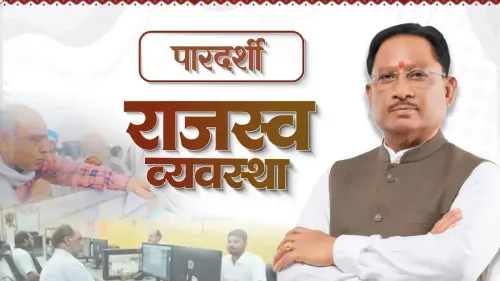
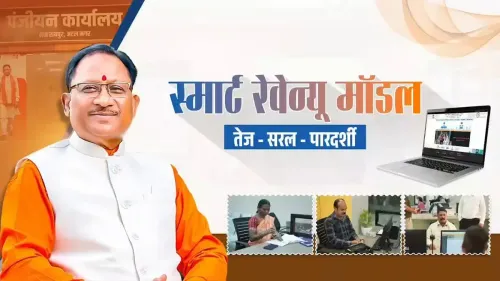
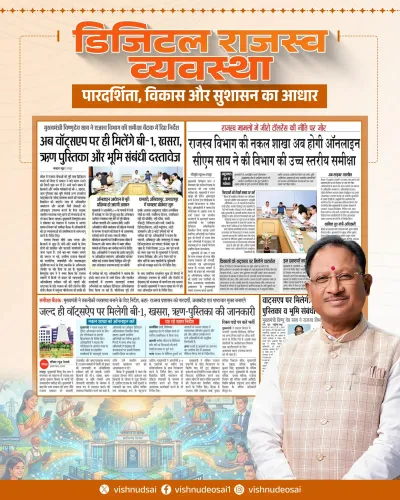
Chief Minister Vishnu Deo Sai has directed Chhattisgarh's revenue administration to adopt a zero-tolerance policy on corruption and negligence, ordering time-bound resolution of pending cases and faster rollout of digital tools including the VASUNDHARA project, cyber tehsils, e-courts, and auto-mutation systems.
Key Takeaways
CM Vishnu Deo Sai declared a zero-tolerance policy on corruption and negligence in Chhattisgarh's revenue administration on 7 July 2026 .
He directed officials to accelerate the VASUNDHARA project , the state's flagship land-records modernisation initiative.
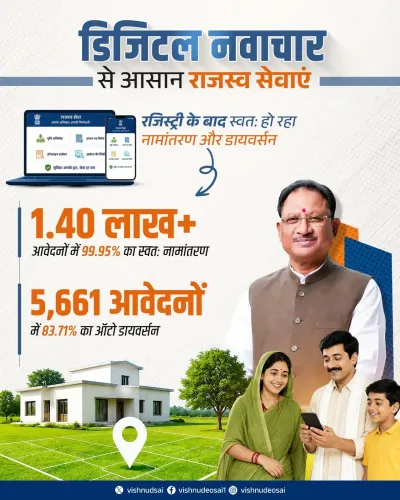
Key technology reforms ordered include digital land records , cyber tehsils , e-courts , and auto-mutation of ownership entries.
All pending revenue cases are to be resolved in a time-bound manner.
The directives build on the national Digital India Land Records Modernisation Programme launched in 2008 .
Primary beneficiaries are landowners who currently face delays and unofficial payments for routine land transactions.
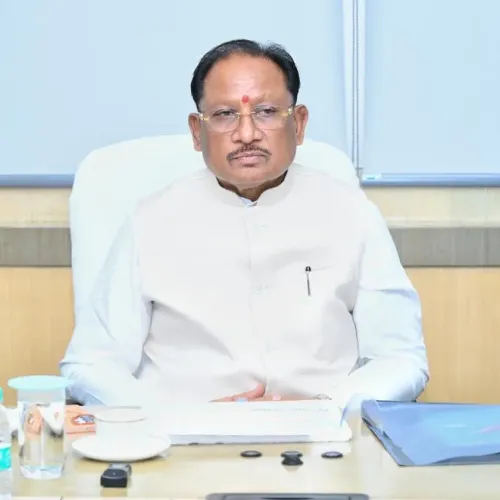
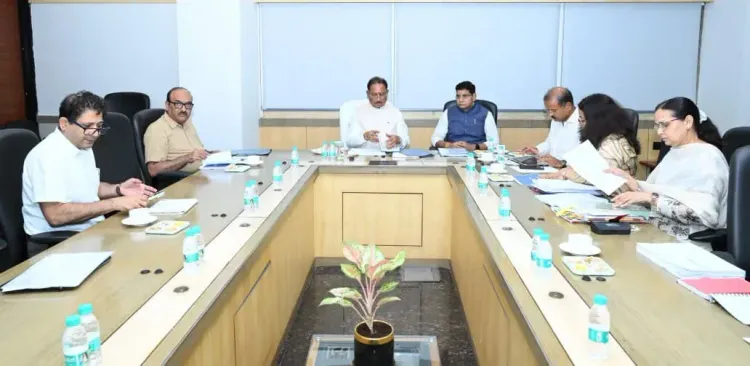
Chief Minister Vishnu Deo Sai on 7 July 2026 directed revenue officials across Chhattisgarh to make the state's revenue administration transparent, accountable, and free of corruption, declaring that negligence or irregularity of any kind would not be tolerated. The Chief Minister's Office of Chhattisgarh shared the directives on X, underscoring the government's zero-tolerance stance on lapses in land and revenue governance.
Context
Posting under the hashtags #राजस्व #Revenue #ZeroTolerance #GoodGovernance, the Chief Minister's Office quoted CM Sai as stating that 'the state government's clear policy is to make revenue administration transparent, accountable, and corruption-free.' He added that 'no negligence or irregularity of any kind in revenue matters will be accepted.' The statement signals a formal policy posture rather than a one-off advisory to officials.
Revenue administration in India encompasses land records, mutation of ownership, dispute resolution, and the functioning of tehsils — the basic unit of land governance. Delays and corruption at this level have historically been among the most common grievances of ordinary citizens, particularly farmers and small landowners.
Policy Backdrop
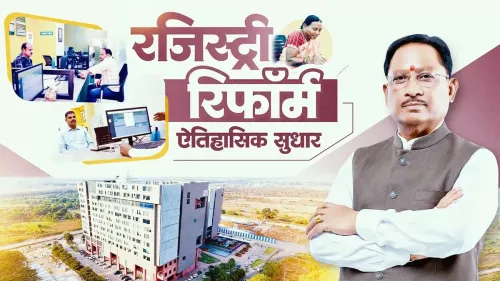
CM Sai, who has led the BJP government in Chhattisgarh since December 2023, directed officials to accelerate several technology-driven reforms. These include the VASUNDHARA project — the state's flagship initiative for modernisation of land records and revenue services — along with digital land records, cyber tehsils, e-courts, and auto-mutation systems. He also called for time-bound resolution of all pending revenue cases.
These initiatives align with the Digital India Land Records Modernisation Programme, a national scheme launched in 2008 to computerise land records and reduce title disputes. Chhattisgarh's push under the current administration continues and deepens this national trend, with cyber tehsils and auto-mutation representing newer layers of digitisation that aim to remove human intermediaries — and the corruption risk they carry — from routine land transactions.
Stakeholders and Impact
The directives directly affect landowners and revenue officials across Chhattisgarh's districts. For citizens, faster auto-mutation means ownership changes after inheritance or sale are recorded without requiring repeated visits to tehsil offices or unofficial payments. E-courts for revenue disputes promise quicker adjudication of cases that can otherwise drag on for years, affecting property rights and agricultural credit access.
For revenue officials, the zero-tolerance framing sets an explicit accountability standard. The instruction to resolve pending cases in a time-bound manner suggests the administration may introduce monitoring mechanisms or deadlines for district-level compliance — details that are expected to emerge in subsequent official orders.
What's Next
Observers will watch for district-level rollout metrics on cyber tehsils and auto-mutation coverage, as well as official timelines for clearing the backlog of pending revenue cases. The pace at which the VASUNDHARA project expands its footprint across Chhattisgarh's 33 districts will be a key indicator of whether these directives translate into measurable administrative change. If the state publishes case-clearance data or tehsil digitisation benchmarks, they will provide an early test of the zero-tolerance pledge.
Point of View
The administration is staking reputational ground ahead of district-level performance reviews. Chhattisgarh's push on cyber tehsils and auto-mutation fits a broader BJP governance narrative of using technology to bypass corrupt intermediaries, a message with clear electoral resonance in a state where land disputes are a daily reality for rural voters. The real test will be whether the VASUNDHARA project's rollout and case-clearance timelines are made public and held to, or whether the announcement remains aspirational. If measurable benchmarks follow, this could mark a genuine administrative inflection point; if they do not, the statement risks being read as routine signalling.
NationPress
6 Oct 2026
Frequently Asked Questions
What is the VASUNDHARA project in Chhattisgarh?
VASUNDHARA is a Chhattisgarh state initiative aimed at modernising land records and revenue services through digitisation. CM Sai has directed officials to accelerate its implementation as part of a broader push for transparent and corruption-free revenue administration.
What is a cyber tehsil in India?
A cyber tehsil is a virtual version of the traditional tehsil office, allowing citizens to access land-record services and file revenue applications online without visiting a physical office. Chhattisgarh is expanding cyber tehsils to reduce human intermediaries and curb corruption.
What is auto-mutation of land records?
Auto-mutation is an automated process that updates land ownership records in government databases after a sale, inheritance, or transfer, without requiring a manual application at a tehsil office. It reduces delays and removes opportunities for unofficial payments.
What did CM Vishnu Deo Sai say about revenue corruption?
CM Sai stated that the state government's clear policy is to make revenue administration transparent, accountable, and corruption-free, and that no negligence or irregularity in revenue matters will be accepted. He issued these directives on 7 July 2026.
What is the Digital India Land Records Modernisation Programme?
It is a national scheme launched in 2008 to computerise land records across Indian states, reduce land disputes, and improve transparency in revenue administration. Chhattisgarh's current reforms, including VASUNDHARA and cyber tehsils, build on this national framework.