CM Sai Reaffirms Zero Tolerance on Corruption via Sushasan Tihar
Synopsis
Chhattisgarh Chief Minister Vishnu Deo Sai on 22 May 2026 reaffirmed zero tolerance on corruption, citing Sushasan Tihar as the platform for direct citizen engagement and swift grievance resolution to ensure welfare benefits reach every last beneficiary without discrimination.
Key Takeaways
CM Vishnu Deo Sai publicly reaffirmed Chhattisgarh 's zero-tolerance anti-corruption policy on 22 May 2026 .
Sushasan Tihar is the state government's flagship initiative for direct public dialogue and rapid complaint resolution.
The BJP government in Chhattisgarh has pursued these policies since coming to power in December 2023 .
The stated goal is to deliver welfare scheme benefits to the last beneficiary without discrimination or corruption.
The initiative follows a broader BJP pattern of visible anti-corruption and grievance-redressal programmes in states it governs.
Progress on complaints registered and resolved under the 2026 edition of Sushasan Tihar will be a key metric to watch.
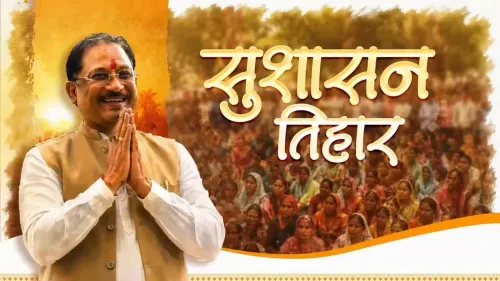
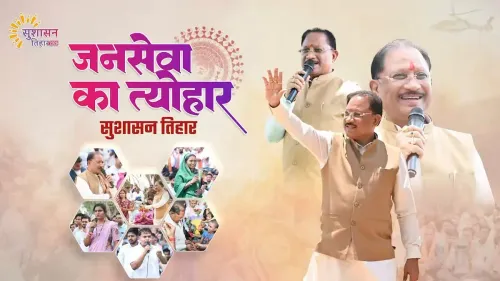
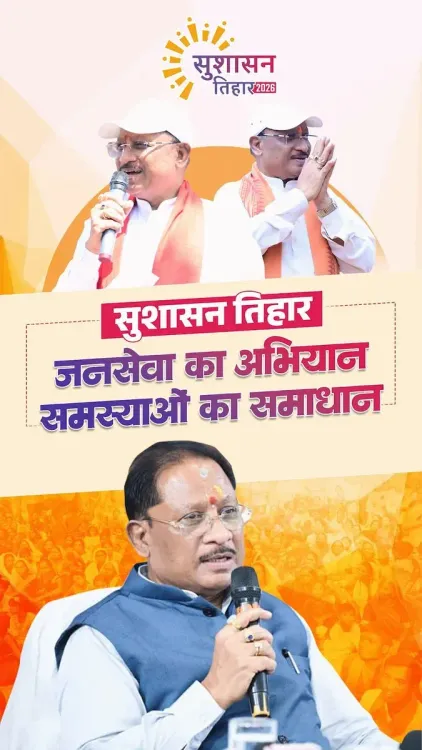
Chhattisgarh Chief Minister Vishnu Deo Sai on Friday, 22 May 2026 reaffirmed his government's zero-tolerance stance on corruption, highlighting the ongoing Sushasan Tihar initiative as the primary vehicle for direct citizen engagement and rapid grievance redressal across the state.
Context
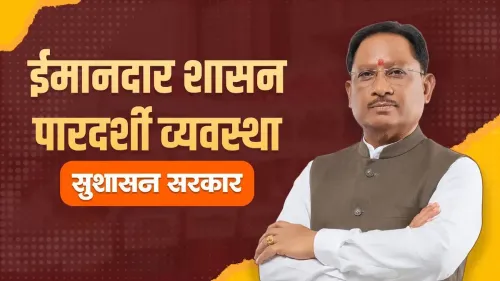
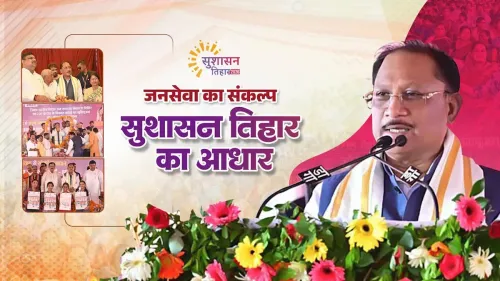
In a post on X, CM Sai wrote: 'जनसेवा का संकल्प, भ्रष्टाचार पर प्रहार' ['A resolve for public service, a strike against corruption'], framing transparent administration as the foundational principle of his government. He stated that the BJP-led administration in Chhattisgarh has adopted a policy of zero tolerance against corruption and that Sushasan Tihar is being used to hold direct conversations with citizens — described as 'देवतुल्य जनता' ['godlike people'] — to ensure swift action on their complaints and problems.
The Chief Minister added that the government's clear resolve is to ensure that the benefits of state schemes reach the last person in line 'without any discrimination and without any corruption,' backed by a strengthened administrative machinery.
Policy Backdrop
The BJP government in Chhattisgarh came to power in December 2023 after winning the state assembly elections, immediately announcing zero-tolerance corruption policies and citizen grievance mechanisms. The administration has positioned these measures as a deliberate contrast to governance under the previous regime, with welfare delivery leakages cited as a legacy problem to be addressed.
Sushasan Tihar — translating broadly to 'Good Governance Festival' — is a state-level initiative designed to bring officials into direct contact with the public, collect complaints, and track their resolution. The programme aligns with a broader pattern seen in BJP-governed states, where visible anti-corruption campaigns and technology-enabled grievance systems have been deployed to strengthen accountability since 2014 at the national level.
Stakeholders and Impact
The primary beneficiaries of the initiative are ordinary citizens and welfare-scheme recipients across Chhattisgarh, particularly those in rural and remote areas who have historically faced barriers in accessing government benefits. State officials are also directly affected, as the programme creates a visible accountability mechanism for administrative performance.
For the ruling BJP, the Sushasan Tihar platform serves as both a governance tool and a political signal — demonstrating responsiveness and reinforcing the party's 'clean government' narrative ahead of future electoral cycles in the state.
What's Next
Attention will now turn to verifiable progress reports from the 2026 edition of Sushasan Tihar, including the number of complaints registered, resolved, and pending. Possible legislative or budgetary follow-ups in the Chhattisgarh state assembly — as well as any expansion of the model to additional districts — will be watched as indicators of whether the initiative translates into structural administrative reform or remains primarily a public-outreach exercise.
Point of View
Timed around the 2026 edition of Sushasan Tihar. By framing the initiative as a direct channel between the administration and citizens, the government is attempting to institutionalise accountability rather than treat it as a one-off campaign. This fits into a wider arc of BJP-governed states using structured grievance-redressal festivals as both administrative tools and political messaging vehicles. The real test will be whether complaint-resolution data from Sushasan Tihar 2026 shows measurable improvement in welfare delivery — numbers the opposition will scrutinise closely.
NationPress
7 Oct 2026
Frequently Asked Questions
What is Sushasan Tihar in Chhattisgarh?
Sushasan Tihar, or 'Good Governance Festival,' is a Chhattisgarh state government initiative that brings officials into direct contact with citizens to collect complaints and ensure swift resolution, promoting transparent administration.
What is Vishnu Deo Sai's anti-corruption policy?
Chief Minister Vishnu Deo Sai has adopted a zero-tolerance policy against corruption, using platforms like Sushasan Tihar to ensure welfare scheme benefits reach every beneficiary without discrimination or leakage.
When did the BJP government come to power in Chhattisgarh?
The BJP-led government in Chhattisgarh came to power in December 2023 after winning the state assembly elections, with anti-corruption and good governance as central commitments.
How does Sushasan Tihar 2026 work?
Sushasan Tihar 2026 facilitates direct dialogue between state officials and the public, allowing citizens to register grievances that are then tracked for rapid administrative action — though specific operational details for the 2026 edition are yet to be officially disclosed.
What does zero tolerance for corruption mean in Chhattisgarh's governance?
Under CM Sai's government, zero tolerance means a stated policy of no exceptions for corrupt practices in welfare delivery or administration, backed by strengthened oversight mechanisms and direct citizen feedback channels like Sushasan Tihar.