CM Sai Bets on Startups to Make Chhattisgarh a Job Creator
Synopsis
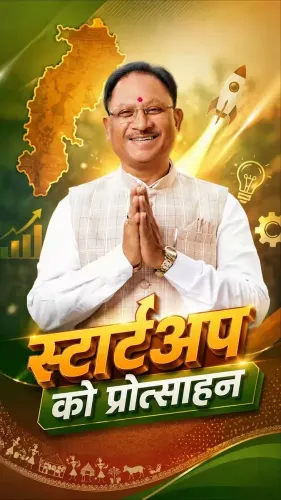
Chhattisgarh Chief Minister Vishnu Deo Sai declared on 5 October 2026 that the state aims to become a leading national startup hub, shifting its youth identity from job-seekers to job-creators through a structured innovation ecosystem.
Key Takeaways
CM Vishnu Deo Sai announced on 5 October 2026 that Chhattisgarh is building a robust startup ecosystem for its youth.
The stated goal is to make Chhattisgarh one of India's leading startup hubs.
The ecosystem will provide youth with resources, mentorship, and platforms to convert innovations into successful enterprises.
The vision reframes the state's youth from job-seekers to job-creators and employment-generators.
The initiative signals a deliberate push to diversify Chhattisgarh's economy beyond its traditional dependence on natural resources.
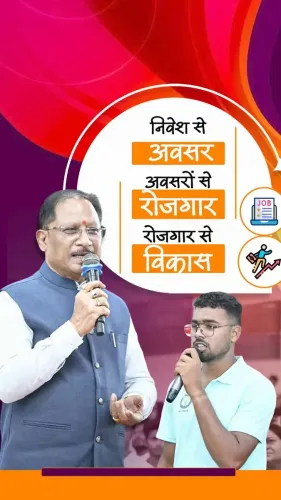
Chhattisgarh's young people should not merely be job-seekers — they should be job-creators. That is the compact Chief Minister Vishnu Deo Sai laid out on Monday, 5 October 2026, in a sharply worded vision statement that positions the state as a rising force in India's startup landscape.
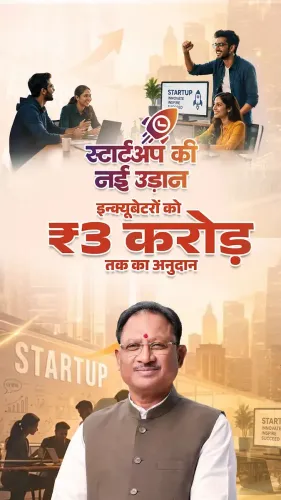
In his post, CM Sai declared that Chhattisgarh is giving youth 'the opportunity for their ideas, encouragement for innovation, and a new flight to entrepreneurship.' The goal, he wrote, is to develop the state into 'desh ke agrani startup hub' — one of the country's leading startup hubs — by building an ecosystem where young innovators get the resources, mentorship, and platforms needed to convert ideas into viable enterprises.
From Job-Seekers to Job-Generators
The framing is deliberate and politically charged. Rather than promising more government employment, CM Sai is repositioning Chhattisgarh's youth as entrepreneurs whose innovations generate fresh opportunities for others. 'We want the youth of Chhattisgarh,' he wrote, 'to not just seek employment, but to create new opportunities and jobs through their innovation and enterprise.' That is a significant rhetorical pivot — a mineral-rich state long associated with Naxal unrest and welfare transfers reaching for a startup identity.
The Ecosystem Under Construction
The post signals that a structured support architecture is being assembled: mentorship networks, funding channels, and incubation resources aimed at first-generation founders. While specifics of individual schemes were not detailed in the announcement, the thrust is toward an integrated 'startup ecosystem' — not isolated competitions or one-off grants, but a self-sustaining pipeline from idea to enterprise. States like Telangana and Karnataka have used similar ecosystem-first language to anchor billion-dollar startup clusters, and Chhattisgarh is clearly watching that playbook.
For a state that has historically competed on natural resources rather than knowledge capital, the ambition carries real weight. If the ecosystem takes root, it could diversify an economy long dependent on steel, coal, and paddy — and give an increasingly restless young workforce a reason to stay and build rather than migrate to metros.
Point of View
Positioning the state as an innovation destination serves a dual purpose of economic signalling and electoral messaging to a young demographic. Whether the ecosystem rhetoric translates into measurable venture activity will depend on follow-through on mentorship infrastructure and early-stage capital — the gaps where most state-led startup campaigns stall.
NationPress
5 Oct 2026
Frequently Asked Questions
What is Chhattisgarh Chief Minister Vishnu Deo Sai's startup plan?
CM Sai has announced plans to build a strong startup ecosystem in Chhattisgarh that provides youth with resources, mentorship, and opportunities to turn innovations into successful businesses, with the goal of making the state a leading national startup hub.
Why does Chhattisgarh want to become a startup hub?
The state aims to diversify its economy beyond natural resources like coal and steel, and to give its young population a pathway to create employment rather than solely seek it.
What did CM Sai say about Chhattisgarh youth and employment?
CM Sai said the goal is for Chhattisgarh's youth to not merely be job-seekers but to generate new opportunities and jobs through their own innovation and enterprise.
When did CM Vishnu Deo Sai announce the startup ecosystem push?
The announcement was made on 5 October 2026 via a post on the social media platform X.
Which Indian states does Chhattisgarh compare with in startup ambition?
States like Telangana and Karnataka have used ecosystem-first approaches to build significant startup clusters; Chhattisgarh's current push appears to draw from that same playbook.