CM Sai launches Chhattisgarh Sports Conclave 2026 in Raipur
Synopsis
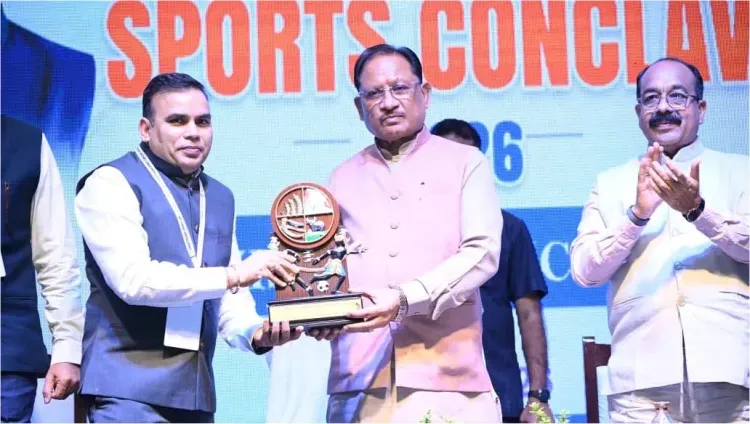
Chief Minister Vishnu Deo Sai attended the Chhattisgarh Sports Conclave-2026 in Raipur on 28 July, calling sports a pillar of state development and committing to new infrastructure, talent promotion, and a future sports policy under the 'Vision for Victory' theme.
Key Takeaways
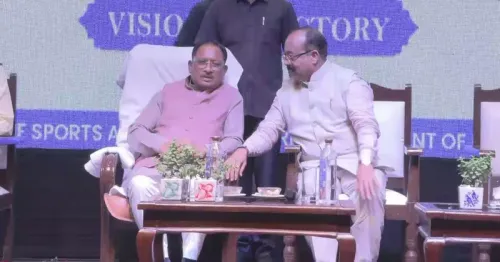
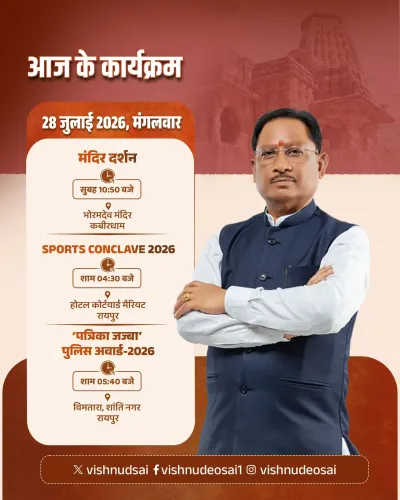
Chhattisgarh Sports Conclave-2026 was held in Raipur on 28 July 2026 , attended by Chief Minister Vishnu Deo Sai .
The conclave's theme was 'Vision for Victory' , focusing on sports as a core development pillar alongside agriculture, industry, and education.
Three agenda pillars: sports infrastructure upgrades, talent identification and promotion, and drafting a new state sports policy .
Sai pledged that every Chhattisgarh athlete would receive opportunities matching their talent and represent the state on the world stage.
The conclave builds on the Khelo India programme (launched 2017) , which provides central funding for state-level sports development.
The road to a developed Chhattisgarh, Chief Minister Vishnu Deo Sai declared on Tuesday, 28 July 2026, runs not just through farms, factories, and classrooms — it runs through playing fields. Speaking at the Chhattisgarh Sports Conclave-2026 in Raipur, Sai framed sports as a pillar of state development, not an afterthought.
Addressing the conclave under the theme 'Vision for Victory' (विजन फॉर विक्ट्री), the Chief Minister said the platform would chart a new direction for sports infrastructure, talent promotion, and future sports policy in the state. His stated resolve: that every athlete in Chhattisgarh receives opportunities commensurate with their talent and carries the state's name onto the world stage.
Why Raipur is hosting this conversation now
Chhattisgarh has long sat in the shadow of larger states when it comes to organised sporting infrastructure. Since the Khelo India programme's launch in 2017, central funding has been available to states willing to build grassroots pipelines — but translating that into international-level athletes requires deliberate state-level policy architecture. The 2026 conclave is Chhattisgarh's structured attempt to do exactly that.
The state has followed a broader national pattern of integrating sports into development agendas alongside education and industry. Conclaves and policy exercises of this kind are designed to build non-cricket sporting capacity — a gap that India's talent pipeline has historically struggled to close at the international level.
What 'Vision for Victory' puts on the table
The conclave's agenda spans three pillars: upgrading sports infrastructure, identifying and nurturing emerging talent, and drafting a forward-looking state sports policy. Sai's framing signals that the outcomes are meant to be structural, not ceremonial — a policy document, not just a declaration.
The emphasis on every player receiving 'opportunities commensurate with their talent' points directly at equity gaps in access to coaching, facilities, and competitive exposure that have historically disadvantaged athletes from smaller states and rural districts.
The real test will come in the months ahead: whether the conclave's recommendations translate into budget allocations, new training academies, and measurable state representation in national competitions. Chhattisgarh's athletes are watching — and so is the national sporting ecosystem.
Point of View
Vishnu Deo Sai is making a political as well as a policy statement — one that aligns Chhattisgarh with the BJP's national 'Khelo India' narrative ahead of a busy electoral and sporting calendar. The 'Vision for Victory' framing is deliberate: it positions the state government as proactive on youth welfare, a constituency that has grown in electoral salience. The harder question is whether the conclave produces a costed, time-bound policy document or remains aspirational. States that have converted similar conclaves into funded infrastructure programmes — Odisha in hockey, Haryana in wrestling — have seen measurable international returns; Chhattisgarh's next budget cycle will reveal how serious this commitment is.
NationPress
27 Oct 2026
Frequently Asked Questions
What is the Chhattisgarh Sports Conclave 2026?
The Chhattisgarh Sports Conclave-2026 is a state-level policy platform held in Raipur on 28 July 2026, focused on building sports infrastructure, identifying talent, and drafting a future sports policy for the state under the theme 'Vision for Victory'.
What did CM Vishnu Deo Sai say at the sports conclave?
CM Sai said the path to a developed Chhattisgarh runs through playing fields alongside farms, factories, and classrooms, and pledged that every athlete in the state would receive opportunities matching their talent and represent Chhattisgarh on the world stage.
What is the Khelo India programme and how does it relate to Chhattisgarh?
Khelo India is a central government programme launched in 2017 that funds grassroots sports development across Indian states, including Chhattisgarh, providing frameworks for talent identification and infrastructure building.
What are the main goals of the Chhattisgarh Sports Conclave 2026?
The conclave has three main goals: upgrading sports infrastructure across the state, promoting and nurturing emerging athletic talent, and formulating a new forward-looking state sports policy.
Who is Vishnu Deo Sai?
Vishnu Deo Sai is the Chief Minister of Chhattisgarh and a BJP leader who took office in December 2023 following the party's victory in the state assembly elections.