CM Sai Congratulates 3 BJP Winners in MP Rajya Sabha Polls
Synopsis
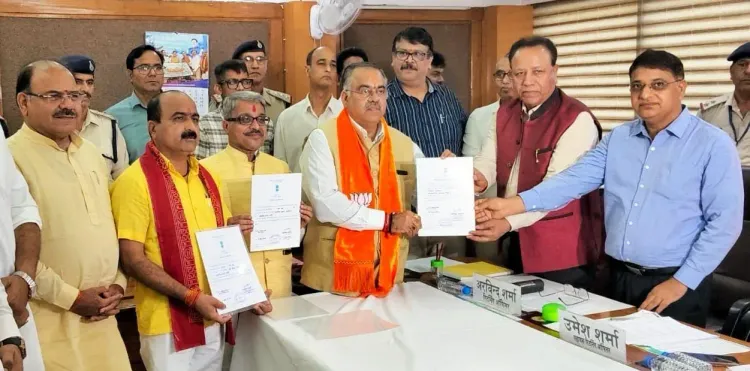
Chhattisgarh Chief Minister Vishnu Deo Sai congratulated BJP leaders Tarun Chugh, Rajneesh Agarwal, and Mahesh Kevat on June 11, 2026, after their unopposed election to the Rajya Sabha from Madhya Pradesh, expressing confidence in their contribution to national development.
Key Takeaways
Three BJP candidates — Tarun Chugh , Rajneesh Agarwal , and Mahesh Kevat — were elected unopposed to the Rajya Sabha from Madhya Pradesh .
Chhattisgarh CM Vishnu Deo Sai publicly congratulated all three on June 11, 2026 via a post on X.
Unopposed results reflect the BJP's majority in the Madhya Pradesh state legislative assembly, which serves as the electorate for Rajya Sabha polls.
Biennial Rajya Sabha elections are conducted under Article 83 of the Constitution , replacing one-third of members every two years.
The new members are expected to join Parliament for the upcoming Monsoon Session and raise issues of public and national interest.
The congratulatory message underscores cross-state BJP coordination between Chhattisgarh and Madhya Pradesh units.
Chhattisgarh Chief Minister Vishnu Deo Sai on Thursday, June 11, 2026, extended congratulations to three Bharatiya Janata Party (BJP) candidates — Tarun Chugh, Rajneesh Agarwal, and Mahesh Kevat — on their unopposed election to the Rajya Sabha from Madhya Pradesh.
In a post on X, CM Sai wrote: 'मध्य प्रदेश से निर्विरोध राज्यसभा सदस्य निर्वाचित होने पर भाजपा प्रत्याशी श्री तरुण चुघ जी, श्री रजनीश अग्रवाल जी एवं श्री महेश केवट जी को हार्दिक बधाई एवं शुभकामनाएं।' ['Heartfelt congratulations and best wishes to BJP candidates Shri Tarun Chugh ji, Shri Rajneesh Agarwal ji and Shri Mahesh Kevat ji on being elected unopposed to the Rajya Sabha from Madhya Pradesh.'] He added that he was confident the three would 'effectively raise issues of public interest and national interest in the Upper House of Parliament and make an important contribution to the development of the country.'
Context
The three BJP nominees were elected without contest from Madhya Pradesh, reflecting the party's commanding majority in the state legislative assembly. Unopposed Rajya Sabha victories occur when the ruling party holds enough seats to secure all available positions without opposition parties fielding viable candidates. The BJP has governed Madhya Pradesh continuously and holds a decisive majority in the assembly.
Policy Backdrop
Rajya Sabha elections are governed by Article 83 of the Constitution of India, with biennial polls replacing one-third of members every two years. Members of state legislative assemblies act as the electorate, voting through a system of proportional representation with a single transferable vote. The unopposed outcome in this cycle is consistent with a broader pattern seen across BJP-majority states during recent biennial rounds, where internal party discipline and numerical strength eliminate the need for a contest.
Tarun Chugh is a BJP national secretary with a history of organisational roles across the party's national structure. Rajneesh Agarwal and Mahesh Kevat are also BJP leaders from Madhya Pradesh entering the Upper House through this election cycle. Their induction adds to the BJP's strength in the Rajya Sabha, where the party and its allies have been steadily consolidating numbers over successive biennial cycles.
Stakeholders and Impact
The election directly affects the composition of the Rajya Sabha, India's Upper House, which has co-equal powers with the Lok Sabha on most legislation, including constitutional amendments. A stronger BJP bench in the Upper House has implications for the passage of key bills during the upcoming Monsoon Session of Parliament. For Madhya Pradesh, the new senators are expected to amplify state-specific concerns — infrastructure, agriculture, and tribal welfare — on the national legislative floor.
CM Sai's congratulatory message also signals active cross-state coordination within the BJP between the Chhattisgarh and Madhya Pradesh units, both Hindi-belt states where the party holds power. Such gestures reinforce solidarity within the party's organisational network ahead of future electoral cycles.
What's Next
The newly elected members are expected to take their seats in the Rajya Sabha and participate in the Monsoon Session of Parliament. Their committee assignments and legislative priorities will be watched as indicators of the issues Madhya Pradesh intends to push at the Centre. The next round of biennial Rajya Sabha elections from Madhya Pradesh is due in 2028.
Point of View
While incremental, fits into a longer arc of the party consolidating legislative strength in the Upper House — a chamber where it historically faced a numbers deficit. Tarun Chugh's national organisational profile in particular suggests the party is deploying experienced hands to strengthen its parliamentary machinery ahead of a busy legislative calendar.
NationPress
15 Sept 2026
Frequently Asked Questions
Who are the three BJP candidates elected to Rajya Sabha from Madhya Pradesh in 2026?
The three BJP candidates elected unopposed to the Rajya Sabha from Madhya Pradesh are Tarun Chugh, Rajneesh Agarwal, and Mahesh Kevat.
Why were the BJP candidates elected unopposed in Madhya Pradesh?
They were elected unopposed because the BJP holds a commanding majority in the Madhya Pradesh state legislative assembly, which is the electorate for Rajya Sabha elections, leaving opposition parties without enough votes to win a seat.
How are Rajya Sabha members elected in India?
Rajya Sabha members are elected by elected members of state legislative assemblies through a system of proportional representation with a single transferable vote, as governed by Article 83 of the Constitution of India.
What is Vishnu Deo Sai's connection to the Madhya Pradesh Rajya Sabha election?
Vishnu Deo Sai is the Chief Minister of Chhattisgarh and a senior BJP leader who publicly congratulated the three winning candidates, reflecting cross-state solidarity within the party.
When is the next Rajya Sabha election from Madhya Pradesh?
The next round of biennial Rajya Sabha elections from Madhya Pradesh is expected in 2028, as one-third of members retire every two years under the constitutional framework.