CM Sai Hails Chhattisgarh Climber After Everest Summit, Rescue
Synopsis
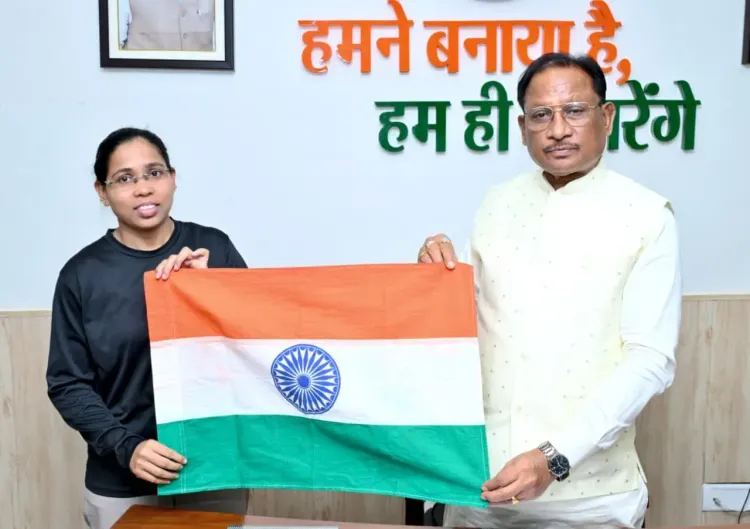
Chhattisgarh CM Vishnu Deo Sai confirmed that Amita Srivasa from Janjgir-Champa summited Mount Everest on 22 May 2026, but was airlifted to Norvic International Hospital in Kathmandu after developing severe frostbite and high-altitude complications during her descent. Officials have been directed to ensure all assistance.
Key Takeaways
Amita Srivasa from Janjgir-Champa, Chhattisgarh summited Mount Everest (8,848.86 m) on 22 May 2026 .
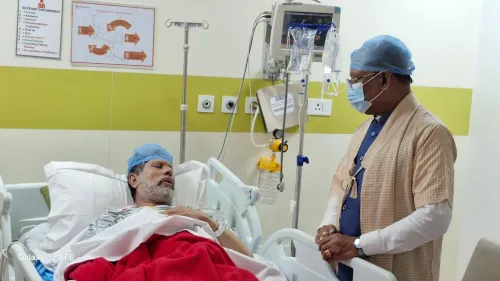
She was airlifted by helicopter and admitted to Norvic International Hospital, Kathmandu after her condition deteriorated during descent.
Doctors have diagnosed her with severe frostbite and high-altitude-related complications; conditions during descent included -40°C temperatures and oxygen deficiency.
CM Vishnu Deo Sai directed senior state officials to coordinate with relevant authorities to ensure necessary assistance.
The Chief Minister called her achievement an inspiration for 'thousands of young people' and said Chhattisgarh is proud of her.
Her summit adds to a growing pattern of mountaineers from non-Himalayan Indian states participating in high-altitude expeditions.
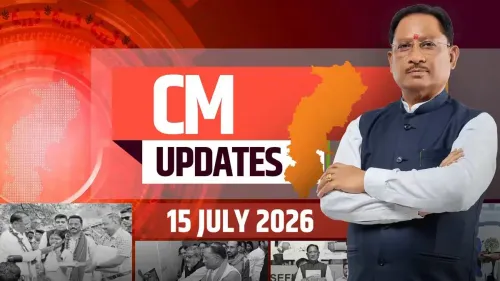
Chhattisgarh Chief Minister Vishnu Deo Sai on Sunday, 24 May 2026 acknowledged that Amita Srivasa, a mountaineer from Janjgir-Champa district, successfully summited Mount Everest (8,848.86 metres) on 22 May 2026, but was subsequently airlifted to a hospital in Kathmandu after her condition deteriorated during the descent. The Chief Minister confirmed that state authorities had been directed to coordinate immediate assistance and extended wishes for her full recovery.
Context
In his post, CM Sai wrote: 'जांजगीर-चांपा की होनहार पर्वतारोही अमिता श्रीवास ने विश्व की सबसे ऊंची चोटी माउंट एवरेस्ट को 22 मई 2026 को सफलतापूर्वक फतह कर छत्तीसगढ़ का नाम पूरे विश्व में गौरवान्वित किया है' ('The talented mountaineer Amita Srivasa from Janjgir-Champa successfully conquered Mount Everest on 22 May 2026, bringing glory to Chhattisgarh across the world'). He noted that after the summit, during her return to base camp, extreme altitude, temperatures of -40°C, and oxygen deficiency caused her health to deteriorate. She was rescued by helicopter and admitted to Norvic International Hospital, Kathmandu, where doctors have diagnosed her with severe frostbite and high-altitude-related complications.
CM Sai stated that upon receiving the information, senior officials were immediately directed to establish coordination and ensure all necessary assistance. He referred to her affectionately as 'Amita bitiya' ('daughter Amita'), expressing hope that she returns home fully recovered soon.
Policy Backdrop
Indian state governments have a long-standing practice of publicly recognising citizens who achieve milestones in adventure sports, using such occasions to inspire youth and project regional pride. Coordination between state administrations and Indian diplomatic channels for medical evacuations from Nepal has been a recurring feature of past Himalayan expeditions involving Indian climbers.
Bachendri Pal became the first Indian woman to summit Everest in 1984, opening the door to wider Indian participation in high-altitude mountaineering. Since then, climbers from states outside the traditional Himalayan belt — including central and peninsular India — have increasingly taken part in such expeditions, reflecting a broadening of the sport's reach across the country.
Chhattisgarh, formed in 2000 and home to more than 25 million people, has a significant tribal and rural population. State governments in recent years have invested in youth sports programmes as part of broader social development initiatives.
Stakeholders and Impact
Amita Srivasa's summit and her ongoing medical situation have drawn attention to the risks mountaineers face even after reaching the peak, particularly during the descent when fatigue, extreme cold, and reduced oxygen levels can be most dangerous. Her case underscores the importance of rapid-response rescue infrastructure near high-altitude zones.
For the youth of Chhattisgarh — and particularly for aspiring mountaineers from non-Himalayan states — her achievement represents a significant milestone. CM Sai said her 'courage and determination will become a source of inspiration for thousands of young people' and affirmed that 'Chhattisgarh is proud of you.'
What's Next
The immediate priority is Amita Srivasa's medical recovery at Norvic International Hospital in Kathmandu. State officials have been tasked with maintaining coordination, and further official statements on her condition are expected. Should she recover fully, the state government may consider formal recognition or policy measures in the area of adventure sports — a pattern seen in similar cases across Indian states.
Point of View
Referring to Amita as 'bitiya' (daughter), is a well-established political idiom in Indian public communication that builds emotional resonance with a broad audience. The episode also fits a wider national pattern in which state governments increasingly spotlight adventure-sports achievements as soft-power tools to project regional identity and energise youth. Should Amita Srivasa recover fully, the political incentive for formal state recognition — a felicitation, a sports scholarship, or a policy announcement — will be considerable.
NationPress
10 Oct 2026
Frequently Asked Questions
Who is Amita Srivasa and what did she achieve?
Amita Srivasa is a mountaineer from Janjgir-Champa district in Chhattisgarh who successfully summited Mount Everest, the world's highest peak at 8,848.86 metres, on 22 May 2026.
Why was Amita Srivasa airlifted to Kathmandu?
After summiting Everest, Amita Srivasa's health deteriorated during her descent to base camp due to extreme altitude, temperatures of -40°C, and oxygen deficiency. She was rescued by helicopter and admitted to Norvic International Hospital in Kathmandu with severe frostbite and high-altitude complications.
What did Chhattisgarh CM Vishnu Deo Sai say about Amita Srivasa?
CM Vishnu Deo Sai praised her achievement on social media, directed senior officials to coordinate necessary assistance, and expressed hope that she recovers fully and returns home soon, calling her courage an inspiration for thousands of young people.
Which hospital is Amita Srivasa being treated at?
She is currently admitted at Norvic International Hospital in Kathmandu, Nepal, where doctors are treating her for severe frostbite and high-altitude-related medical conditions.
Is Amita Srivasa the first woman from Chhattisgarh to climb Everest?
The post by CM Sai does not specify whether she is the first from Chhattisgarh to summit Everest. Her achievement has been publicly celebrated by the state government as a moment of pride for Chhattisgarh.