CM Sai Appeals for Caution Amid Severe Heatwave in Chhattisgarh
Synopsis
Chhattisgarh Chief Minister Vishnu Deo Sai on 27 May 2026 appealed to residents to take precautions against severe summer heat, issuing the advisory alongside other key state updates. The appeal aligns with NDMA heat-action frameworks and highlights the risk to rural and outdoor workers during peak summer.
Key Takeaways
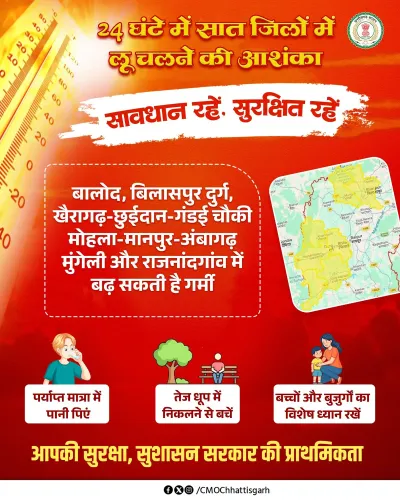
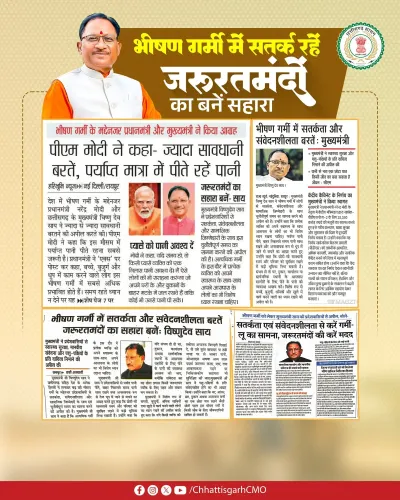
CM Vishnu Deo Sai issued a public heatwave caution advisory on 27 May 2026 via his official social media account.
The appeal urged general residents of Chhattisgarh to exercise caution amid 'bhishan garmi' (severe heat).
The advisory was part of a broader 'CM Updates' dispatch covering multiple important state news items.
Chhattisgarh experiences extreme temperatures in May-June , with rural, tribal, and outdoor workers most at risk.
State governments are required under NDMA guidelines (updated post-2016) to issue heat-wave advisories and open cooling centres.
District-level activation of cooling shelters and hospital heat-stroke reporting will be the key implementation indicators to watch.
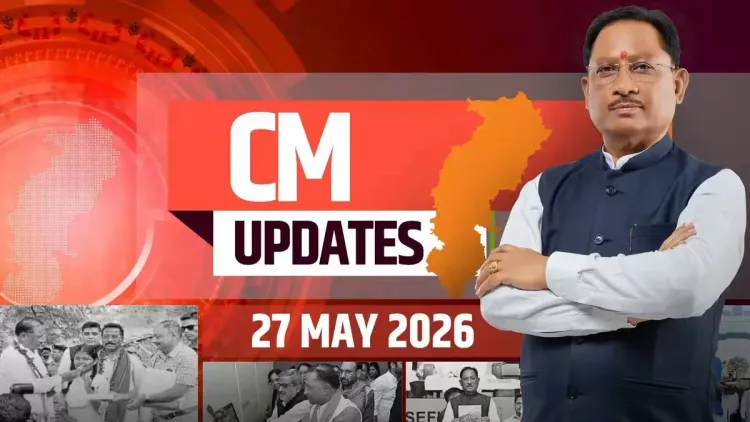
Chhattisgarh Chief Minister Vishnu Deo Sai on Wednesday, 27 May 2026 issued a public appeal urging residents to exercise caution in the face of intense summer heat, sharing the advisory alongside other important state updates through his official social media account.
Context
The Chief Minister's post, captioned 'Bhishan garmi ko dekhte hue aamjan se savdhani bartne ki appeal' ('an appeal to the general public to exercise caution in view of the severe heat'), reflects the administration's acknowledgement of the public health risk posed by peak summer temperatures in the state. Chhattisgarh, a central Indian state with large rural and tribal populations, regularly records extreme temperatures during May and June, placing outdoor workers and vulnerable communities at heightened risk.
The advisory was bundled with other significant state news under a 'CM Updates' format, suggesting the Chief Minister's office is using consolidated social media dispatches to keep citizens informed across multiple fronts simultaneously.
Policy Backdrop
India's National Disaster Management Authority (NDMA) has maintained national guidelines for state-level heat-wave action plans since 2016, with subsequent updates requiring state governments to issue timely public advisories, open cooling shelters, and coordinate with district administrations. Chief ministers' offices across Indian states routinely amplify such advisories during peak summer to align with India Meteorological Department (IMD) forecasts and reduce heat-related illness and mortality.
Chhattisgarh's district administrations are expected under the NDMA framework to operationalise cooling centres, deploy health teams at vulnerable locations, and report hospital data on heat-stroke cases to the state government. CM Sai, who took office in December 2023 following the BJP's victory in the state assembly elections, has continued the practice of direct public outreach on seasonal health risks through digital platforms.
Stakeholders and Impact
The advisory is primarily directed at Chhattisgarh's general public, with particular relevance for outdoor and agricultural labourers, construction workers, and residents in districts that historically record the highest summer temperatures. Tribal and rural communities, who form a significant share of the state's population and often lack access to air-conditioned spaces, are among the most exposed groups during heatwave conditions.
Health departments at the district level are key institutional stakeholders, as they are responsible for tracking heat-stroke admissions and ensuring that primary health centres are stocked with oral rehydration supplies. The Chief Minister's public appeal can reinforce compliance with precautionary guidelines across these administrative layers.
What's Next
Attention will now turn to district-level implementation — specifically whether cooling shelters are activated in urban centres and high-temperature districts, and whether hospitals are reporting and responding to a rise in heat-stroke cases. Follow-up advisories from the Chief Minister's office or the state health department would indicate the severity of the ongoing heat event. As June approaches, the intensity of the summer season in central India typically remains elevated until the onset of the monsoon, making sustained public communication essential for reducing preventable casualties.
Point of View
While routine in seasonal terms, carries political weight: heat-related deaths are a reputational liability for state governments, and early, visible outreach helps pre-empt criticism. Framing the appeal as part of a broader news bundle also reflects an attempt to signal administrative activity on multiple fronts simultaneously. The real test, as always, lies in district-level execution rather than the advisory itself.
NationPress
11 Oct 2026
Frequently Asked Questions
Why did Chhattisgarh CM Vishnu Deo Sai issue a heatwave advisory?
CM Vishnu Deo Sai issued the advisory on 27 May 2026 because of severe summer heat conditions in Chhattisgarh, urging residents to take precautions to avoid heat-related illness. State governments are required under NDMA guidelines to issue such public advisories during peak summer.
What precautions should people in Chhattisgarh take during the heatwave?
General precautions during a heatwave include staying indoors during peak afternoon hours, drinking adequate water, avoiding strenuous outdoor activity, and using government-run cooling shelters where available. District administrations in Chhattisgarh are expected to operationalise such facilities under the state heat-action plan.
When does the heatwave season typically end in Chhattisgarh?
In Chhattisgarh, extreme summer temperatures generally persist through May and June until the arrival of the southwest monsoon, which typically reaches the state in mid-to-late June.
Who is most at risk during a heatwave in Chhattisgarh?
Outdoor and agricultural labourers, construction workers, elderly residents, and tribal and rural communities who lack access to air-conditioned spaces are considered the most vulnerable groups during heatwave conditions in Chhattisgarh.
What is the NDMA heat-action plan and does it apply to Chhattisgarh?
The National Disaster Management Authority issued national guidelines for state heat-wave action plans in 2016, requiring all states including Chhattisgarh to issue public advisories, open cooling centres, and coordinate district-level health responses during heatwave events.