CM Sai Issues Heatwave Advisory for Chhattisgarh
Synopsis
Chief Minister Vishnu Dev Sai has appealed to Chhattisgarh residents to guard against heatwave risks, urging hydration, sun avoidance, and care for children, the elderly, labourers, and animals during peak pre-monsoon heat.
Key Takeaways
The Chief Minister's Office of Chhattisgarh issued a heatwave public health advisory on 28 May 2026 .
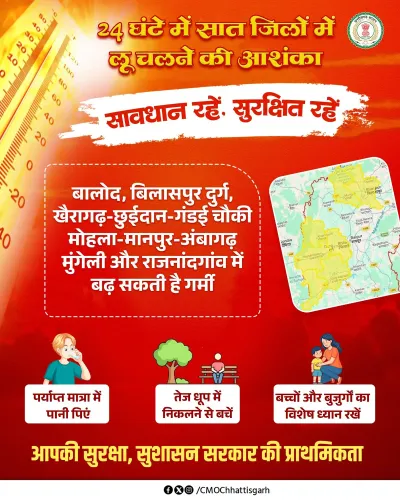
CM Vishnu Dev Sai called on citizens to drink adequate water and avoid direct sunlight during peak summer heat.
The advisory specifically highlights children, the elderly, outdoor labourers, and animals and birds as vulnerable groups.
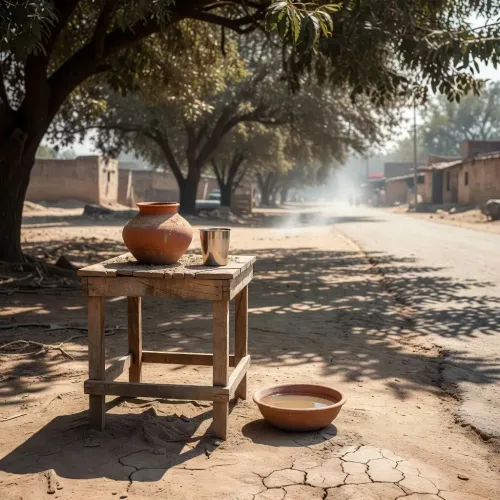
Citizens were urged to leave water out for animals and birds — reflecting the state's agrarian and forested character.
The advisory is consistent with India's national Heat Action Plan framework, active since 2010 , and NDMA disaster risk reduction guidelines.
State health department follow-up and IMD coordination for June 2026 will determine the operational impact of the appeal.
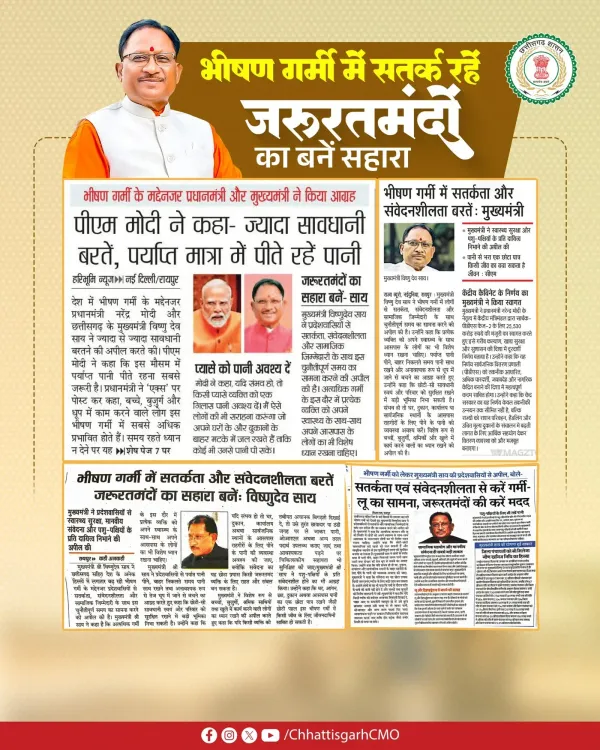
The Chief Minister's Office of Chhattisgarh, on behalf of Chief Minister Vishnu Dev Sai, on Thursday, 28 May 2026, issued a public health appeal urging residents across the state to take precautions against the ongoing heatwave — with special attention to children, the elderly, labourers, and animals.
Context
The appeal, posted under the hashtags #SushasanSarkar (Good Governance Government) and #HeatWave, calls on citizens to stay adequately hydrated, avoid direct sunlight, and keep water accessible for animals and birds. The advisory reads: 'In the summer heat, take care of your health as well as that of children, the elderly, workers, and animals and birds.'
Chhattisgarh, a central Indian state with large stretches of forest and a significant population of outdoor and agricultural workers, experiences intense pre-monsoon heat each year. Temperatures in the region typically peak in May and June, placing vulnerable groups at heightened risk of heat-related illness.
Policy Backdrop
India's tradition of formal state-level heat advisories traces back to 2010, when Ahmedabad became the first city to implement a Heat Action Plan following a deadly heatwave that year. Since then, state governments across the country have issued seasonal guidance as part of disaster risk reduction frameworks under the National Disaster Management Authority (NDMA).
Central Indian states such as Chhattisgarh are routine participants in this annual cycle, coordinating public messaging with district-level temperature alerts from the India Meteorological Department (IMD). The advisory from CM Sai's office follows this established governance pattern, emphasising hydration, sun avoidance, and community responsibility toward the most vulnerable.
Stakeholders and Impact
The advisory specifically names four groups at elevated risk: children, the elderly, outdoor labourers, and animals and birds. The inclusion of livestock and wildlife reflects the agrarian character of much of Chhattisgarh, where rural households depend on working animals and where extreme heat threatens both productivity and survival.
Outdoor labourers — including those in the state's mining, construction, and agricultural sectors — face the greatest occupational exposure. Public health guidance of this nature, when amplified through official government channels, serves as a first line of awareness for communities that may lack access to real-time weather alerts.
What's Next
Attention will now turn to whether the Chhattisgarh state health department follows up with district-level data on heat-related illness cases, and whether the advisory is accompanied by operational measures such as cooling centres or extended water distribution. Coordination with IMD forecasts for June 2026 will be critical as the pre-monsoon period deepens. The broader effectiveness of such advisories often depends on ground-level dissemination through local administration and community health workers.
Point of View
The messaging acknowledges the occupational and agrarian realities of Chhattisgarh's population — a more grounded framing than generic hydration reminders. Under the BJP's 'Sushasan' (good governance) brand, such proactive public health communication also serves a political signalling function, projecting administrative responsiveness. The real test, however, lies in whether district-level health infrastructure backs the appeal with tangible resources such as cooling centres and oral rehydration distribution.
NationPress
11 Oct 2026
Frequently Asked Questions
What did CM Vishnu Dev Sai say about the heatwave in Chhattisgarh?
CM Vishnu Dev Sai appealed to residents to protect themselves and vulnerable groups — including children, the elderly, outdoor workers, and animals — by drinking adequate water, avoiding sunlight, and keeping water available for animals and birds during the summer heat.
Which groups are most at risk during the Chhattisgarh heatwave?
The advisory identifies children, elderly citizens, outdoor labourers, and animals and birds as the most vulnerable groups during the peak summer heat in Chhattisgarh.
What is India's Heat Action Plan and does Chhattisgarh follow it?
India's Heat Action Plan framework began in Ahmedabad in 2010 and has since been adopted by state governments nationwide under NDMA guidelines. Chhattisgarh follows this pattern by issuing seasonal public health advisories during the May-June pre-monsoon period.
What precautions should people in Chhattisgarh take during the heatwave?
According to the Chief Minister's advisory, people should drink sufficient water, stay out of direct sunlight, and ensure that animals and birds have access to water during the hot weather.
Who is Vishnu Dev Sai and which party does he represent?
Vishnu Dev Sai is the Chief Minister of Chhattisgarh, representing the BJP. He was sworn in after the party's victory in the 2023 state assembly elections.