CM Sai Hails Jashpur Rail Link Notified as Special Project
Synopsis
Chhattisgarh CM Vishnu Deo Sai welcomed the Centre's notification of the Dharamjaygarh–Patthalgaon–Lohardaga corridor as a special railway project on 13 June 2026, marking a milestone for Jashpur district's long-awaited rail connectivity and opening prospects for tribal welfare, tourism, and trade.
Key Takeaways
The Dharamjaygarh–Patthalgaon–Lohardaga new rail line has been notified by the central government as a special railway project .
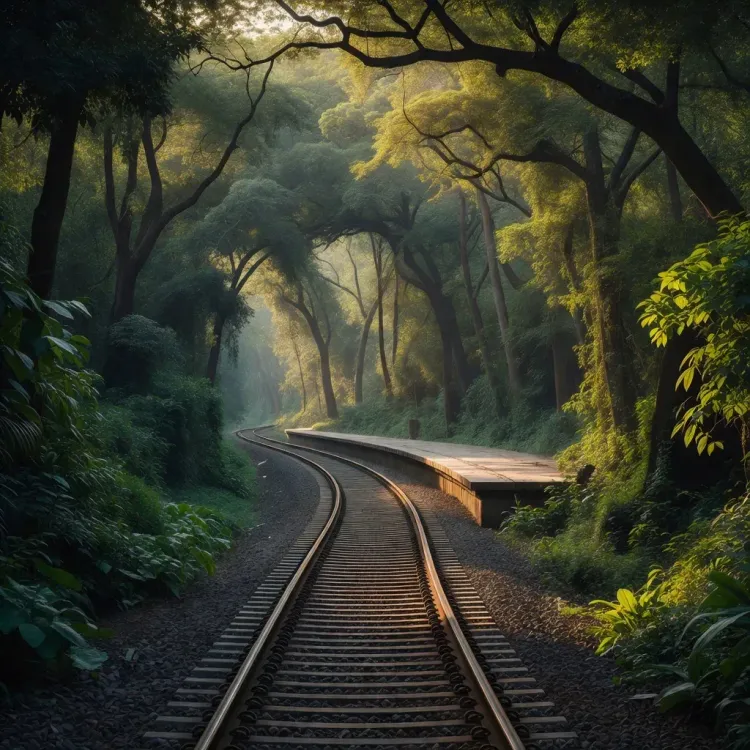
Jashpur , a tribal-majority district in northern Chhattisgarh, has historically lacked direct rail connectivity.
CM Vishnu Deo Sai credited the 'double-engine government' — aligned BJP administrations at the Centre and in Chhattisgarh — for the development.
The project is expected to improve access to education, health, tourism, trade, and employment for Jashpur residents.
PM Narendra Modi and Railway Minister Ashwini Vaishnaw were publicly thanked by the Chief Minister on behalf of all Chhattisgarh residents.
Next steps include a detailed project report, land acquisition, and formal budgetary allocation before construction can begin.
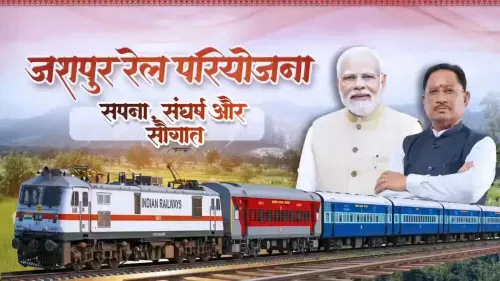
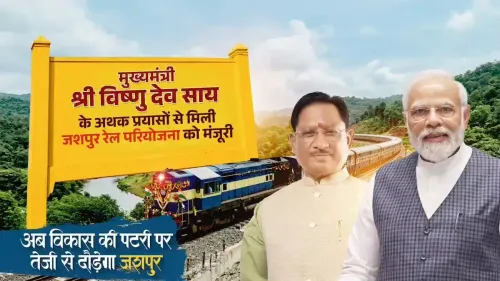
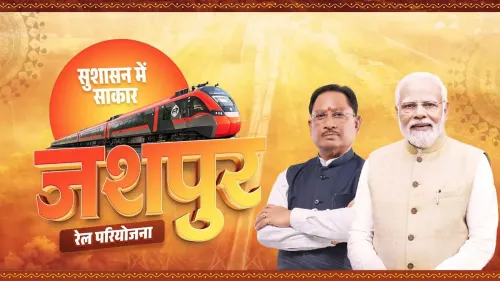
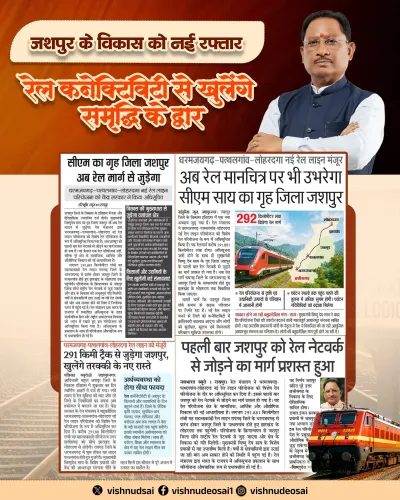
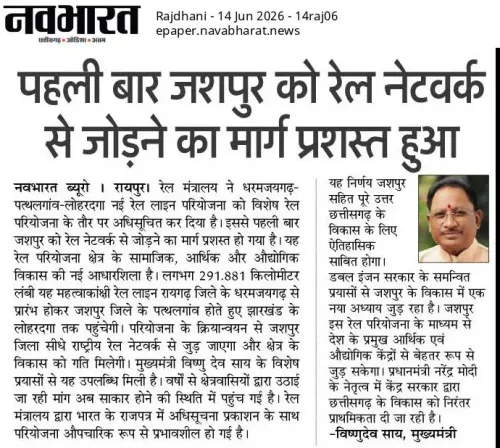
Chhattisgarh Chief Minister Vishnu Deo Sai on Saturday, 13 June 2026 welcomed the central government's decision to notify the Dharamjaygarh–Patthalgaon–Lohardaga new rail line as a special railway project, calling it a new chapter in the development of Jashpur district. Sai credited the 'double-engine government' — the BJP administrations at both the Centre and in Chhattisgarh — for paving the way to finally connect the historically rail-dark district to the national network.
Context
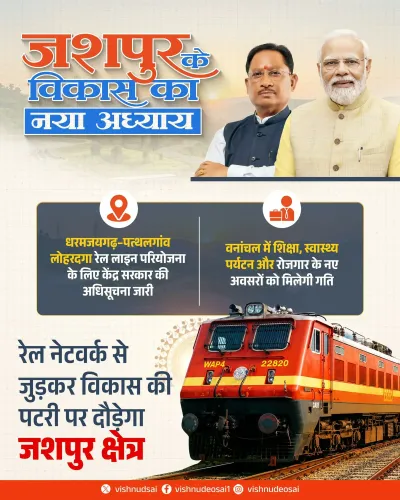
In his post, CM Sai wrote: 'डबल इंजन सरकार के प्रयासों से जशपुर के विकास में एक नया अध्याय जुड़ गया है' ('With the efforts of the double-engine government, a new chapter has been added to the development of Jashpur'). He specifically thanked Prime Minister Narendra Modi and Union Railway Minister Ashwini Vaishnaw on behalf of all residents of Chhattisgarh for sanctioning the ambitious project. The notification formally designates the line as a special rail project, a classification that fast-tracks planning, funding allocation, and execution.
Jashpur is a northern Chhattisgarh district characterised by dense forest cover, a significant tribal population, and rich natural resources. Despite its resource wealth, the district has long lacked direct rail connectivity, limiting access to markets, healthcare, and education for its residents.
Policy Backdrop
The Ministry of Railways has, since 2019, progressively notified new rail lines in Chhattisgarh and neighbouring states as special projects to accelerate execution in under-connected regions. The Dharamjaygarh–Patthalgaon–Lohardaga corridor is significant because it would stitch together remote forested stretches of Chhattisgarh and Jharkhand, opening a rail corridor through terrain that road infrastructure alone has struggled to serve effectively.
Successive railway budgets have prioritised extending the network into mineral-rich but poorly connected districts of central and eastern India, with tribal welfare and economic integration cited as twin objectives. The special project notification is a procedural milestone that precedes detailed project reports, land acquisition, and budgetary sanction.
Stakeholders and Impact
The most direct beneficiaries would be the tribal and forest-dwelling communities of the Jashpur region, who currently depend on road transport for access to district headquarters, hospitals, and educational institutions. CM Sai's post specifically highlighted that the project would open 'new avenues in education, health, tourism, trade, and employment' — sectors that connectivity directly catalyses.
Local traders and small businesses stand to gain from reduced logistics costs, while the region's tourism potential — Jashpur is known for its waterfalls, hills, and tribal culture — could see a significant uptick once rail access is established. Mineral extraction and related industries in the corridor would also benefit from improved freight movement.
What's Next
The notification as a special project is an early but important step. The pipeline ahead includes preparation of a detailed project report, environmental and forest clearances, land acquisition across the corridor, and formal budgetary allocation in an upcoming Union Railway Budget or supplementary demand. State assembly sessions in Chhattisgarh may also see discussion on the state government's contribution to land acquisition and resettlement.
If execution timelines follow the pattern of comparable special projects in the region, ground-breaking and initial civil works could be expected within the next few years, though the full commissioning of a greenfield rail line of this nature typically spans a longer horizon. For Jashpur, long excluded from the rail map, the notification marks the formal beginning of that journey.
Point of View
Where demonstrating central government dividends to the state remains a key electoral argument. CM Sai's public gratitude to PM Modi and Railway Minister Vaishnaw underscores how state-level BJP leaders routinely leverage central infrastructure announcements to consolidate support in tribal and rural constituencies. Jashpur's rail connectivity gap has been a longstanding grievance, making this notification a high-visibility win even before a single track is laid. The broader pattern — special project notifications preceding actual construction by years — means the political dividend is immediate while the developmental impact remains contingent on execution speed and budget follow-through.
NationPress
13 Sept 2026
Frequently Asked Questions
What is the Dharamjaygarh–Patthalgaon–Lohardaga rail line project?
It is a proposed new railway line connecting Dharamjaygarh and Patthalgaon in Chhattisgarh to Lohardaga in Jharkhand, recently notified by the central government as a special railway project to fast-track its development and bring rail connectivity to the Jashpur region.
Why is Jashpur important for rail connectivity in Chhattisgarh?
Jashpur is a northern Chhattisgarh district with a large tribal population, rich natural resources, and significant tourism potential, but it has historically been excluded from the rail network, limiting economic opportunities and access to services for its residents.
What does 'special railway project' notification mean?
A 'special railway project' notification by the Ministry of Railways is a formal designation that prioritises a proposed line for faster planning, clearances, and funding allocation, and is typically an early procedural step before detailed project reports and construction begin.
What did CM Vishnu Deo Sai say about the Jashpur rail project?
CM Vishnu Deo Sai said the notification marks 'a new chapter in the development of Jashpur' and that the project will open new opportunities in education, health, tourism, trade, and employment. He publicly thanked PM Narendra Modi and Railway Minister Ashwini Vaishnaw on behalf of all Chhattisgarh residents.
When will the Dharamjaygarh–Patthalgaon–Lohardaga rail line be completed?
No completion date has been officially announced. The project has been notified as a special railway project as of June 2026 , with detailed project reports, land acquisition, and budgetary sanctions still ahead before construction can commence.