CM Sai Hails Modi as India's Longest-Serving Elected PM
Synopsis
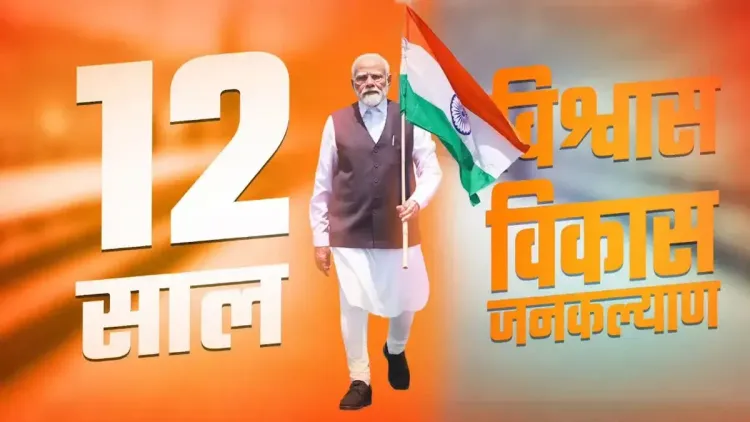
Chhattisgarh Chief Minister Vishnu Deo Sai on 10 June 2026 celebrated PM Narendra Modi crossing a new benchmark as India's longest-serving elected Prime Minister, citing Article 370 abrogation, the Ayodhya Ram Temple, and the Viksit Bharat 2047 vision as defining achievements of his three-term tenure.
Key Takeaways
CM Vishnu Deo Sai posted a tribute on 10 June 2026 marking PM Modi as India's longest-serving elected Prime Minister.
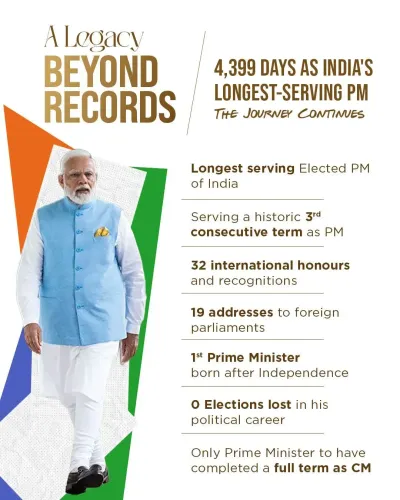
Modi has held office continuously since May 2014 , winning general elections in 2014, 2019 and 2024 .
The post credits the abrogation of Article 370 in August 2019 as a milestone in national integration.
The inauguration of the Ram Temple in Ayodhya on 22 January 2024 is cited as a moment of renewed national consciousness.
India's advancement toward becoming the world's fourth-largest economy and the Viksit Bharat 2047 goal are highlighted as economic achievements.
The BJP is described as the world's largest political party, with Modi credited as central to its organisational growth.
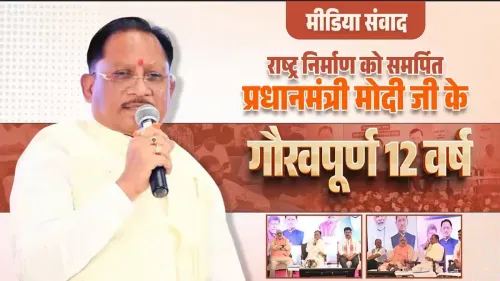
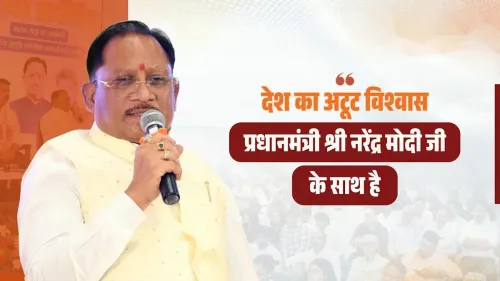
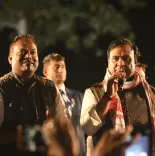
Chhattisgarh Chief Minister Vishnu Deo Sai on Wednesday, 10 June 2026, took to X to mark what he described as a landmark moment in India's democratic history — Prime Minister Narendra Modi setting a new record as the longest-serving elected Prime Minister of India, on the strength of three consecutive popular mandates.
Context
In his post, CM Sai wrote: 'भारत के लोकतांत्रिक इतिहास में आज एक महत्वपूर्ण उपलब्धि दर्ज हुई है' ('A significant milestone has been recorded in India's democratic history today'). He attributed the record to the sustained public mandate that has kept Modi in office continuously since May 2014, through re-elections in 2019 and 2024. The post carries the hashtag #LongestServingElectedPMModi, which BJP leaders and supporters have used to mark the occasion.
Policy Backdrop
CM Sai cited several policy milestones under Modi's leadership. He noted the abrogation of Article 370 in August 2019, which ended Jammu and Kashmir's special constitutional status, as having 'strengthened national unity.' He also referenced the inauguration of the Ram Temple in Ayodhya on 22 January 2024, calling it a renewal of national consciousness. On the economic front, the post asserts that India has become the world's fourth-largest economy and is advancing steadily toward the Viksit Bharat 2047 vision — the government's roadmap for India to become a developed nation by the centenary of independence. The post also invokes the principle of Antyodaya — welfare of the last person in the queue — as having been realised under Modi's stewardship.
The Viksit Bharat 2047 framework, launched as an official government vision document, sets targets across infrastructure, manufacturing, digital economy and social indicators. Modi's government has pursued the goal of making India the world's third-largest economy by 2027-28, with the fourth-largest ranking cited as an interim marker of that trajectory.
Stakeholders and Impact
CM Sai also highlighted the Bharatiya Janata Party's organisational growth, describing it as the world's largest political party by membership — a claim the party has long made and which underscores the dual nature of the tribute: honouring Modi both as a national leader and as the architect of the BJP's expansion. The post is consistent with a broader pattern of statements from BJP state leaders during the party's third term at the Centre, linking Modi's personal tenure to specific deliverables on security, culture, and economic governance. BJP workers and the wider national electorate are the primary audiences for such messaging.
On national security, Sai praised what he called 'decisive action against terrorism and strong military operations,' framing these as demonstrations of a 'new India's capability and confidence' on the world stage — a reference to operations and postures that have been central to the BJP's governance narrative.
What's Next
With state assembly elections due in several states across 2026-27, tributes of this nature from chief ministers serve a dual purpose: consolidating the party's base and reinforcing the Modi-centric electoral identity ahead of those contests. A mid-term review of Viksit Bharat 2047 deliverables is also expected in central ministries, which will test the credibility of the economic milestones cited in posts like CM Sai's. How the government frames India's economic rankings and development metrics in that review will shape the political messaging that follows.
Point of View
Ayodhya, Viksit Bharat — to present governance as a seamless, mandate-backed continuum. The timing, with state elections on the horizon, signals that the party intends to keep Modi's record tenure as a central electoral asset. The invocation of Antyodaya alongside GDP rankings is a deliberate bridging of welfare politics and aspirational economics, the twin pillars of the BJP's mass appeal. Such coordinated messaging from state-level leaders also reinforces the party's top-down coherence ahead of what could be a demanding electoral cycle.
NationPress
26 Oct 2026
Frequently Asked Questions
When did Narendra Modi become India's longest-serving elected Prime Minister?
According to BJP leaders including Chhattisgarh CM Vishnu Deo Sai, the milestone was reached on 10 June 2026 , after Modi had served continuously as Prime Minister since May 2014 through three consecutive electoral mandates in 2014, 2019 and 2024.
What is Viksit Bharat 2047?
Viksit Bharat 2047 is the Indian government's official vision framework to transform India into a fully developed nation by 2047 , the centenary of independence, with targets spanning infrastructure, manufacturing, digital economy and social welfare.
What did CM Vishnu Deo Sai say about Modi's record?
CM Sai called it 'a significant milestone in India's democratic history,' crediting the achievement to Modi's dedicated leadership in public service, good governance and national interest, and listing Article 370 abrogation, the Ayodhya Ram Temple and decisive action against terrorism as defining moments.
When was Article 370 abrogated?
Article 370 , which granted Jammu and Kashmir special constitutional status, was abrogated through a presidential order and parliamentary legislation on 5-6 August 2019 during Modi's second term.
Is the BJP really the world's largest political party?
The Bharatiya Janata Party has long claimed to be the world's largest political party by primary membership, a figure the party itself reports. CM Sai's post reiterates this claim, crediting Modi with playing a key role in the party's organisational expansion.