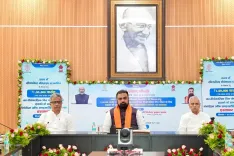
CM Sai Hails Modi, Shah for Expanding Cooperative Sector
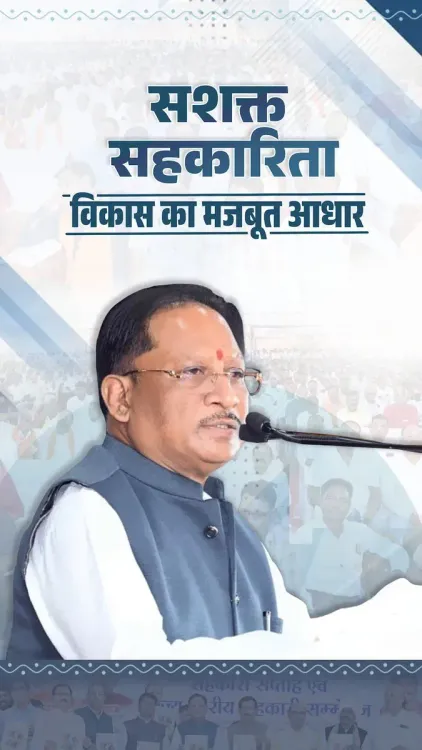
Synopsis
Chhattisgarh Chief Minister Vishnu Deo Sai on 3 July 2026 credited PM Narendra Modi and Union Minister Amit Shah for the continuous growth of India's cooperative sector, saying cooperatives are now delivering diverse services to ordinary citizens and improving their livelihoods.
Key Takeaways
CM Vishnu Deo Sai posted on 3 July 2026 crediting PM Modi and Amit Shah for cooperative sector growth.
India's Ministry of Cooperation was established in July 2021 as the country's first dedicated cooperative ministry.
The Multi-State Cooperative Societies (Amendment) Act, 2023 introduced governance reforms and expanded national-level cooperative societies.
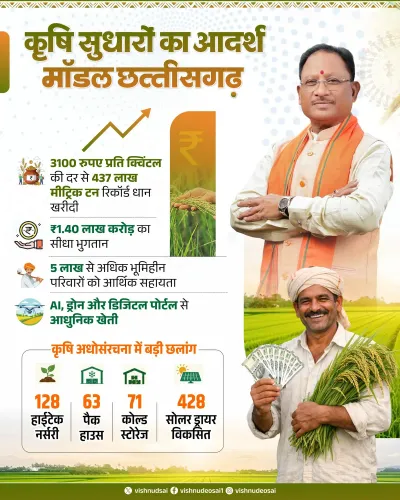
Cooperatives in Chhattisgarh play a key role in paddy procurement, rural credit and last-mile service delivery.
The post is part of a broader BJP pattern of showcasing cooperative expansion as a grassroots economic inclusion initiative under Atmanirbhar Bharat .
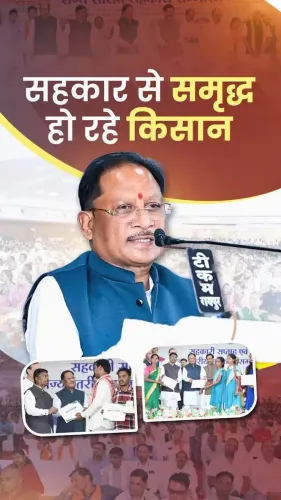
Chhattisgarh Chief Minister Vishnu Deo Sai on Friday, 3 July 2026, credited Prime Minister Narendra Modi and Union Home and Cooperation Minister Amit Shah for the sustained expansion of India's cooperative sector, saying cooperatives are now delivering a range of services directly to ordinary citizens and making their lives easier and more prosperous.
Context
Posting on X, CM Sai wrote in Hindi: 'सहकारिता आमजन तक विभिन्न सेवाओं को पहुंचाते हुए उनके जीवन को अधिक सुगम और समृद्ध बना रही है' — 'cooperatives are reaching various services to the common people and making their lives more convenient and prosperous.' He attributed this progress to the 'guidance' of PM Modi and the 'leadership' of Amit Shah, who holds the Cooperation portfolio alongside Home Affairs.
The post tagged both @narendramodi and @AmitShah directly, signalling Chhattisgarh's alignment with the Centre's cooperative push and reinforcing the BJP's intra-party messaging on grassroots economic governance.
Policy Backdrop
The Union Cabinet established a separate Ministry of Cooperation in July 2021 — the first of its kind in India — to provide dedicated institutional focus to the cooperative movement spanning agriculture, credit, dairy and fisheries. The move was widely seen as an effort to revive a sector that had long operated under the broader Agriculture Ministry with limited policy bandwidth.
In 2023, Parliament passed the Multi-State Cooperative Societies (Amendment) Act, introducing governance reforms and expanding the operational scope of national-level cooperative societies. States were simultaneously encouraged to adopt model bye-laws and integrate cooperatives more deeply into rural service delivery under the Atmanirbhar Bharat framework.
Stakeholders and Impact
The primary beneficiaries of cooperative expansion are rural households and farming communities, who access credit, inputs, storage and market linkages through cooperative networks. In Chhattisgarh, a state with a large agrarian and tribal population, cooperatives have historically served as critical intermediaries for paddy procurement and rural credit delivery.
CM Sai's statement underscores the state government's intent to deepen this integration, positioning cooperatives not merely as economic entities but as vehicles of social inclusion and last-mile service delivery.
What's Next
Attention will now turn to the state-level rollout of any new national cooperative policy and to potential legislative action on pending cooperative reforms during Parliament's monsoon session. For Chhattisgarh, the focus will be on how the state adapts central frameworks to its specific agricultural and tribal economy. Broader adoption of model bye-laws and digital integration of cooperative societies could mark the next phase of this policy arc.
Point of View
Timed to reinforce the BJP's grassroots economic narrative ahead of any legislative activity in the monsoon session. By publicly crediting both PM Modi and Amit Shah — the two most powerful figures in the Union government — the Chhattisgarh chief minister signals his administration's full alignment with New Delhi's rural economy priorities. The cooperative sector has emerged as a key BJP differentiator since 2021, blending economic inclusion rhetoric with institutional reform. For a state like Chhattisgarh, with its large tribal and agrarian base, doubling down on cooperatives carries both policy substance and electoral logic.
NationPress
3 Jul 2026
Frequently Asked Questions
What did Chhattisgarh CM Vishnu Deo Sai say about cooperatives?
CM Vishnu Deo Sai said that under PM Modi's guidance and Amit Shah's leadership, India's cooperative sector is continuously expanding and delivering various services to ordinary citizens, making their lives more convenient and prosperous.
When was India's Ministry of Cooperation established?
The Ministry of Cooperation was established by the Union Cabinet in July 2021 , making it India's first dedicated ministry for the cooperative sector.
What is the Multi-State Cooperative Societies Amendment Act?
The Multi-State Cooperative Societies (Amendment) Act, 2023 introduced governance reforms for cooperative societies operating across multiple states and expanded the role of national-level cooperative bodies.
How do cooperatives benefit rural citizens in Chhattisgarh?
In Chhattisgarh , cooperatives serve as critical intermediaries for paddy procurement, rural credit delivery and access to agricultural inputs, directly benefiting farming and tribal communities.
What is Atmanirbhar Bharat's connection to cooperatives?
The Union government has positioned cooperative societies as grassroots economic organisations central to the Atmanirbhar Bharat framework, promoting self-reliance through local credit, agriculture and service delivery networks.