CM Sai Distributes Assistive Devices to Divyangjans in Raipur
Synopsis
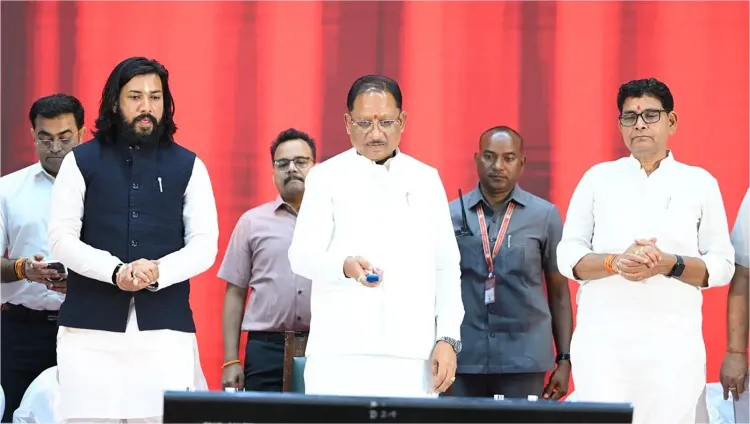
Chhattisgarh Chief Minister Vishnu Deo Sai presided over the 'Project Sahara' assistive-device distribution drive in Raipur on 3 August 2026, framing the programme as a commitment to dignity, self-reliance, and equal opportunity for persons with disabilities under the state's 'double engine' governance model.
Key Takeaways
Chhattisgarh CM Vishnu Deo Sai distributed assistive devices to persons with disabilities in Raipur on 3 August 2026 .
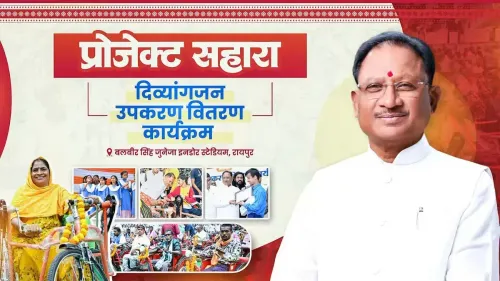
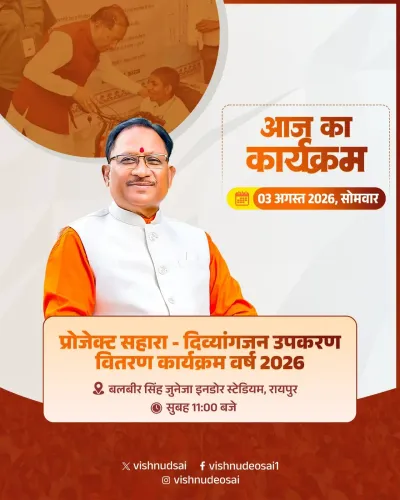
The event was held under 'Project Sahara — Divyangjan Equipment Distribution Programme 2026' .
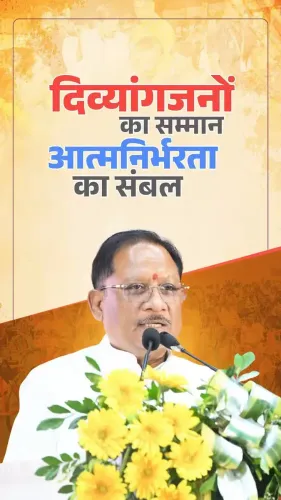
CM Sai described the initiative as delivering self-reliance, dignity, and renewed confidence — not merely equipment.
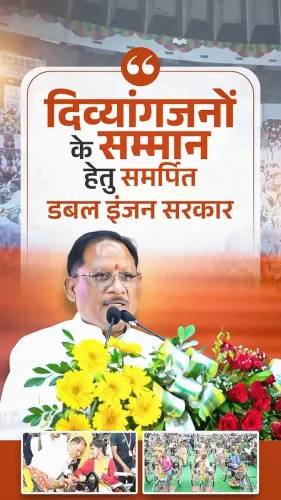
The programme is framed under the BJP's 'double engine government' concept of coordinated state-centre welfare delivery.
India's Rights of Persons with Disabilities Act, 2016 provides the statutory foundation for such state-level assistive-device drives.
District-level distribution camps and future state budget allocations for assistive devices are the next indicators to watch.
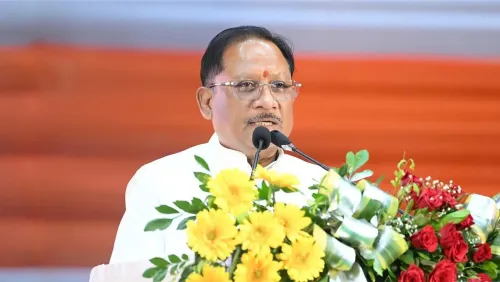
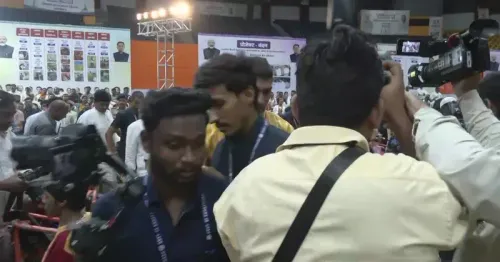
In Raipur on Monday, 3 August 2026, Chhattisgarh Chief Minister Vishnu Deo Sai handed assistive devices to persons with disabilities at the 'Project Sahara — Divyangjan Equipment Distribution Programme 2026', framing the initiative not as charity but as a restoration of confidence, dignity, and possibility.
Addressing the gathering, CM Sai said: 'Vikas tab sarthak hota hai, jab woh kisi ka jeevan badal de' — 'Development is meaningful only when it changes a life, restores someone's self-belief, and gives new flight to someone's dreams.' The words set the register for an event that went beyond logistics.
What 'Project Sahara' Is Actually Delivering
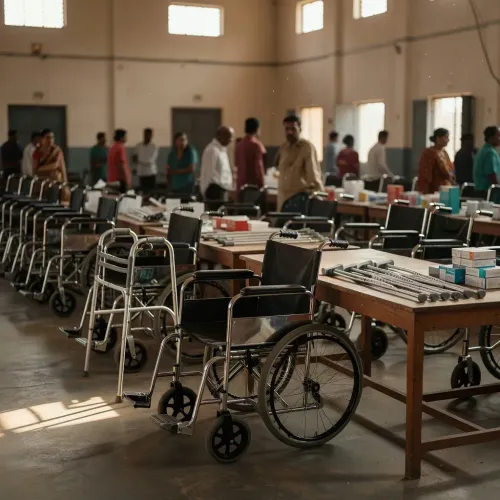
The programme distributed a range of assistive devices — mobility aids, hearing supports, and similar equipment — to divyangjan (persons with disabilities) drawn from across the state capital and surrounding areas. The stated aim is self-reliance: atmanirbharta, dignity, and renewed confidence, not merely the physical handover of hardware.
India's Rights of Persons with Disabilities Act, 2016 expanded legal protections and reservations for persons with disabilities well beyond the earlier 1995 Act, creating a stronger statutory floor on which state-level programmes like this one are built. Distribution camps for assistive devices have been a recurring feature of welfare delivery across Indian states, often channelled through central schemes designed to promote mobility and independence.
The 'Double Engine' Frame and What It Signals
CM Sai explicitly invoked the 'double engine government' — the BJP's shorthand for aligned state and central administrations — as the driving force behind the programme's reach and ambition. The phrase is both a policy claim and a political signal: that coordinated governance between Raipur and New Delhi unlocks welfare delivery that a divided mandate cannot.
BJP-governed states have consistently used this framing around disability welfare events since the mid-2010s, tying on-the-ground distribution to a broader narrative of seva, samvedana aur sushasan — service, sensitivity, and good governance. The language is deliberate, and its recurrence across events suggests a standardised communication architecture around social welfare.
What to watch now: whether Chhattisgarh follows this Raipur camp with district-level drives, and whether the state's next budget allocates a specific line item to scale assistive-device procurement further.
Point of View
The Raipur camp serves a dual purpose: it advances a genuine welfare agenda for a historically underserved constituency while reinforcing the political argument that BJP's simultaneous control of state and centre produces tangible, on-the-ground results. The emphasis on dignity and self-reliance, drawn directly from the 2016 disability rights framework, also signals an attempt to shift the narrative around disability welfare from passive beneficiary to active citizen — a framing with both policy merit and electoral resonance ahead of future state cycles.
NationPress
17 Sept 2026
Frequently Asked Questions
What is Project Sahara Chhattisgarh 2026?
'Project Sahara — Divyangjan Equipment Distribution Programme 2026' is a Chhattisgarh government initiative under which Chief Minister Vishnu Deo Sai distributed assistive devices to persons with disabilities in Raipur on 3 August 2026, aimed at promoting self-reliance and dignity.
What assistive devices were distributed at the Raipur divyangjan camp?
The programme distributed a range of assistive devices — including mobility aids and hearing supports — to persons with disabilities, though the full official list of device categories has not been separately detailed beyond the Chief Minister's post.
What is the 'double engine government' claim in Chhattisgarh?
The 'double engine government' is a BJP phrase describing the alignment of a BJP state government with the BJP-led central government, which the party argues enables faster and more effective delivery of welfare schemes, including disability support programmes.
Which law governs disability rights and assistive device schemes in India?
The Rights of Persons with Disabilities Act, 2016 is the primary legislation, replacing the 1995 Act. It expanded legal protections, reservations, and support mechanisms for persons with disabilities and forms the statutory basis for state-level distribution drives.
Will Chhattisgarh hold more divyangjan device distribution camps?
Based on the pattern seen in other BJP-governed states, district-level camps are likely to follow the Raipur event. State budget allocations for assistive device procurement will be a key indicator of how far the programme is scaled.