CM Sai Highlights 1076 Helpline as Chhattisgarh's Grievance Lifeline
Synopsis
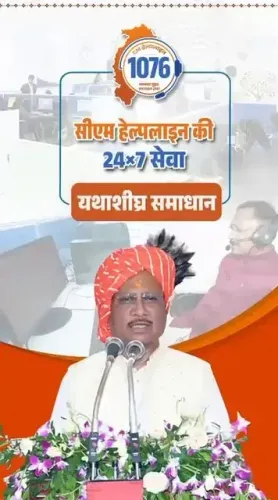
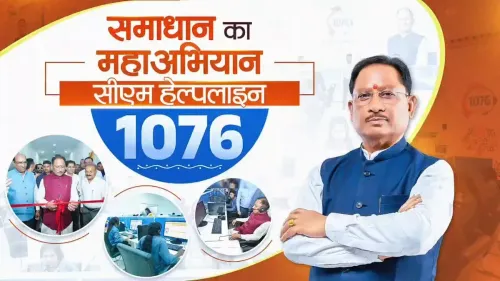
Chhattisgarh Chief Minister Vishnu Deo Sai on 6 July 2026 spotlighted the CM Helpline 1076 as a pillar of his good-governance agenda, saying farmers and persons with disabilities can now access state services and grievance redressal with a single toll-free call.
Key Takeaways
Chhattisgarh CM Vishnu Deo Sai publicly promoted the CM Helpline 1076 on 6 July 2026 via a post on X.
The helpline is described as a toll-free, single-call grievance redressal channel for all state residents.
Key beneficiary groups highlighted are farmers and divyangjan (persons with disabilities).
CM Sai framed the initiative under his administration's sushasan (good governance) identity, adopted since taking office in December 2023 .
State-level CM helplines are part of a broader e-governance trend across India dating to the early 2010s.
Performance data — complaint volumes and resolution rates — has not yet been publicly disclosed and will be a key indicator of the helpline's effectiveness.
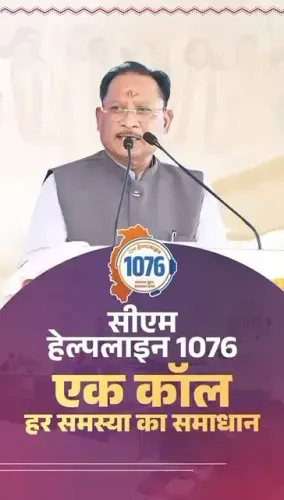
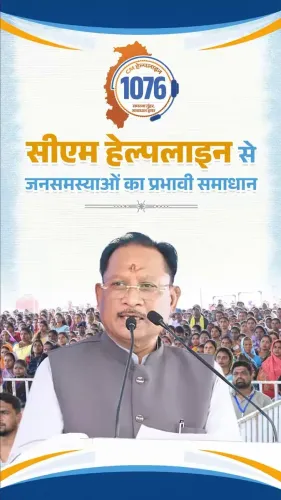
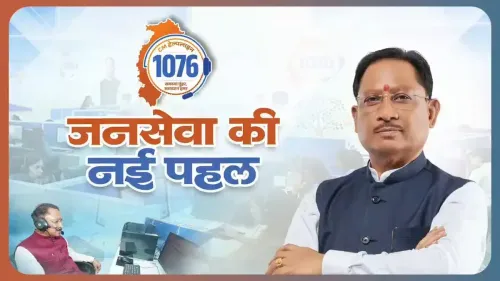
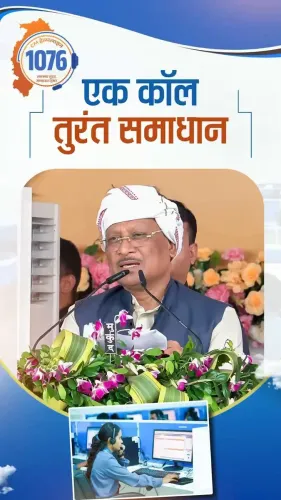
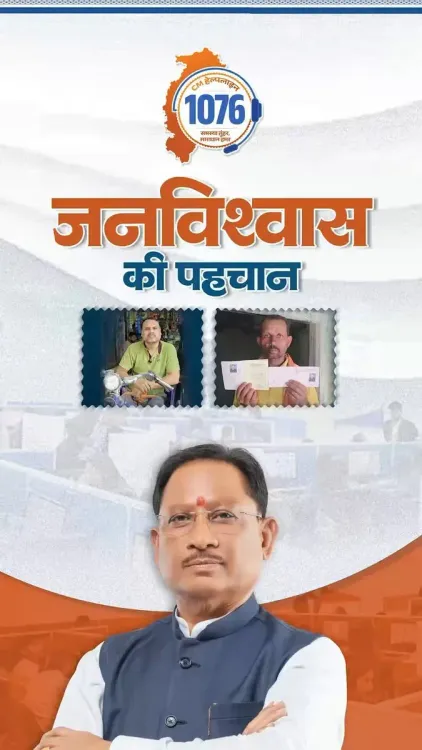
Chhattisgarh Chief Minister Vishnu Deo Sai on Monday, 6 July 2026 highlighted the state government's CM Helpline 1076 as a growing instrument of public trust, saying the toll-free line is delivering solutions to citizens — from farmers to persons with disabilities — with a single call.
Posting on X in Hindi, CM Sai wrote: 'सुशासन सरकार की 'सीएम हेल्पलाइन 1076' प्रदेशवासियों की समस्याओं के समाधान के साथ जनविश्वास का सशक्त माध्यम बन रही है' — ('The good-governance government's CM Helpline 1076 is becoming a powerful medium of public trust alongside resolving the problems of the state's residents'). He added that essential facilities for divyangjan (persons with disabilities) and solutions to farmers' problems are now reachable through a single call, closing with the pledge: 'A solution to every problem, dignity for every citizen — this is our resolve, this is the hallmark of good governance.'
Context
The CM Helpline 1076 is a state-level toll-free grievance redressal number operated by the Chhattisgarh government. It is designed to give ordinary citizens — including those in rural and remote areas — a direct channel to the administration without requiring physical visits to government offices. The helpline covers a broad range of complaints spanning agriculture, disability welfare, and basic civic amenities.
Chief Minister Sai, who took office in December 2023 after the BJP won the Chhattisgarh assembly elections, has consistently framed his administration around the concept of sushasan (good governance), positioning accessible grievance mechanisms as a cornerstone of that agenda.
Policy Backdrop
CM-level helplines have been a feature of Indian state governance since the early 2010s, when e-governance reforms prompted several states to consolidate citizen complaint channels under a single, easily remembered number. The model has since spread across the country, with states adapting the format to local administrative priorities.
In Chhattisgarh, the post-2023 BJP government has placed particular emphasis on administrative accessibility, seeking to demonstrate a contrast with the previous administration. The 1076 helpline fits within a wider national pattern of using technology-enabled platforms to reduce the distance between citizens and government services, particularly for vulnerable groups such as farmers facing crop or credit grievances and persons with disabilities seeking welfare entitlements.
Stakeholders and Impact
The primary beneficiaries identified in CM Sai's post are farmers and divyangjan — two groups that have historically faced procedural barriers in accessing state welfare. Farmers in Chhattisgarh frequently raise issues related to crop insurance, input subsidies, and land records, while persons with disabilities often seek assistance with certificates, pensions, and assistive devices.
Rural citizens more broadly stand to benefit from a functioning single-window complaint system, particularly in a state where large tracts of territory are tribal and geographically dispersed. By routing grievances through a centralised helpline, the administration aims to create an auditable trail of complaints and resolutions, improving accountability at the district and block level.
What's Next
Analysts and civil society observers will watch for periodic disclosures on complaint volumes, average resolution times, and the categories of grievances most frequently logged on 1076. Any announced integration of the helpline with existing farmer welfare portals or the national disability database would signal a deeper institutional embedding of the platform. CM Sai's public emphasis on the helpline ahead of what is likely a review or milestone moment suggests the government may release performance data in the near term, using the numbers to reinforce its good-governance narrative ahead of future electoral cycles.
Point of View
Using the 1076 helpline as shorthand for the BJP's 'sushasan' promise in Chhattisgarh — a contrast it has sought to draw with the previous Congress administration since December 2023. By foregrounding farmers and divyangjan, the messaging targets two politically significant constituencies in a state with a large agrarian and tribal population. The absence of verifiable performance metrics, however, means the claim rests on intent rather than demonstrated outcome, a gap that opposition voices are likely to probe. If the government follows up with concrete resolution-rate data, the helpline could become a replicable model; if not, it risks being seen as symbolic communication ahead of future electoral cycles.
NationPress
6 Jul 2026
Frequently Asked Questions
What is CM Helpline 1076 in Chhattisgarh?
CM Helpline 1076 is a toll-free grievance redressal number operated by the Chhattisgarh state government, allowing citizens to register complaints and seek government services with a single call, covering areas such as agriculture, disability welfare, and civic amenities.
Who is Vishnu Deo Sai?
Vishnu Deo Sai is the Chief Minister of Chhattisgarh, a BJP leader who assumed office in December 2023 after the party won the state assembly elections.
How can farmers use CM Helpline 1076?
Farmers in Chhattisgarh can dial 1076 to register grievances related to crop insurance, input subsidies, land records, and other agricultural issues directly with the state administration.
What does sushasan mean in the context of Chhattisgarh politics?
Sushasan is a Hindi term meaning 'good governance.' The Vishnu Deo Sai-led BJP government in Chhattisgarh has used it as a defining slogan since December 2023 to describe its administrative approach, emphasising citizen accessibility and accountability.
Which states in India have CM-level helplines?
Several Indian states operate CM-level toll-free helplines as part of e-governance reforms that began in the early 2010s. Chhattisgarh's 1076 is one such example, designed to centralise citizen complaints and improve government responsiveness.