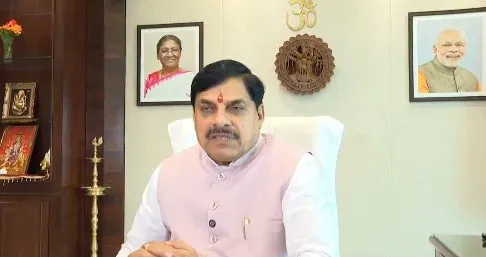
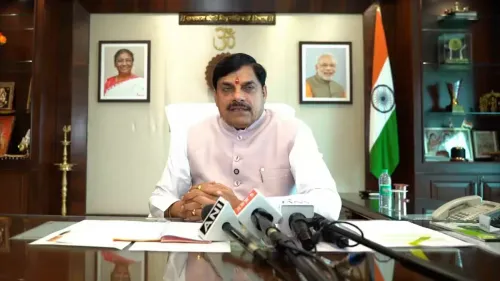
CM Mohan Yadav pledges UCC implementation in Madhya Pradesh
Synopsis
Madhya Pradesh Chief Minister Dr. Mohan Yadav has pledged to implement the Uniform Civil Code in the state, invoking Dr. Shyama Prasad Mookerjee's 'one nation, one law' ideal. The move follows Uttarakhand's 2024 state-level UCC legislation and advances the BJP's long-standing constitutional commitment under Article 44.
Key Takeaways
Mohan Yadav announced on 6 July 2026 that Madhya Pradesh will implement the Uniform Civil Code (UCC) .
The announcement invokes the legacy of Dr.
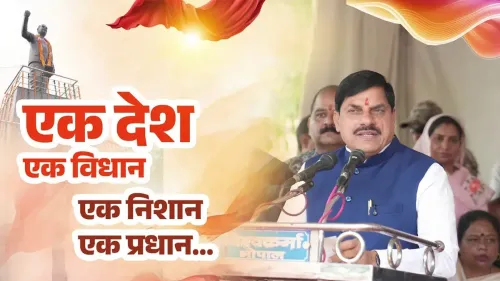
Shyama Prasad Mookerjee and his slogan 'Ek desh, ek nishan, ek vidhan, ek pradhan' .
Article 44 of the Indian Constitution has directed the State to work towards a UCC since 1950 .
Uttarakhand passed India's first state-level UCC bill in February 2024 , serving as a legislative precedent.
Madhya Pradesh , with a population of over 8.5 crore , would be the largest state by population to enact a state-level UCC.
A formal drafting process and assembly tabling are the expected next steps for the Madhya Pradesh government.
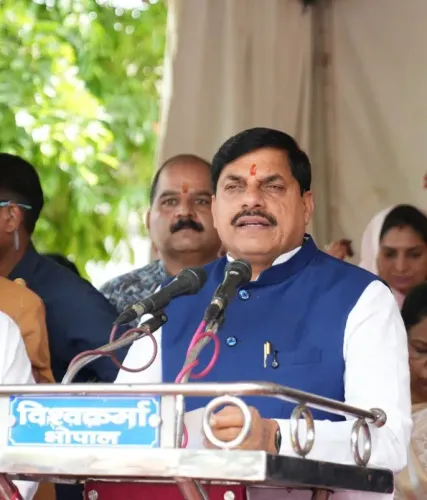
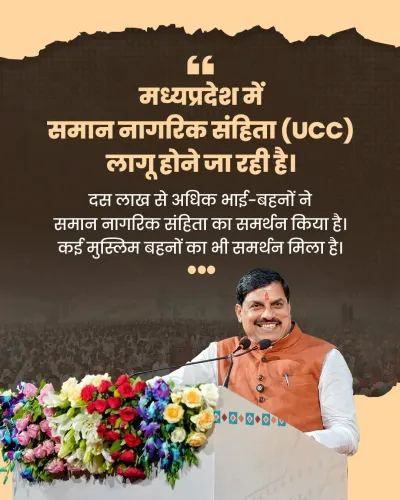
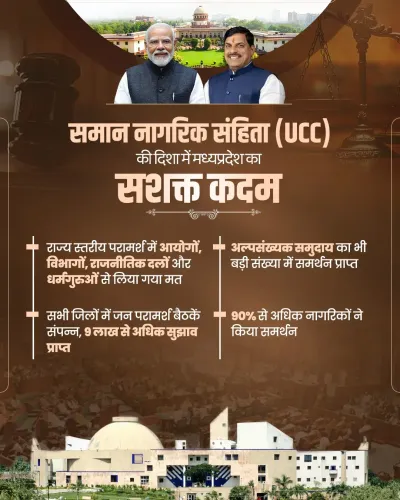
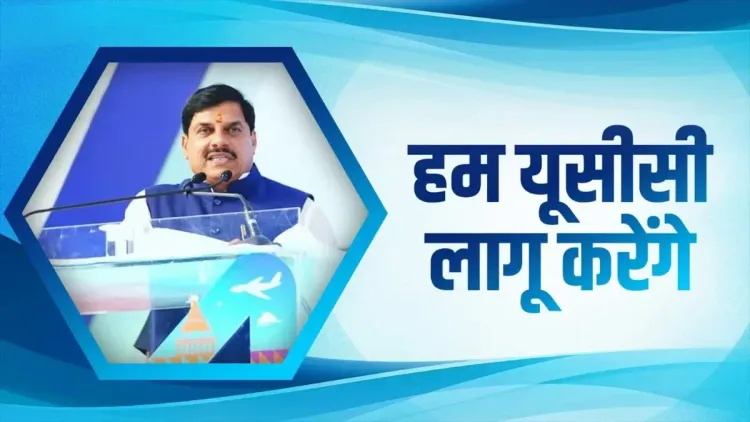
Madhya Pradesh Chief Minister Dr. Mohan Yadav announced on Monday, 6 July 2026 that his government will implement the Uniform Civil Code (UCC) in Madhya Pradesh, invoking the ideological legacy of Dr. Shyama Prasad Mookerjee as the guiding inspiration for the move.
Context
Posting on X, Dr. Yadav declared: 'Ek desh, ek nishan, ek vidhan, ek pradhan' ('One nation, one flag, one constitution, one leader') — a slogan historically associated with Dr. Shyama Prasad Mookerjee, founder of the Bharatiya Jana Sangh and a foundational ideological figure for the Bharatiya Janata Party (BJP). The Chief Minister framed the UCC pledge as a direct realisation of Mookerjee's vision for national legal and constitutional uniformity.
Dr. Mookerjee had championed the cause of scrapping special constitutional provisions that, in his view, created a two-standard framework within the Indian Union. The BJP has carried that ideological thread across decades, and Dr. Yadav's announcement positions Madhya Pradesh as the next state to translate it into legislation.
Policy Backdrop
Article 44 of the Indian Constitution, a Directive Principle of State Policy since 1950, directs the State to endeavour to secure a Uniform Civil Code for all citizens, covering personal laws on marriage, divorce, inheritance, and adoption that currently vary across religious communities. The BJP's national manifestos of 2014 and 2019 both carried an explicit commitment to enact a UCC.
Uttarakhand became the first Indian state to pass a state-level UCC bill in February 2024, establishing a legislative template that other BJP-governed states have since studied closely. Madhya Pradesh, a BJP stronghold since 2003, has consistently aligned its legislative agenda with the party's core national commitments on cultural and legal uniformity.
Dr. Mohan Yadav took charge as Chief Minister in December 2023 and has since focused on advancing central party priorities at the state level. His announcement on 6 July 2026 signals that a formal drafting and legislative process for a state UCC bill is now on the government's active agenda.
Stakeholders and Impact
A state-level UCC would replace religion-specific personal law codes — including those governing Hindu, Muslim, Christian, and Parsi communities — with a single, uniform statutory framework applicable to all citizens of Madhya Pradesh regardless of faith. Women's rights organisations have historically supported UCC on grounds of gender equality in inheritance and divorce proceedings, while several religious bodies have raised concerns about the erosion of community-specific customs.
With a population of over 8.5 crore, Madhya Pradesh would be the largest state by population to attempt a state-level UCC if the bill is passed. The move is expected to draw national attention and could accelerate parallel discussions in other BJP-ruled states such as Gujarat and Assam.
What's Next
The immediate next steps will be the formation of a drafting committee and the eventual tabling of a UCC bill in the Madhya Pradesh Legislative Assembly. The Uttarakhand model — which covers registration of marriages, divorces, and inheritance — is widely expected to serve as a reference point, though state-specific provisions may differ.
Political observers will watch whether the announcement is accompanied by a concrete legislative timeline or a commission appointment in the coming weeks, which would indicate how quickly the government intends to move from intent to statute.
Point of View
Timed to reinforce the party's national narrative of legal uniformity. By anchoring the announcement in Dr. Shyama Prasad Mookerjee's legacy, the Chief Minister frames UCC not as a new policy experiment but as the fulfilment of a decades-old ideological debt. Following Uttarakhand's 2024 precedent, the move suggests a coordinated BJP state-by-state strategy to normalise UCC before any potential central legislation. The real test will be in the drafting details — how the bill balances constitutional uniformity with the diverse personal law traditions of Madhya Pradesh's communities.
NationPress
6 Jul 2026
Frequently Asked Questions
What is the Uniform Civil Code and why is Madhya Pradesh implementing it?
The Uniform Civil Code is a proposed common legal framework governing personal matters such as marriage, divorce, inheritance, and adoption for all citizens regardless of religion. Madhya Pradesh CM Dr. Mohan Yadav announced its implementation on 6 July 2026, citing the BJP's long-standing constitutional commitment under Article 44 and the ideological vision of Dr. Shyama Prasad Mookerjee.
Which was the first Indian state to pass a UCC law?
Uttarakhand was the first Indian state to pass a Uniform Civil Code bill, doing so in February 2024. Its legislation covering marriage registration, divorce, and inheritance is widely seen as the template for other BJP-governed states.
Who was Dr. Shyama Prasad Mookerjee and what is his connection to UCC?
Dr. Shyama Prasad Mookerjee was the founder of the Bharatiya Jana Sangh, the ideological predecessor of the BJP. He championed the idea of 'Ek desh, ek nishan, ek vidhan, ek pradhan' — one nation, one flag, one constitution, one leader — opposing provisions that created differential legal treatment within India. The UCC is seen as a modern legislative expression of that vision.
Will the UCC in Madhya Pradesh affect all religious communities?
Yes. A Uniform Civil Code, by design, replaces religion-specific personal laws governing Hindus, Muslims, Christians, Parsis, and other communities with a single statutory framework applicable to all citizens of the state.
What happens next after CM Mohan Yadav's UCC announcement?
The next steps are expected to include the formation of a drafting committee and the tabling of a UCC bill in the Madhya Pradesh Legislative Assembly. No specific timeline has been officially confirmed alongside the announcement.