Punjab CMO: Sehat Card funds free hip surgery for pregnant woman
Synopsis
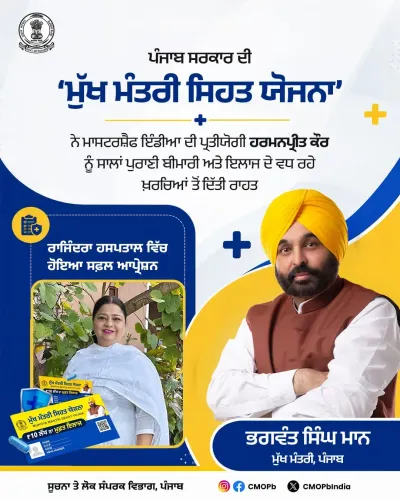
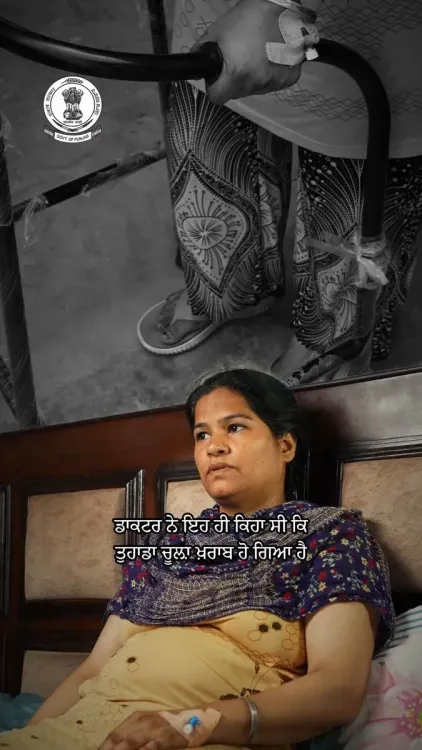
The Chief Minister's Office of Punjab shared the story of Nirmal Kaur, who received a free hip-joint surgery under the Sehat Card scheme after the condition worsened during pregnancy. The post highlights the scheme's role in providing cashless specialist care to vulnerable women in the state.
Key Takeaways
Nirmal Kaur , a Punjab resident, suffered a serious hip-joint condition that worsened during pregnancy.
She received a free hip-replacement surgery using the state's Sehat Card health coverage scheme.
The Chief Minister's Office of Punjab publicised her case on 6 July 2026 via a video post on X.
The Sehat Card enables cashless hospitalisation for eligible Punjab residents, removing out-of-pocket surgical costs.
The case highlights the documented link between traditional cookstove use, prolonged smoke exposure, and health complications in rural women.
Punjab's approach mirrors a national pattern of combining state health cards with clean-cooking access programmes to protect maternal health.
The Chief Minister's Office of Punjab on Monday, 6 July 2026 shared the story of Nirmal Kaur, a resident who underwent a free hip-replacement surgery under the state's Sehat Card scheme after a deteriorating hip joint made daily life unbearable during her pregnancy.
Posting in Punjabi, the official CMO account described how a damaged hip joint — ਚੂਲ਼ੇ ਦੀ ਗੰਭੀਰ ਸਮੱਸਿਆ ('a serious problem with the hip joint') — had turned every day into a struggle for Nirmal Kaur. Using her health card, she received the operation at no cost and is today living free of pain, the post stated.
Context
Nirmal Kaur's case centres on a hip-joint condition that worsened during pregnancy, a period when invasive procedures carry added risk and financial burden. The Sehat Card — Punjab's state health-coverage mechanism — enabled cashless access to the surgery, removing what would otherwise have been a prohibitive out-of-pocket expense for a family of limited means. The post is accompanied by a video, which the CMO account has used to let Nirmal Kaur speak about her experience in her own words, a format the office has adopted consistently to put a human face on welfare delivery.Policy Backdrop
The Sehat Card is the primary vehicle through which the Government of Punjab provides cashless hospitalisation to eligible residents. It is part of a broader national and state-level push to extend health-insurance coverage to economically vulnerable households, particularly women. The case also touches on a documented public-health concern: the link between traditional biomass-stove use (chulha), prolonged indoor smoke exposure, and respiratory and musculoskeletal complications among rural women. The Pradhan Mantri Ujjwala Yojana, launched in 2016, sought to address this by providing free LPG connections to replace biomass chulhas, recognising the disproportionate health toll on women who spend extended hours cooking over open flame.Stakeholders and Impact
The primary beneficiaries of such interventions are rural and pregnant women in Punjab, who face compounded vulnerability — both from occupational health hazards associated with traditional cooking and from limited access to specialist surgical care. For Nirmal Kaur, the Sehat Card translated a potentially life-altering condition into a resolved medical episode. The state government's use of individual beneficiary stories serves a dual purpose: it validates the scheme's on-ground delivery and signals to eligible residents that the coverage is real and accessible. Advocacy groups working on maternal health and clean-cooking access watch such communications as indicators of programme reach.What's Next
The continued empanelment of hospitals under the Sehat Card network and any expansion of clean-cookstove or LPG distribution in rural Punjab will determine how many more residents like Nirmal Kaur can access timely, cost-free care. If the state scales both the health-coverage and clean-energy pillars together, the compounding burden on women from household air pollution and deferred medical treatment could be meaningfully reduced.Point of View
Relatable story of maternal hardship resolved. It fits a well-established pattern across Indian states of using social media as a proof-of-delivery channel, converting policy outcomes into shareable human narratives. The choice of a pregnant woman as the beneficiary is politically pointed: it connects the health card to maternal vulnerability, a constituency that cuts across caste and class. Whether such storytelling translates into measurable uptake of the Sehat Card among underserved rural women remains the harder question for the government to answer.
NationPress
6 Jul 2026
Frequently Asked Questions
What is the Sehat Card in Punjab?
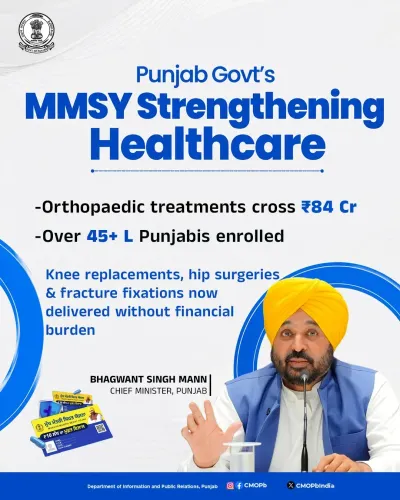
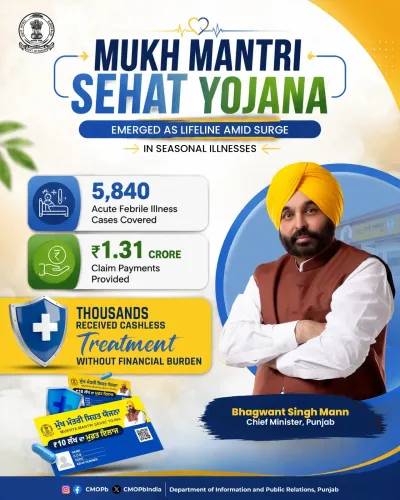
The Sehat Card is Punjab's state health-coverage scheme that enables eligible residents to access cashless hospitalisation and surgical procedures at empanelled hospitals without paying out of pocket.
Who is Nirmal Kaur and what treatment did she receive?
Nirmal Kaur is a Punjab resident whose hip-joint condition deteriorated during pregnancy. She received a free hip-replacement surgery under the Sehat Card scheme and is now reported to be living without pain.
Is hip replacement surgery covered under the Sehat Card?
According to the Chief Minister's Office of Punjab, Nirmal Kaur's hip surgery was covered under the Sehat Card, suggesting the scheme includes major orthopaedic procedures, though the full list of covered treatments depends on empanelment terms.
How does the Sehat Card help pregnant women in Punjab?
The Sehat Card provides cashless access to medical procedures, which is especially significant for pregnant women who may face compounded health risks and limited finances, allowing them to receive specialist care without deferring treatment.
What is the link between traditional chulha use and women's health in India?
Prolonged use of biomass-burning traditional stoves exposes women to indoor air pollution, which is associated with respiratory illness and other health complications. Schemes like the Pradhan Mantri Ujjwala Yojana were launched in 2016 to replace such stoves with LPG connections to reduce this health burden.