Vaishnaw Pays Tribute to Dr. Mookerjee on 125th Birth Anniversary
Synopsis
Union Minister Ashwini Vaishnaw on 6 July 2026 marked Dr. Syama Prasad Mookerjee's 125th Birth Anniversary by sharing PM Modi's tribute, highlighting the Jana Sangh founder's lifelong ideal of an indivisible India and his enduring influence on BJP's political philosophy.
Key Takeaways
Syama Prasad Mookerjee was born on 6 July 1901 and founded the Bharatiya Jana Sangh in 1951 , the ideological forerunner of the BJP.
Union Minister Ashwini Vaishnaw shared PM Modi's reflection that 'the indivisibility of India' was the defining ideal of Mookerjee's public life.
Mookerjee's central political cause was the full constitutional integration of Jammu and Kashmir with the Indian Union, opposing its special status.
The central government abrogated Article 370 in August 2019 , a move the BJP linked directly to Mookerjee's decades-old ideological position.
The 125th birth anniversary is being observed as a milestone year, with commemorations expected across BJP-governed states on 6 July 2026 .
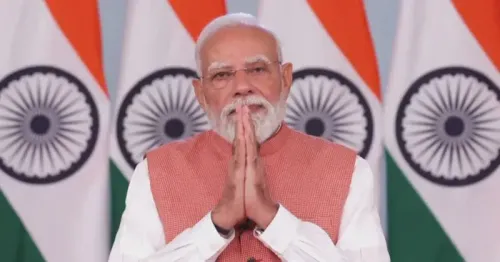
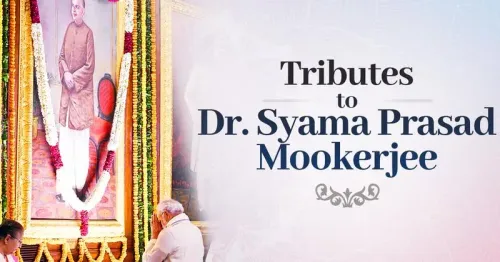
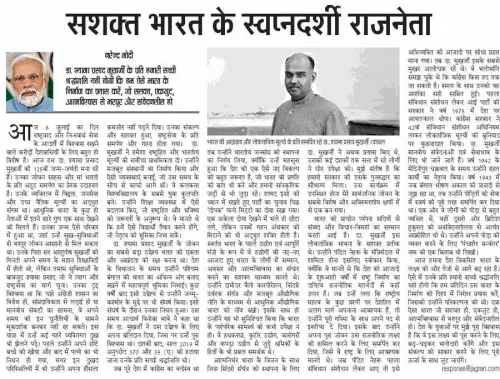
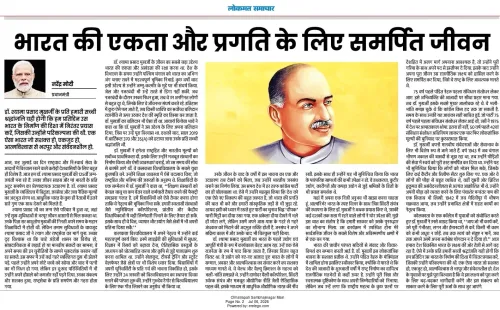
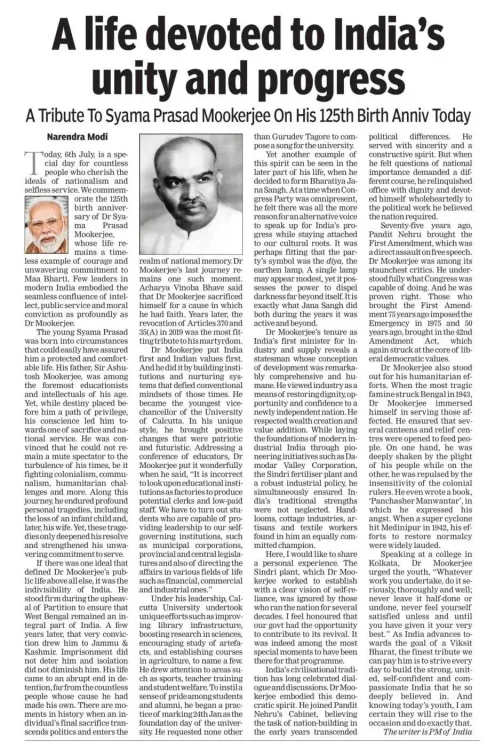
Union Minister Ashwini Vaishnaw on Monday, 6 July 2026, shared a tribute to Dr. Syama Prasad Mookerjee on his 125th Birth Anniversary, amplifying a reflection by Prime Minister Narendra Modi on the founding ideologue's lifelong commitment to an undivided India.
Sharing PM Modi's words on the occasion, Vaishnaw quoted: 'If there was one ideal that defined Dr. Mookerjee's public life above all else, it was the indivisibility of India.' The minister described the tribute as 'heartfelt' and underscored Mookerjee's 'unwavering commitment to an indivisible India.'
Context
Dr. Syama Prasad Mookerjee, born on 6 July 1901, was a towering figure in early post-independence Indian politics. An eminent educationist, lawyer, and statesman, he served as a cabinet minister before breaking away to found the Bharatiya Jana Sangh in 1951 — the political forerunner of today's Bharatiya Janata Party (BJP). His most defining political campaign was his opposition to the special constitutional status accorded to Jammu and Kashmir and his insistence that the state be fully and unconditionally integrated with the Indian Union.
Mookerjee's famous slogan — 'Ek Desh mein do Vidhan, do Pradhan aur do Nishan nahin chalenge' (One country cannot have two constitutions, two prime ministers, and two emblems) — encapsulated his vision of a unified, indivisible republic. He died in detention in Kashmir in 1953 while protesting the requirement for a permit for Indian citizens to enter the state, an event that remains a deeply contested chapter in Indian political history.
Policy Backdrop
The BJP has consistently positioned itself as the custodian of Mookerjee's ideological legacy. In August 2019, the central government abrogated Article 370 of the Constitution, revoking Jammu and Kashmir's special status — a step the party framed as the fulfilment of a decades-old ideological commitment rooted in Mookerjee's vision. The reorganisation also bifurcated the former state into two Union Territories: Jammu and Kashmir and Ladakh.
Annual commemorations of Mookerjee's birth and death anniversaries have become significant moments in the BJP's political calendar, used to reinforce the narrative of integral nationalism and administrative uniformity across states. Senior ministers and the Prime Minister routinely issue statements on these occasions, connecting historical figures to contemporary governance decisions.
Stakeholders and Impact
The tribute carries resonance for BJP supporters and the party's ideological base, for whom Mookerjee is a foundational martyr-figure. Residents of Jammu and Kashmir, who have lived through the most consequential policy change linked to his legacy — the abrogation of Article 370 — remain key stakeholders in how this historical memory is invoked in public discourse.
For the broader electorate, such commemorations form part of a sustained effort by the ruling dispensation to anchor present-day policy in a coherent historical and ideological narrative. Vaishnaw, as a senior cabinet minister holding portfolios in Railways, Information and Broadcasting, and Electronics and IT, lends institutional weight to the tribute by amplifying the Prime Minister's message across his platform.
What's Next
State-level commemorative events are expected across BJP-governed states on 6 July 2026, with party workers and elected representatives likely to hold programmes honouring Mookerjee's memory. Any references to his vision during upcoming parliamentary debates — particularly on federal structure, integration, or governance uniformity — will be closely watched as indicators of how the party continues to deploy this legacy in legislative discourse.
As the 125th birth anniversary marks a milestone year, the scale and prominence of official commemorations may set a precedent for how foundational BJP ideologues are memorialised in the years ahead.
Point of View
Vaishnaw reinforces the party's claim to be the direct inheritor of Mookerjee's integrationist vision — a claim made most tangible by the 2019 abrogation of Article 370. The emphasis on 'indivisibility' is not merely ceremonial; it functions as a recurring ideological signal that shapes how the party communicates on federalism, regional autonomy, and national unity. As the BJP heads deeper into its current term, such commemorations serve to consolidate its ideological identity among its core base while projecting a coherent historical narrative to the broader electorate.
NationPress
5 Oct 2026
Frequently Asked Questions
Who was Dr. Syama Prasad Mookerjee?
Dr. Syama Prasad Mookerjee was an Indian politician born on 6 July 1901 who founded the Bharatiya Jana Sangh in 1951, the party that later evolved into the BJP. He is best known for his campaign to fully integrate Jammu and Kashmir with India and his opposition to its special constitutional status.
Why is Dr. Mookerjee's 125th birth anniversary significant?
The 125th birth anniversary is a milestone year that the BJP is observing with prominent tributes from the Prime Minister and senior cabinet ministers, reflecting the party's emphasis on Mookerjee as a foundational ideologue whose vision of an indivisible India shaped its political philosophy.
What was Dr. Mookerjee's connection to Article 370?
Dr. Mookerjee strongly opposed the special status granted to Jammu and Kashmir under Article 370, arguing that one country could not have two constitutions. The BJP cited his legacy when the central government abrogated Article 370 in August 2019.
What did Ashwini Vaishnaw post about Dr. Mookerjee?
Union Minister Ashwini Vaishnaw shared PM Modi's tribute on 6 July 2026, quoting the Prime Minister's reflection that 'the indivisibility of India' was the defining ideal of Dr. Mookerjee's public life, and offered heartfelt tributes on the 125th birth anniversary.
What is the BJP's relationship with Dr. Syama Prasad Mookerjee's legacy?
The BJP traces its direct ideological lineage to the Bharatiya Jana Sangh founded by Mookerjee. The party regularly commemorates his birth and death anniversaries and has framed major policy decisions, including the abrogation of Article 370, as fulfilments of his integrationist vision.