Punjab CM Sehat Yojna aids MasterChef contestant Harmanpreet
Synopsis
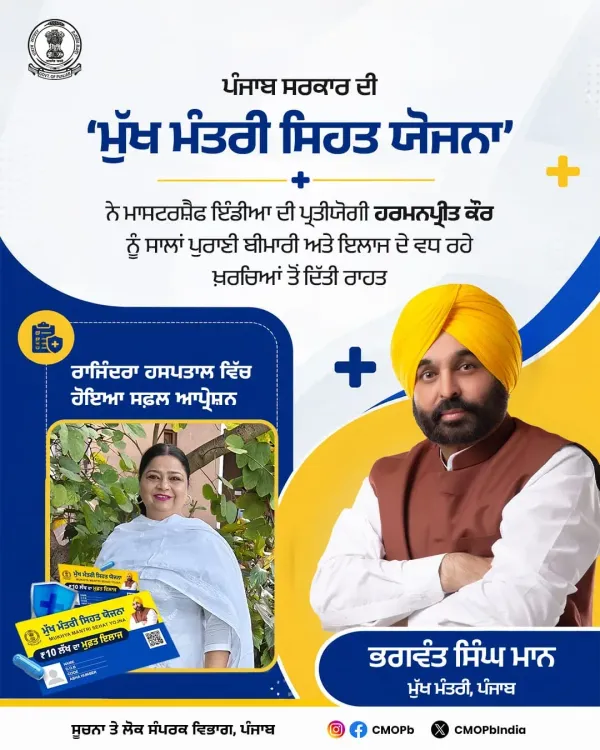
Punjab's Mukh Mantri Sehat Yojna has aided Harmanpreet Kaur, a 51-year-old Patiala entrepreneur and MasterChef India Season 6 Top-20 contestant, who battled brain haemorrhage complications, chronic bleeding, diabetes and psoriasis for nearly a decade. The announcement was made by the Chief Minister's Office on June 8, 2026.
Key Takeaways
Harmanpreet Kaur , aged 51 , from Patiala , received relief under Punjab's Mukh Mantri Sehat Yojna .
She had been battling complications from a brain haemorrhage , chronic bleeding, diabetes , and psoriasis for over a decade .
Kaur is a public figure recognised as a Top-20 contestant on MasterChef India Season 6 .
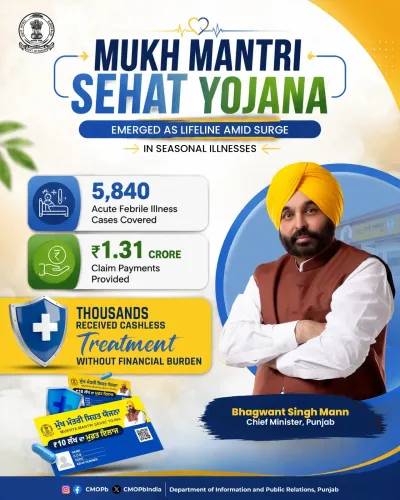
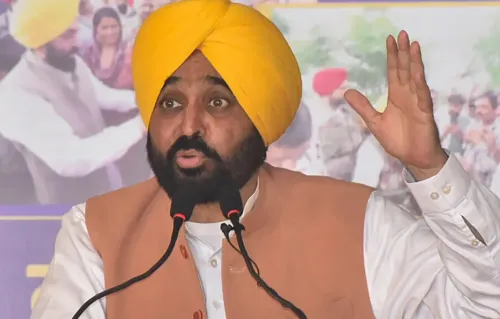
The scheme is run by the Aam Aadmi Party government under Chief Minister Bhagwant Singh Mann , in office since March 2022 .
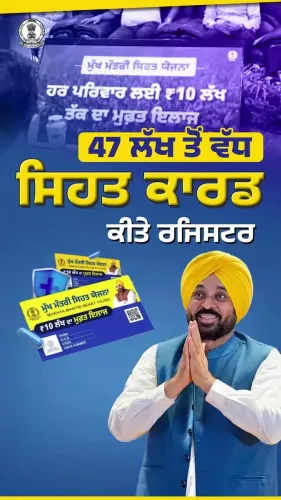
MMSY supplements the national Ayushman Bharat programme by targeting residents with complex, long-term health conditions.
The announcement was made by the Chief Minister's Office of Punjab on June 8, 2026 .
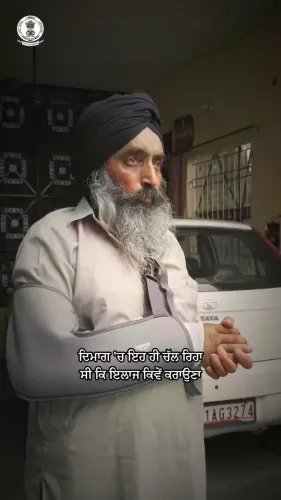
The Chief Minister's Office of Punjab announced on Monday, June 8, 2026 that the state government's Mukh Mantri Sehat Yojna (MMSY) has provided significant medical relief to Harmanpreet Kaur, a 51-year-old entrepreneur from Patiala and a Top-20 contestant of MasterChef India Season 6, who had been battling multiple serious health conditions for nearly a decade.
Context
Harmanpreet Kaur had been struggling with a cluster of severe ailments — complications arising from a brain haemorrhage, chronic bleeding, diabetes, and psoriasis — for over ten years. Her case drew attention as an example of a long-term patient with multiple comorbidities who required sustained medical intervention beyond routine outpatient care. The CMO Punjab post described her condition in both Punjabi and English, noting she had been fighting these challenges for 'about a decade.'
Policy Backdrop
The Mukh Mantri Sehat Yojna is a state-level health scheme introduced by the Aam Aadmi Party government in Punjab under Chief Minister Bhagwant Singh Mann, who took office in March 2022. The scheme is designed to extend medical support to Punjab residents suffering from chronic and complex conditions, supplementing the nationally launched Ayushman Bharat Pradhan Mantri Jan Arogya Yojana of 2018. State governments across India have increasingly introduced their own targeted health programmes to address coverage gaps — particularly for patients managing multiple long-term illnesses — that broader central schemes do not always fully cover.
The AAP-led Punjab government has positioned welfare-oriented health delivery as a central pillar of its governance agenda since assuming office, with MMSY serving as one of its flagship instruments for reaching residents with complex medical needs.
Stakeholders and Impact
Harmanpreet Kaur's case is being highlighted by the government as illustrative of the scheme's reach beyond routine beneficiaries. As a public figure recognised from MasterChef India Season 6, her treatment under MMSY lends visibility to the programme among urban and semi-urban populations who may not associate such schemes with their own circumstances. Chronic patients across Punjab — particularly those managing brain haemorrhage aftereffects, metabolic conditions such as diabetes, and autoimmune skin conditions such as psoriasis — represent the core stakeholder group the scheme targets.
The case also underscores the financial burden that multi-year, multi-condition health crises place on individuals and families, and the potential role of state-backed schemes in providing relief where private healthcare costs would otherwise be prohibitive.
What's Next
The Punjab government's continued emphasis on publicising individual beneficiary outcomes suggests an effort to build public awareness and uptake of MMSY. Observers and health policy analysts will be watching state budget allocations for health schemes and reported beneficiary data in upcoming Punjab Legislative Assembly sessions for a clearer picture of the programme's scale and financial sustainability. The government's approach of pairing welfare delivery with high-profile human-interest cases is likely to continue as a communication strategy ahead of future electoral cycles.
Point of View
Semi-public figure rather than aggregate statistics. For the AAP administration, MMSY serves a dual purpose — genuine health delivery and a visible counter-narrative to criticism that state resources are stretched. The case fits a broader pattern of regional governments using individual beneficiary stories to drive scheme awareness, particularly in the run-up to budget cycles where health allocation is contested. The long-term test will be whether MMSY's reach and funding scale to match the chronic-disease burden across Punjab's population.
NationPress
23 Oct 2026
Frequently Asked Questions
What is Mukh Mantri Sehat Yojna Punjab?
Mukh Mantri Sehat Yojna (MMSY) is a Punjab state government health scheme that provides medical support to residents suffering from chronic and complex health conditions, introduced under Chief Minister Bhagwant Singh Mann's AAP government after it took office in March 2022.
Who is Harmanpreet Kaur from MasterChef India?
Harmanpreet Kaur is a 51-year-old entrepreneur based in Patiala, Punjab, who featured as a Top-20 contestant on MasterChef India Season 6. She has been dealing with multiple serious health conditions, including brain haemorrhage complications, chronic bleeding, diabetes, and psoriasis, for nearly a decade.
How did Punjab's health scheme help Harmanpreet Kaur?
The Mukh Mantri Sehat Yojna provided Harmanpreet Kaur with medical relief for her multiple chronic conditions — brain haemorrhage complications, chronic bleeding, diabetes, and psoriasis — which she had been battling for over ten years, according to the Chief Minister's Office of Punjab.
What is the difference between MMSY and Ayushman Bharat?
Ayushman Bharat Pradhan Mantri Jan Arogya Yojana is a central government scheme launched nationally in 2018, while MMSY is a Punjab state-level programme designed to supplement Ayushman Bharat by addressing coverage gaps for residents with long-term and multiple comorbid conditions.
What health conditions does Mukh Mantri Sehat Yojna cover?
While the full scope of MMSY coverage is defined by state policy, the scheme has been used to assist patients with complex, chronic conditions such as brain haemorrhage aftereffects, diabetes, chronic bleeding, and psoriasis, as highlighted in the case of Patiala resident Harmanpreet Kaur.