CM Bhagwant Mann's Sehat Yojana covers 5,840 fever cases in Punjab
Synopsis
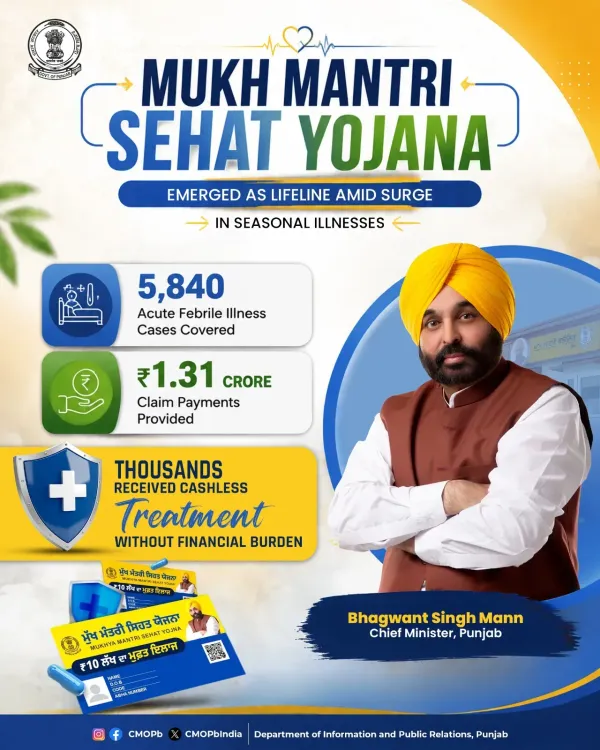
Punjab's Mukh Mantri Sehat Yojana, led by CM Bhagwant Mann, has provided cashless treatment to 5,840 acute febrile illness patients, with ₹1.31 crore in claims settled. The scheme shields families from medical expenses during seasonal illness surges, reinforcing the AAP government's health security push.
Key Takeaways
The Chief Minister's Office of Punjab announced on 30 May 2026 that Mukh Mantri Sehat Yojana has covered 5,840 cases of acute febrile illness.
Total claim payments under the scheme for these cases amount to ₹1.31 crore .
The scheme provides cashless treatment , removing upfront financial burden from enrolled families.
The initiative supplements the national Ayushman Bharat PMJAY by filling secondary and tertiary care gaps for Punjab residents.
The Bhagwant Mann -led Aam Aadmi Party government launched the scheme after coming to power in March 2022 .
Utilisation during the full 2026 monsoon season will determine whether additional budget allocations are needed to sustain the scheme.
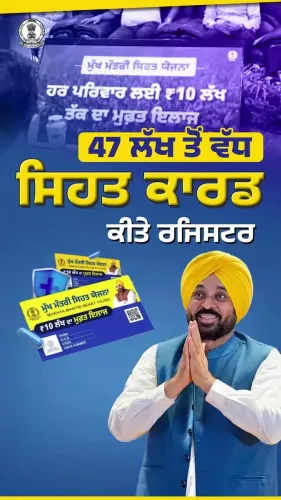
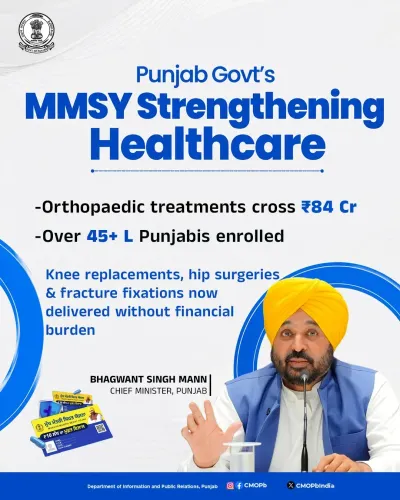
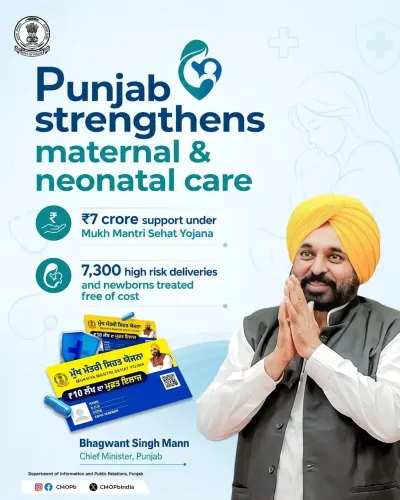
The Chief Minister's Office of Punjab announced on Saturday, 30 May 2026 that the Mukh Mantri Sehat Yojana (MMSY), led by Chief Minister Bhagwant Mann, has provided cashless treatment to 5,840 cases of acute febrile illness across the state, with claim payments totalling ₹1.31 crore.
Context
The official post from the Chief Minister's Office of Punjab described the scheme as 'a true lifeline amid the surge in seasonal illnesses,' underscoring the government's framing of the initiative as a direct response to rising fever-related hospitalisations. The cashless model means enrolled families are shielded from out-of-pocket expenses at the point of care, a critical safeguard during periods of heightened disease burden.
Seasonal illnesses — particularly acute febrile conditions linked to vector-borne and water-borne diseases — tend to spike in Punjab during the pre-monsoon and monsoon months, placing pressure on both public and private health facilities. The scheme's activation data reflects that pressure translating into real utilisation.
Policy Backdrop
The Mukh Mantri Sehat Yojana is a state-level health protection initiative launched by the Aam Aadmi Party government of Punjab after it came to power in March 2022. It was designed to complement the national Ayushman Bharat Pradhan Mantri Jan Arogya Yojana, plugging gaps in secondary and tertiary cashless care for residents who may not be fully covered under the central scheme.
Indian states have progressively built supplementary insurance layers atop central health programmes, particularly to address seasonal and regional disease patterns. Punjab's approach mirrors similar efforts in other states that have prioritised cashless access during peak illness windows, reducing the risk of households falling into medical debt.
Stakeholders and Impact
The immediate beneficiaries are Punjab residents hospitalised with acute febrile illness — a category that encompasses dengue, malaria, typhoid, and other fever-inducing conditions prevalent during seasonal transitions. The ₹1.31 crore in settled claims across 5,840 cases points to an average reimbursement that covers meaningful portions of inpatient treatment costs.
For families in lower-income brackets, the absence of an upfront payment requirement is particularly consequential: it prevents the deferral of care that often turns manageable illnesses into medical emergencies. Private empanelled hospitals also benefit from a structured reimbursement pipeline, incentivising their participation in the network.
What's Next
Utilisation patterns under MMSY during the full 2026 monsoon season will be closely watched as a gauge of the scheme's scalability. A sustained rise in claims could prompt the Punjab government to seek supplementary budget allocations in the next assembly session to expand the scheme's corpus or widen its beneficiary base.
The broader test for the Bhagwant Mann administration will be whether the cashless infrastructure holds up under peak seasonal load — both in terms of hospital network capacity and the speed of claim settlement — as the monsoon deepens across the state.
Point of View
A tactic the AAP government has used consistently to validate welfare delivery. Anchoring the announcement around seasonal illness spikes is politically astute: it frames the scheme as responsive rather than merely aspirational. The data also implicitly applies pressure on the empanelled hospital network to maintain service quality, since public scrutiny of claim volumes invites follow-up questions about settlement timelines and denial rates. More broadly, the announcement fits a pattern of Indian state governments using health insurance metrics as a proxy for governance credibility ahead of budget cycles.
NationPress
13 Oct 2026
Frequently Asked Questions
What is Mukh Mantri Sehat Yojana in Punjab?
Mukh Mantri Sehat Yojana (MMSY) is a state government health insurance scheme launched by the Bhagwant Mann-led Punjab government to provide cashless secondary and tertiary medical treatment to eligible Punjab residents, supplementing the national Ayushman Bharat programme.
How many cases has Punjab's Sehat Yojana covered for fever treatment?
According to the Chief Minister's Office of Punjab, the scheme has covered 5,840 cases of acute febrile illness, with claim payments totalling ₹1.31 crore.
Is Mukh Mantri Sehat Yojana different from Ayushman Bharat?
Yes. MMSY is a Punjab state-level scheme designed to fill gaps in the national Ayushman Bharat Pradhan Mantri Jan Arogya Yojana, particularly for secondary care and conditions not fully covered under the central programme.
Who is eligible for Mukh Mantri Sehat Yojana?
The scheme targets Punjab residents, with a focus on economically vulnerable households. Eligibility criteria are set by the Punjab government and align broadly with state welfare beneficiary databases.
What diseases are covered under MMSY's acute febrile illness category?
Acute febrile illness typically encompasses fever-inducing conditions such as dengue, malaria, typhoid, and other seasonal infections. The scheme covers inpatient treatment for these conditions on a cashless basis at empanelled hospitals.