Is Punjab Set to Launch Cashless Health Insurance on January 15?
Synopsis
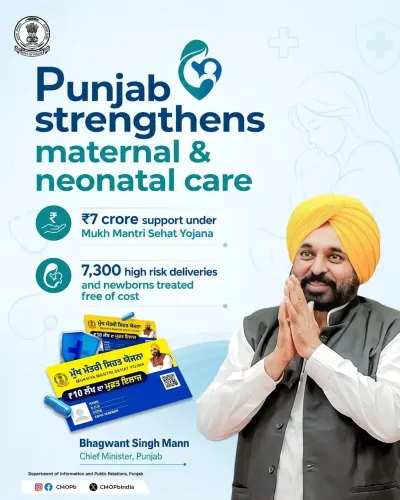
On January 15, Punjab will launch the Mukh Mantri Sehat Yojna, offering Rs 10 lakh cashless health insurance to families. This initiative, signed with United India Insurance Company, marks a significant enhancement in health coverage, aiming for inclusivity with no income restrictions.
Key Takeaways
Cashless coverage of Rs 10 lakh for families No income cap or exclusion criteria Enrollment via Common Service Centres Access to over 2,000 treatment packages Network of 824 empanelled hospitals
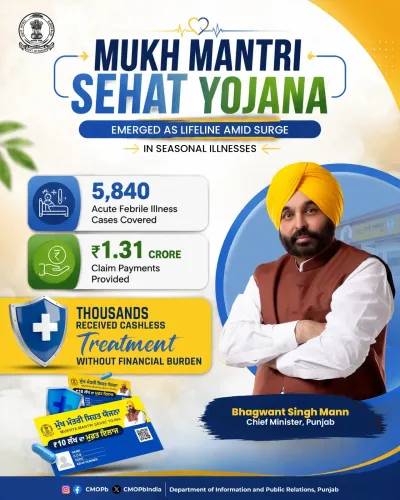
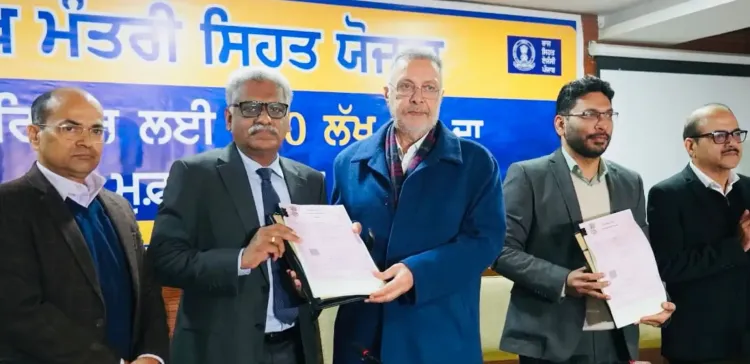
Chandigarh, Jan 2 (NationPress) In a significant move to initiate the Mukh Mantri Sehat Yojna on January 15, the Punjab state government signed an agreement with United India Insurance Company to offer a cashless health insurance cover of Rs 10 lakh to every family in Punjab.
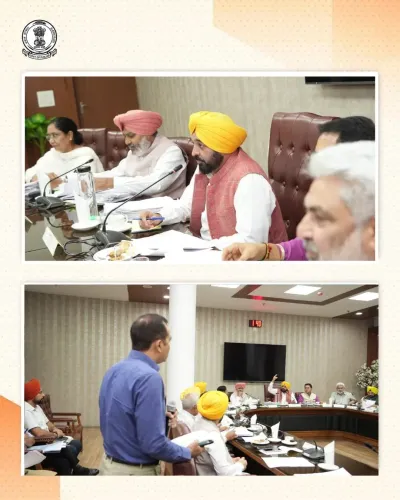
The agreement was formalized by Sanyam Aggarwal, CEO of the State Health Agency, and Mathew George, Executive Director of United India Insurance, with the State Health and Family Welfare Minister Balbir Singh present.
Calling it a major reform, the minister noted that the Mukh Mantri Sehat Yojna enhances health coverage from the previous Rs 5 lakh limit, which applied only to specific groups.
“This new initiative aims to deliver cashless medical treatment of up to Rs 10 lakh per family annually to all Punjab residents, including government employees and pensioners,” he stated.
Chief Minister Bhagwant Singh Mann and AAP national convenor Arvind Kejriwal are expected to officially launch the scheme on January 15. The minister highlighted that the scheme is crafted for total inclusivity, featuring no income restrictions or exclusion criteria.
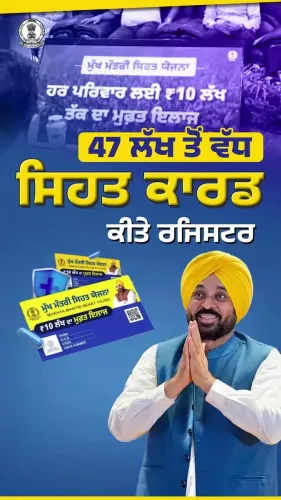
“Enrollment is straightforward and accessible via Common Service Centres (CSCs), using only Aadhaar and voter IDs. Beneficiaries will receive dedicated MMSY health cards. A helpline will soon be introduced to ease the process,” he mentioned.
Explaining the operational framework, the minister shared that United India Insurance Company will cover Rs 100,000 per family for all 65 lakh families in the state.
“For treatment costs ranging from Rs 100,000 to Rs 10,00,000, the state health agency will provide coverage on a trust basis,” he explained.
The scheme embraces a contemporary health benefit package, ensuring extensive coverage through over 2,000 selected treatment packages.
“Beneficiaries will have access to secondary and tertiary care across a robust network of 824 empanelled hospitals, which includes 212 public hospitals, eight government of India hospitals, and more than 600 private hospitals. The number of empanelled hospitals is expected to grow as the scheme evolves,” he added.
Point of View
The initiative aims to ensure health security for all families in the state. Such measures are essential in today's context, where accessible healthcare remains a fundamental right.
NationPress
24 Sept 2026
Frequently Asked Questions
What is the Mukh Mantri Sehat Yojna?
The Mukh Mantri Sehat Yojna is a cashless health insurance scheme launched by the Punjab government, providing coverage of up to Rs 10 lakh for families.
Who can enroll in the scheme?
All families in Punjab, including government employees and pensioners, can enroll in the Mukh Mantri Sehat Yojna.
How can families enroll in the scheme?
Enrollment is simplified through Common Service Centres using Aadhaar and voter IDs.
What types of treatment are covered?
The scheme covers a range of treatments through over 2,000 selected health packages.
When will the scheme be launched?
The Mukh Mantri Sehat Yojna is set to be officially launched on January 15.