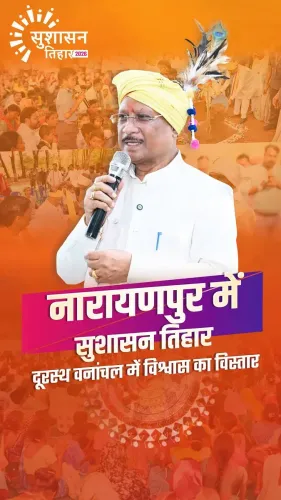
CM Sai holds chaupal in GPM district under Sushasan Tihar
Synopsis
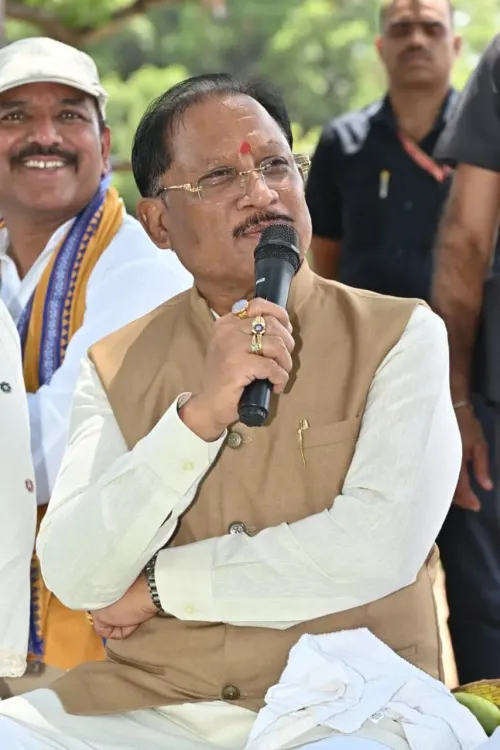
Chief Minister Vishnu Deo Sai visited village Nimdha in Gaurela-Pendra-Marwahi district on 6 June 2026 under Sushasan Tihar 2026, holding a tree-shade chaupal to engage directly with rural residents — continuing the BJP government's grassroots governance outreach across Chhattisgarh.
Key Takeaways
CM Vishnu Deo Sai visited village Nimdha in Gaurela-Pendra-Marwahi district on 6 June 2026 .
The visit was part of Sushasan Tihar 2026 , the Chhattisgarh government's ongoing good governance outreach programme.
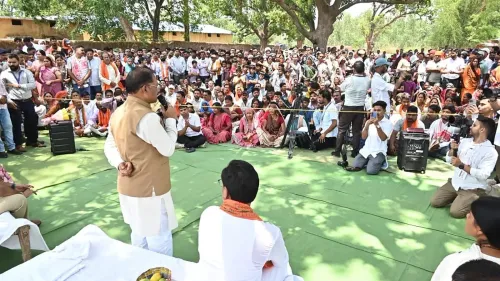
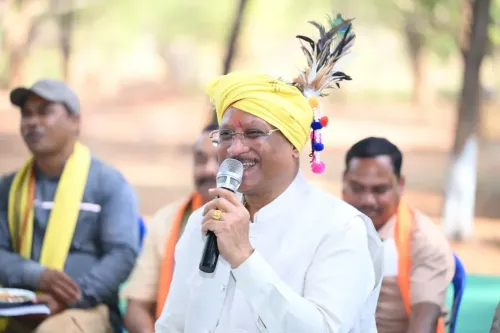
The CM held an open chaupal under a tree, engaging in direct dialogue with local villagers.
Gaurela-Pendra-Marwahi is a tribal-majority district in northern Chhattisgarh, carved out of Bilaspur in 2019 .
The BJP government has made direct citizen-outreach a central governance commitment since taking power in December 2023 .
District-level follow-up on grievances raised at Sushasan Tihar chaupals is expected through the 2026 monsoon session .
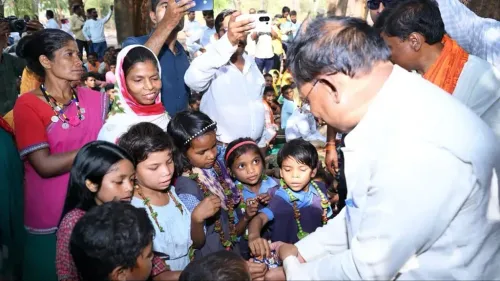
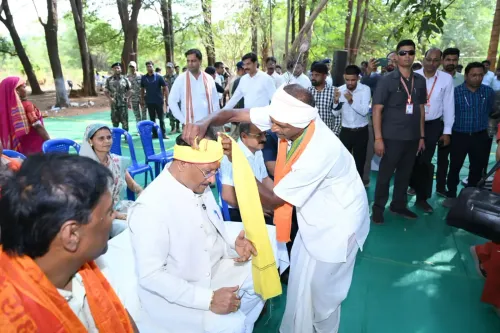
The Chief Minister's Office of Chhattisgarh announced on Saturday, 6 June 2026 that Chief Minister Vishnu Deo Sai visited village Nimdha in Gaurela-Pendra-Marwahi district as part of the ongoing Sushasan Tihar 2026 programme, where he held an open chaupal under the shade of a tree and engaged in direct dialogue with villagers.
Context
The Chief Minister's Office described the visit as a 'विश्वास, विकास और अपनत्व की चौपाल' — a 'chaupal of trust, development and belonging'. CM Sai sat with residents of Nimdha in an informal, open-air setting, a format deliberately chosen to signal accessibility and closeness to the grassroots. The office noted that his 'simplicity and warmth' had transformed the gathering into what it called a 'festival of public trust'.
The chaupal format — a traditional open village assembly — has been a cornerstone of Sushasan Tihar, the BJP-led Chhattisgarh government's flagship governance outreach programme. Such sessions are designed to allow citizens to raise grievances, seek scheme benefits, and interact directly with the state's top executive.
Policy Backdrop
The BJP government that came to power in Chhattisgarh in December 2023 — with Vishnu Deo Sai as Chief Minister — prioritised direct citizen-outreach mechanisms as a central plank of its administrative approach. Sushasan Tihar, which translates loosely as 'Good Governance Festival', operationalises this commitment through time-bound, district-level programmes across the state.
Gaurela-Pendra-Marwahi, a district carved out of Bilaspur in 2019, sits in northern Chhattisgarh and is home to significant tribal and forested communities. The choice of this district for a chaupal reflects the administration's stated focus on reaching tribal and rural populations who have historically faced barriers to accessing state welfare schemes.
Chhattisgarh has a large Scheduled Tribe population, and forest rights and tribal welfare have long shaped administrative priorities in the state. The chaupal model mirrors similar outreach drives seen in neighbouring states, underlining a broader pattern of Indian state governments using traditional community formats to improve last-mile governance delivery.
Stakeholders and Impact
The primary beneficiaries of Sushasan Tihar chaupals are rural and tribal residents who gain direct access to the Chief Minister and senior officials outside the formal bureaucratic channel. For communities in districts like Gaurela-Pendra-Marwahi, where administrative infrastructure can be sparse, such visits represent a rare opportunity for face-to-face grievance redressal.
The programme also carries political significance for the BJP administration, reinforcing its public-connect narrative ahead of future electoral cycles. CM Sai, who represents the Surguja region — itself a tribal heartland — brings personal credibility to these engagements, lending the outreach an authenticity that scripted public events often lack.
What's Next
District-level follow-up orders and scheme announcements emerging from Sushasan Tihar 2026 chaupals are expected to be closely watched through the monsoon session of the state legislature. The programme's effectiveness will ultimately be measured by the pace at which grievances logged at village-level chaupals are resolved and translated into on-ground scheme delivery.
As the 2026 edition of the programme continues across Chhattisgarh's districts, the administration's ability to convert public trust built at chaupals into verifiable governance outcomes will determine the programme's long-term credibility with rural voters.
Point of View
Newly-formed district like Gaurela-Pendra-Marwahi, the administration signals that its outreach extends beyond established administrative centres. Sushasan Tihar fits a wider pattern across BJP-governed states of repackaging traditional community formats — the chaupal, the jan samvad — as modern accountability mechanisms. The programme's real test, however, lies not in the warmth of village gatherings but in the speed and quality of post-chaupal scheme delivery.
NationPress
22 Oct 2026
Frequently Asked Questions
What is Sushasan Tihar in Chhattisgarh?
Sushasan Tihar is a good governance outreach programme run by the Chhattisgarh government, featuring open chaupals and grievance redressal sessions held by senior officials and the Chief Minister across districts of the state.
Why did CM Vishnu Deo Sai visit village Nimdha?
CM Vishnu Deo Sai visited village Nimdha in Gaurela-Pendra-Marwahi district on 6 June 2026 as part of Sushasan Tihar 2026, to hold a direct dialogue session with local rural residents under the programme's chaupal format.
Where is Gaurela-Pendra-Marwahi district located?
Gaurela-Pendra-Marwahi is a district in northern Chhattisgarh, carved out of the older Bilaspur district in 2019. It has significant tribal and forested areas.
Who is Vishnu Deo Sai?
Vishnu Deo Sai is the Chief Minister of Chhattisgarh, a BJP leader who took office in December 2023. He represents the Surguja region, a tribal heartland of the state.
What is the purpose of a chaupal in Indian governance?
A chaupal is a traditional open village assembly format used in Indian governance to facilitate direct dialogue between officials and citizens, allowing residents to raise grievances and seek information about government schemes without formal bureaucratic barriers.