CM Vishnu Deo Sai attends Karam Puja fest in Raipur
Synopsis
Chhattisgarh Chief Minister Vishnu Deo Sai attended the Karam Puja Parv Mahotsav in Raipur, hosted by the Uraon Adivasi Vikas Sangh, calling such festivals vital for cultural continuity and social harmony.
Key Takeaways
Chhattisgarh CM Vishnu Deo Sai attended the Karam Puja Parv Mahotsav in Raipur on 28 October 2026 .
The event was organised by the Uraon Adivasi Vikas Sangh , a tribal welfare body representing the Oraon community.
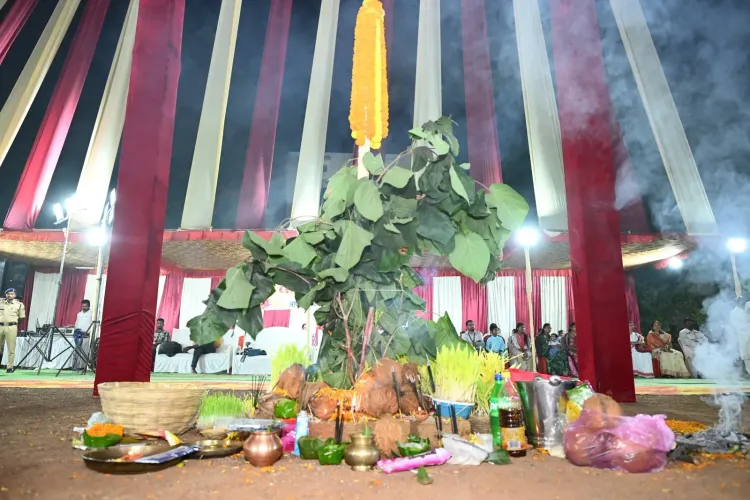
Karam Puja is a harvest festival centred on worship of the Karam tree, observed by the Oraon tribe of Chhattisgarh.
CM Sai described the festival as a confluence of faith, folk culture, and traditional joy, and called such events essential for passing heritage to future generations.
Tribal communities make up roughly 30 per cent of Chhattisgarh's population, making Adivasi cultural engagement a significant dimension of state politics.
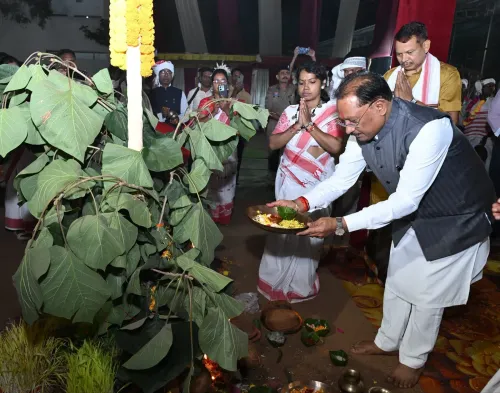
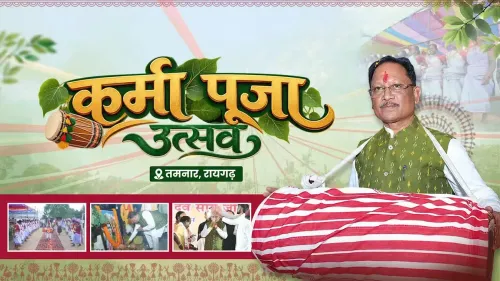
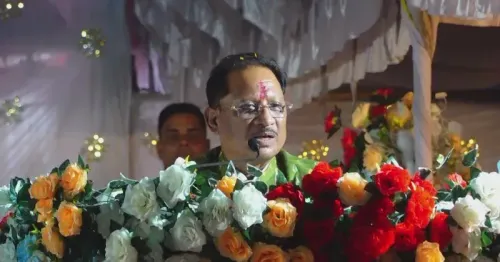
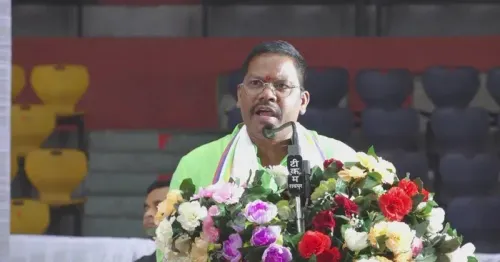
Faith, folk music, and the earthy rhythms of Oraon tradition filled Raipur on Wednesday, 28 October 2026, as the Uraon Adivasi Vikas Sangh hosted its Karam Puja Parv Mahotsav — and Chhattisgarh Chief Minister Vishnu Deo Sai was there to witness it.
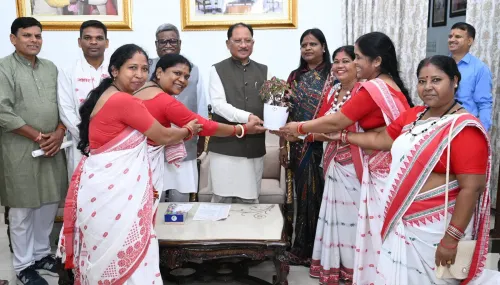
Posting four images from the celebration, CM Sai wrote in Hindi: 'Raipur mein Uraon Adivasi Vikas Sangh dwara aayojit Karam Puja Parv Mahotsav mein aastha, lok-sanskriti aur paramparik ullas ka sundar sangam dekhne ko mila' — 'A beautiful confluence of faith, folk culture, and traditional joy was on display at the Karam Puja festival organised by the Uraon Adivasi Vikas Sangh in Raipur.'
What Karam Puja means to the Oraon community
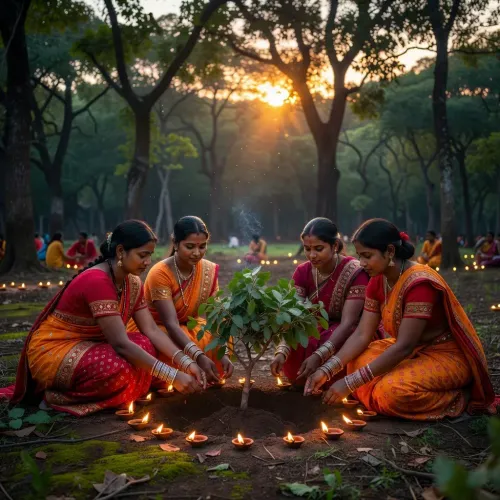
Karam Puja is a harvest festival observed by the Oraon tribe, one of Chhattisgarh's most prominent Adivasi communities. At its heart is the worship of the Karam tree, believed to bestow prosperity and well-being. Families bring branches of the tree indoors, offer prayers, and celebrate through the night with song and dance rooted in generations of oral tradition. It is as much a social ritual as a spiritual one — a moment when community bonds are renewed.
The Uraon Adivasi Vikas Sangh, the tribal welfare body that organised this edition, has long worked to keep these observances alive in an increasingly urbanised capital. Hosting the festival in Raipur rather than a village setting signals a deliberate effort to carry Oraon heritage into the state's public mainstream.
CM Sai's consistent engagement with tribal culture
For CM Sai — himself from a tribal background — participation in such events carries particular weight. Since taking office, he has made visible attendance at Adivasi festivals a recurring feature of his public calendar, framing them as expressions of Chhattisgarh's composite cultural identity rather than niche community affairs.
In his post, Sai went further than a routine greeting. He argued that cultural heritage does more than preserve the past — it 'strengthens mutual harmony and unity' and plays a 'vital role in passing this glorious legacy to future generations.' The framing positions tribal festivals not as folklore relics but as living instruments of social cohesion.
Chhattisgarh's tribal population accounts for roughly 30 per cent of the state's people, spread across dozens of distinct communities. Successive governments have encouraged Adivasi festival participation; the current BJP administration has continued — and in some respects amplified — that pattern alongside welfare outreach programmes targeting Scheduled Tribes.
If Karam Puja is a reminder of where Chhattisgarh's roots lie, events like this one in Raipur are increasingly the arena where those roots are tended — publicly, visibly, and with the Chief Minister watching.
Point of View
Personalised engagement with Adivasi cultural life — a strategy that blends cultural affirmation with political outreach in a state where tribal votes are decisive. With roughly 30 per cent of Chhattisgarh's electorate belonging to Scheduled Tribes, festivals like Karam Puja are not merely ceremonial; they are arenas of soft-power consolidation. Sai's own tribal identity lends the gesture authenticity that transcends routine political optics. The framing of heritage as a tool for 'social harmony' also reflects the ruling party's broader civilisational-continuity narrative, applied here at the grassroots level.
NationPress
28 Oct 2026
Frequently Asked Questions
What is Karam Puja and which tribe celebrates it?
Karam Puja is a harvest festival celebrated by the Oraon (Uraon) tribe of Chhattisgarh and neighbouring states. It involves the worship of the Karam tree, accompanied by traditional songs and dances, and is observed as a celebration of nature, prosperity, and community bonds.
Who organised the Karam Puja Parv Mahotsav in Raipur in 2026?
The event was organised by the Uraon Adivasi Vikas Sangh, a tribal welfare body representing the Oraon community, and was held in Raipur, the capital of Chhattisgarh.
Why did CM Vishnu Deo Sai attend the Karam Puja festival?
CM Sai attended as part of his consistent engagement with Adivasi cultural events in Chhattisgarh. He stated that such festivals strengthen mutual harmony, preserve cultural heritage, and help pass on indigenous traditions to future generations.
What is the significance of tribal culture in Chhattisgarh politics?
Tribal communities account for roughly 30 per cent of Chhattisgarh's population. Engaging with Adivasi festivals and welfare is a key dimension of governance and political outreach for all major parties in the state.
What is the Uraon Adivasi Vikas Sangh?
The Uraon Adivasi Vikas Sangh is a tribal welfare organisation working for the Oraon community in Chhattisgarh. It organises cultural events like the Karam Puja Mahotsav to preserve and promote Oraon heritage.