CM Sai Launches Bijli Bill Waiver Scheme for Chhattisgarh
Synopsis
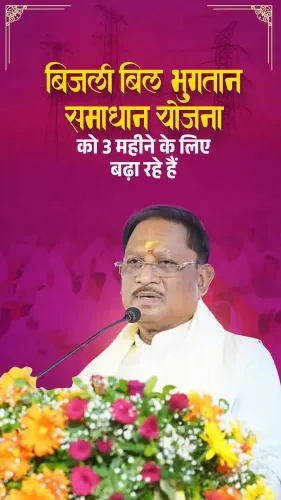
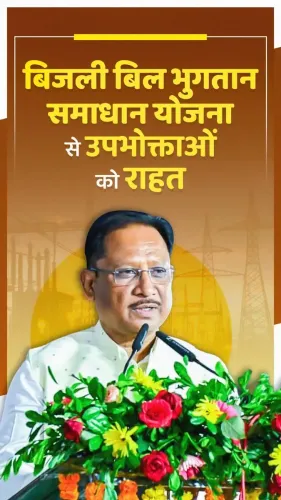
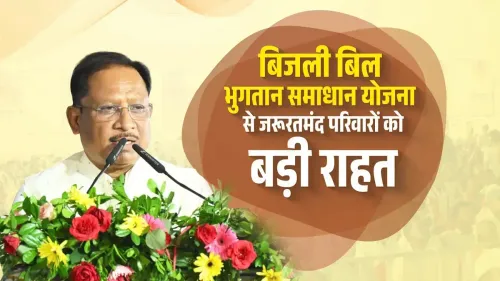
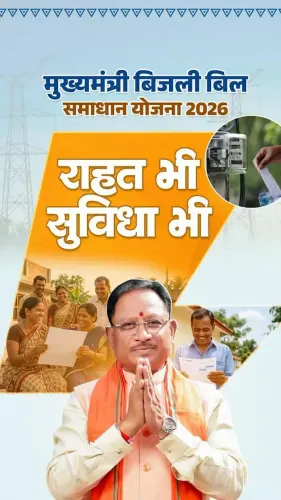
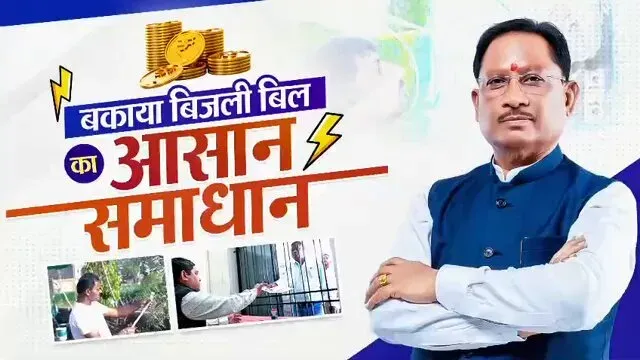
Chhattisgarh CM Vishnu Deo Sai launched the Mukhyamantri Bijli Bill Samadhan Yojana-2026 on 7 June, waiving all surcharges on overdue electricity bills and offering discounts on principal arrears for lakhs of consumers across the state.
Key Takeaways
Mukhyamantri Bijli Bill Samadhan Yojana-2026 was announced by CM Vishnu Deo Sai on 7 June 2026 .
The scheme waives the entire surcharge on old pending electricity bills for consumers in Chhattisgarh .
A special discount on the principal outstanding amount is also being offered under the scheme.
The initiative targets lakhs of consumers , with rural, tribal, and low-income households among the primary beneficiaries.
The announcement aligns with the government's stated goal of ensuring every household has uninterrupted, affordable electricity access.
Detailed eligibility rules, application timelines, and budget allocation are yet to be officially notified.
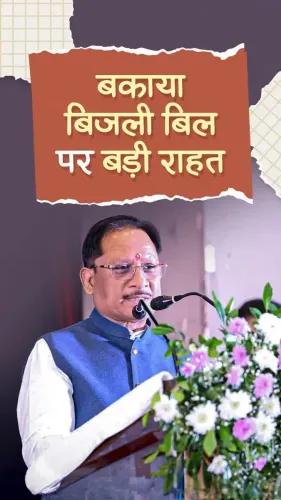
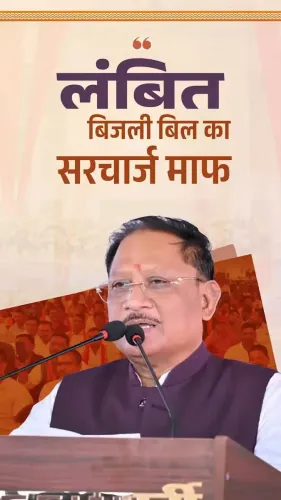
Chhattisgarh Chief Minister Vishnu Deo Sai on Sunday, 7 June 2026 announced the Mukhyamantri Bijli Bill Samadhan Yojana-2026, a scheme that waives all surcharges on overdue electricity bills and offers special discounts on principal arrears for lakhs of consumers across the state.
Context
In a post on X, CM Sai described the scheme as a major relief for millions of consumers in Chhattisgarh. He wrote: 'Mukhyamantri Bijli Bill Samadhan Yojana-2026 pradesh ke laakhon upbhoktaaon ke liye badi rahat bankar aayi hai' ('The Chief Minister's Electricity Bill Resolution Scheme-2026 has arrived as a major relief for lakhs of consumers in the state'). The announcement covers the full waiver of surcharges accumulated on old pending electricity bills, along with a special reduction on the principal outstanding amount.
CM Sai, who has led the state since December 2023, framed the scheme as part of his government's commitment to ensuring that 'every household in the state is lit and every family moves forward on the path of development without financial worry.'
Policy Backdrop
Electricity access and billing arrears have long been pressure points in Chhattisgarh, a state with large rural and tribal populations. The central government's Pradhan Mantri Sahaj Bijli Har Ghar Yojana (Saubhagya), launched in 2017, extended last-mile connections to households across the state, but sustained payment of bills has remained a challenge for many low-income families.
Bill amnesty schemes are a recurring instrument used by state governments across India to reduce household arrears and improve the financial health of electricity distribution companies. Such measures typically follow electoral cycles and are designed to align with national electrification goals while addressing stress in the power sector.
Stakeholders and Impact
The primary beneficiaries are domestic electricity consumers — particularly rural and semi-urban households — who have accumulated unpaid dues and surcharges over time. For Chhattisgarh's distribution companies, the scheme represents a trade-off: reduced surcharge revenue in the short term against improved collection rates and a cleaner arrears ledger.
Tribal communities and small farmers, who form a significant share of the state's population, are among those most likely to benefit from relief on legacy dues. The scheme could also reduce the administrative burden on local electricity offices handling long-pending default cases.
What's Next
The state government is expected to notify detailed eligibility criteria, the window for consumers to apply, and the specific discount slabs on principal arrears. Observers will watch for the scheme's budget allocation and any corresponding revision to discom tariff orders. The rollout's reach — in terms of verified beneficiary numbers — will be a key measure of its on-ground impact in the months ahead.
Point of View
The scheme reinforces his government's pro-poor positioning ahead of any future electoral cycle, targeting rural and tribal constituencies where energy affordability is a lived concern. The surcharge waiver is the politically visible component, but the discount on principal arrears is the more consequential fiscal decision — one that will test the state's capacity to compensate its discoms without straining the power sector's long-term viability. How swiftly and transparently the eligibility framework is published will determine whether the scheme delivers broad relief or remains a headline measure.
NationPress
19 Sept 2026
Frequently Asked Questions
What is the Mukhyamantri Bijli Bill Samadhan Yojana-2026?
It is a state government scheme in Chhattisgarh announced by CM Vishnu Deo Sai that waives all surcharges on overdue electricity bills and offers a special discount on the principal arrears owed by consumers.
Who benefits from the Chhattisgarh electricity bill waiver scheme?
Lakhs of electricity consumers in Chhattisgarh, particularly rural, tribal, and low-income households with pending dues, are the primary beneficiaries of this scheme.
Will the principal electricity bill amount also be waived?
The scheme offers a special discount on the principal outstanding amount in addition to a full waiver of accumulated surcharges, though the exact discount slabs are yet to be officially notified.
How is this scheme different from existing central government electricity schemes?
The central government's Saubhagya scheme focused on providing new electricity connections, whereas this state-level scheme addresses the accumulated billing arrears of existing consumers through surcharge waivers and principal discounts.
When was the Bijli Bill Samadhan Yojana 2026 announced?
Chief Minister Vishnu Deo Sai announced the scheme on 7 June 2026 via a post on his official X account.