CM Sai marks 12 years of Make in India, hails Modi's vision

Synopsis
Chhattisgarh Chief Minister Vishnu Deo Sai marked the 12th anniversary of Make in India on 25 September 2026, crediting PM Modi's 2014 campaign for transforming India's manufacturing identity across electronics, semiconductors, defence, automobiles and digital payments.
Key Takeaways
Make in India completed 12 years on 25 September 2026 , having been launched on the same date in 2014 by PM Narendra Modi .
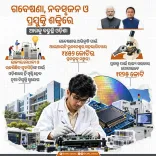
CM Vishnu Deo Sai highlighted sectors including electronics, semiconductors, defence, automobiles, UPI and railways as beneficiaries of the initiative.
The campaign is embedded within the broader Atmanirbhar Bharat self-reliance framework, reinforced by Production Linked Incentive (PLI) schemes launched from 2020 onward.
UPI , India's digital payments infrastructure, was cited alongside physical manufacturing sectors — reflecting an expanded definition of 'Made in India.' BJP-led state governments, including Chhattisgarh, have consistently amplified the Make in India narrative as part of the national party's economic messaging.
Semiconductor fabrication capacity and defence indigenisation remain the high-stakes sectors to watch under the PLI and Make in India umbrella.
Twelve years after Prime Minister Narendra Modi launched a campaign to remake India as the world's factory floor, Chhattisgarh Chief Minister Vishnu Deo Sai marked the milestone on Friday, 25 September 2026 — calling the initiative proof of a nation that has learned to back itself.
In a post on X, CM Sai wrote: 'Make in India ke 12 varsh poorn hone par sabhi deshwasion ko hardik badhai' — 'Heartfelt congratulations to all citizens on the completion of 12 years of Make in India.' He framed the campaign as a symbol of India's confidence, capability and self-reliance, pointing to a sweep of sectors — electronics to semiconductors, defence to automobiles, UPI to railways — as evidence of the country's talent, technology and innovation reaching 'new heights.'
From a campaign slogan to a manufacturing identity
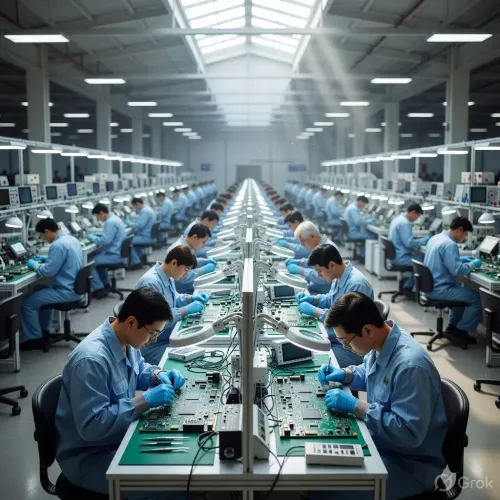
Make in India was launched on 25 September 2014 by the Government of India under Prime Minister Modi with a clear mandate: pull global investment in, push domestic manufacturing up, and reduce the country's dependence on imports. The iconic spinning gear logo became shorthand for an ambition that cut across sectors — from fighter jets to mobile phones.
Over the following decade, the campaign evolved into the broader Atmanirbhar Bharat framework, with Production Linked Incentive (PLI) schemes rolling out from 2020 onward in electronics, semiconductors and automobiles. The PLI architecture essentially put cash on the table for companies that manufactured and scaled in India — a structural bet that moved the needle beyond sloganeering.
Semiconductors, defence and the sectors in the spotlight
CM Sai's post specifically name-checks semiconductors and defence — two sectors that define strategic manufacturing ambition. India's push to build domestic semiconductor fabrication capacity has drawn attention from global chipmakers looking to diversify supply chains beyond East Asia. Defence indigenisation, driven by targets set under Defence Acquisition Procedure reforms, has steadily raised the share of locally produced equipment in the armed forces' procurement pipeline.
The reference to UPI — India's homegrown digital payments stack, now adopted by several countries — signals a deliberate broadening of what 'Made in India' means. It is no longer just physical goods rolling off assembly lines; it includes digital infrastructure exported as a governance model.
BJP state governments amplify the 12-year narrative
CM Sai's congratulatory post is part of a wider pattern: BJP-led state governments routinely use Make in India anniversaries to reinforce the party's economic record at the national level. For Chhattisgarh — a mineral-rich state with significant steel and power sector activity — the manufacturing narrative carries local weight beyond political messaging. The state's industrial base in coal, steel and now emerging electronics assembly positions it as a potential beneficiary of PLI-driven supply chain shifts.
The road from a 2014 launch to a 12-year landmark is measured not just in anniversary posts, but in whether the world's investors price India differently. CM Sai's closing line makes exactly that claim: 'Today the world sees Made in India with trust and quality.' The data on whether that trust has translated into durable FDI flows and export share gains will be the real scorecard.
Point of View
While ceremonial in register, reflects a deliberate BJP strategy of tethering state-level political capital to national economic branding. The mention of semiconductors and UPI alongside traditional sectors signals a maturation of the Make in India pitch: India is no longer selling cheap labour but selling an ecosystem. Whether the PLI-led manufacturing bet delivers sustained export competitiveness, rather than import substitution dressed in subsidy, remains the central policy question the next phase of the campaign must answer.
NationPress
25 Sept 2026
Frequently Asked Questions
When was Make in India launched?
Make in India was launched on 25 September 2014 by Prime Minister Narendra Modi to boost domestic manufacturing and attract foreign direct investment into India.
What is Make in India's connection to Atmanirbhar Bharat?
Make in India forms the foundational manufacturing pillar of the Atmanirbhar Bharat (self-reliant India) framework, which was formalised around 2020 and is complemented by Production Linked Incentive (PLI) schemes across electronics, semiconductors, defence and automobiles.
Why did CM Vishnu Deo Sai post about Make in India?
Chhattisgarh Chief Minister Vishnu Deo Sai posted to mark the 12th anniversary of Make in India on 25 September 2026 , congratulating citizens and crediting PM Modi's leadership for India's rising manufacturing profile.
Which sectors does Make in India cover?
Make in India spans a wide range of sectors including electronics, semiconductors, defence, automobiles and digital infrastructure such as UPI , as well as railways and heavy industry.
What are PLI schemes and how do they relate to Make in India?
Production Linked Incentive (PLI) schemes offer financial incentives to companies that manufacture and scale production in India; they were rolled out from 2020 onward as the structural backbone of the Make in India and Atmanirbhar Bharat push.