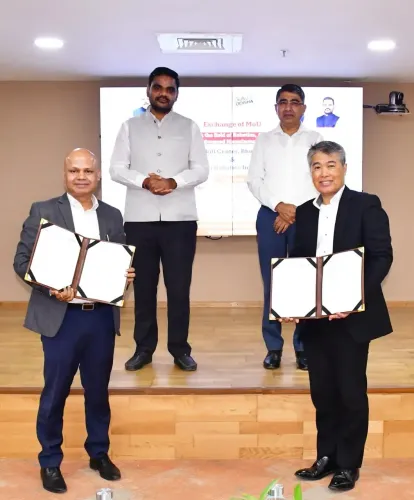
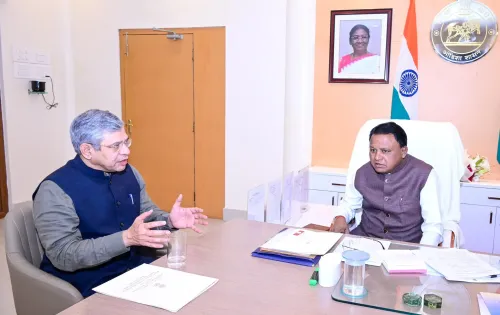
Odisha Clears ₹452 Cr Power Electronics Hub with IIT Bhubaneswar
Synopsis
The Odisha CMO has announced a ₹452 crore Integrated Power Electronics project with IIT Bhubaneswar, with the state government contributing ₹125 crore. The initiative aims to boost R&D, drive innovation in renewables and EVs, and retain skilled youth talent within the state.
Key Takeaways
A ₹452 crore Integrated Power Electronics project has been approved in partnership with IIT Bhubaneswar .
The Odisha state government will contribute ₹125 crore as co-funding support for the project.
The project targets research and innovation in power electronics, with applications in EVs, renewables, and industrial automation .
IIT Bhubaneswar , established in 2008, serves as the institutional anchor for the initiative.
A key stated goal is creating high-skill employment and research opportunities for Odisha's educated youth within the state .
The project aligns with India's national push for electronics self-reliance under the India Semiconductor Mission framework .
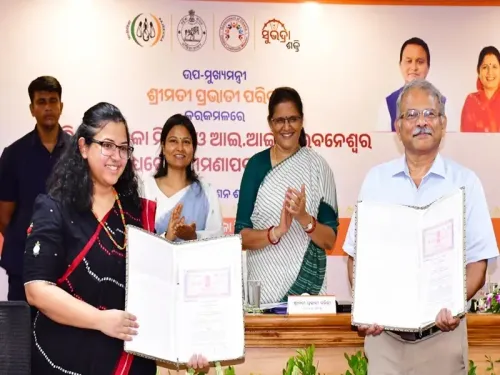
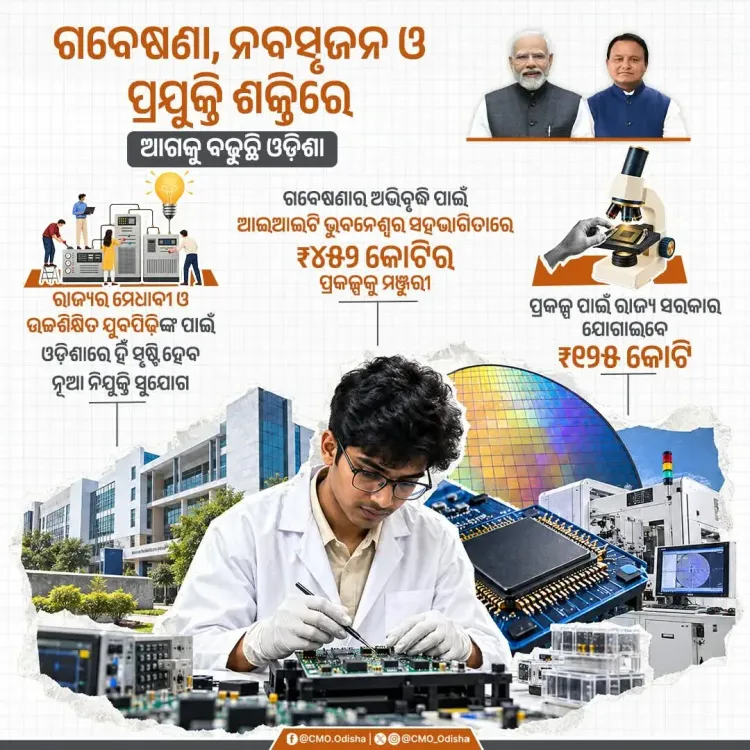
Odisha is betting big on homegrown talent. The state government has announced approval of a ₹452 crore Integrated Power Electronics project in partnership with IIT Bhubaneswar — and is putting up ₹125 crore of its own money to make it happen, the Chief Minister's Office of Odisha confirmed on Friday, 25 September 2026.
The post, written in Odia, declared: 'ଗବେଷଣା, ନବସୃଜନ ଓ ପ୍ରଯୁକ୍ତିର ଶକ୍ତିରେ ଓଡ଼ିଶା ଆଗକୁ ବଢୁଛି' — 'Odisha is moving forward on the strength of research, innovation, and technology.' The project, the CMO said, will accelerate research and innovation while creating fresh opportunities for the state's educated and highly skilled youth — right here in Odisha.
What the ₹452 Crore Project Actually Does
Power electronics is the engineering discipline that controls and converts electrical energy — the invisible backbone of electric vehicles, solar inverters, industrial drives, and smart grids. An integrated research centre at IIT Bhubaneswar targeting this field places Odisha squarely inside the fastest-growing layer of the global energy transition. The institute, established in 2008, has steadily built research capacity in engineering and technology, making it a natural anchor for a project of this scale.
The funding structure is telling. The ₹452 crore total project cost was approved at the central level, while the Odisha state government's ₹125 crore contribution is co-funding — a deliberate pattern the state has used to leverage centrally sanctioned projects with supplementary support that accelerates local execution and builds state-level ownership over outcomes.
Brain-Drain in Reverse — Odisha's Talent Retention Play
The most pointed line in the CMO's announcement was also the most strategic one: the project will create opportunities for highly educated youth 'within the state itself.' That phrase carries weight. Odisha, like many Indian states with strong engineering colleges and IIT infrastructure, has long watched its brightest graduates leave for Bengaluru, Hyderabad, or abroad. A world-class power electronics R&D facility anchored at IIT Bhubaneswar changes the calculus — it creates research careers, doctoral positions, and eventually industry spin-offs that didn't previously exist in the state.
This move also aligns with India's broader Semiconductor and Electronics Mission framework, under which state-level technology partnerships with premier institutes have been actively encouraged since 2021. Power electronics research directly feeds applications in renewables, EV manufacturing, and industrial automation — sectors where India is rapidly scaling domestic capacity.
What to Watch as the Project Takes Shape
The immediate questions are about execution: when groundwork begins, how research milestones are defined, and whether the facility will seed industry tie-ups or attract further private investment into Bhubaneswar's emerging technology corridor. The state's willingness to co-fund to the tune of ₹125 crore signals intent — but the true measure will be the researchers it attracts and the patents it produces.
Odisha has quietly positioned itself as one of eastern India's most ambitious states on the technology and industry front. This project is a concrete, funded, institutionally anchored step — not a promise on a manifesto.
Point of View
Then add state capital to assert ownership and accelerate timelines. The explicit framing around retaining educated youth is politically savvy and economically sound: brain-drain is one of the most measurable costs of underdeveloped state R&D ecosystems. If this facility matures into a genuine research and commercialisation hub, it could anchor a wider electronics and clean-tech cluster in Bhubaneswar — the kind of ecosystem Maharashtra and Karnataka built over decades. The real test is in execution, institutional governance, and whether private sector partners follow public investment in.
NationPress
25 Sept 2026
Frequently Asked Questions
What is the Integrated Power Electronics project in Odisha?
It is a ₹452 crore research and innovation facility approved in partnership with IIT Bhubaneswar , focused on power electronics — technology used in EVs, solar inverters, and industrial systems. The Odisha government will contribute ₹125 crore toward the project.
How much is Odisha contributing to the IIT Bhubaneswar power electronics project?
The Odisha state government is contributing ₹125 crore as co-funding support, with the total project cost approved at ₹452 crore .
What is IIT Bhubaneswar and when was it established?
IIT Bhubaneswar is a public technical university in Odisha established in 2008 , focused on engineering education, research, and industry collaboration. It is one of the newer IITs under the Government of India.
Why is power electronics research important for Odisha?
Power electronics underpins electric vehicles, renewable energy inverters, and industrial automation — all fast-growing sectors. A dedicated R&D centre positions Odisha to build expertise and attract investment in these high-value technology areas.
How does this project help Odisha's youth?
The CMO stated the project will create research and career opportunities for highly educated and skilled youth within Odisha itself , addressing the longstanding challenge of talent migration to other states or abroad.