CM Sai Meets Medicinal Plants Board Chief in Raipur
Synopsis
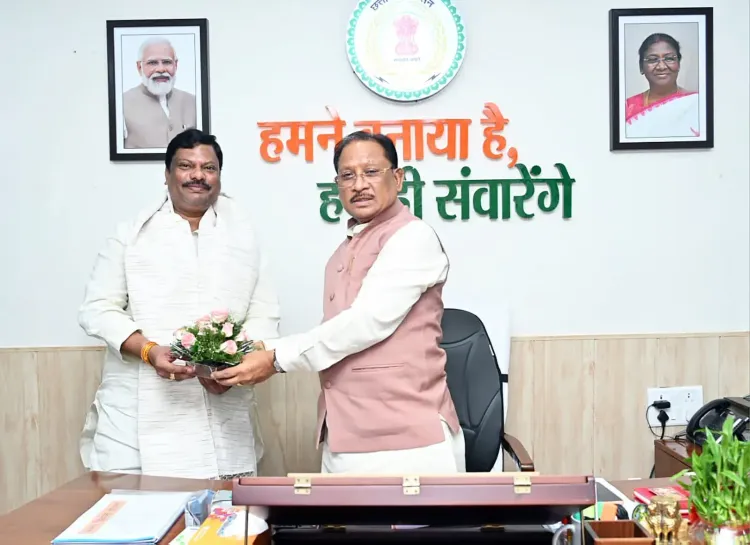
Chhattisgarh Chief Minister Vishnu Deo Sai met Vikas Markam, Chairman of the state's Adivasi, Local Health Tradition and Medicinal Plants Board, at his Raipur residence on 30 May 2026 to discuss key departmental issues, signalling continued focus on tribal health and medicinal plant policy.
Key Takeaways
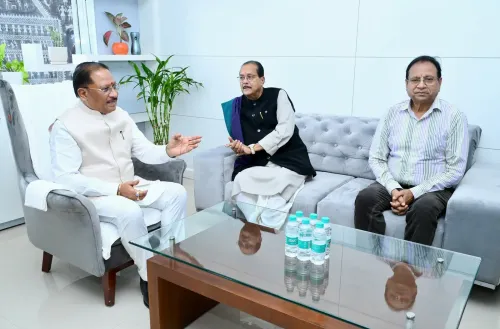
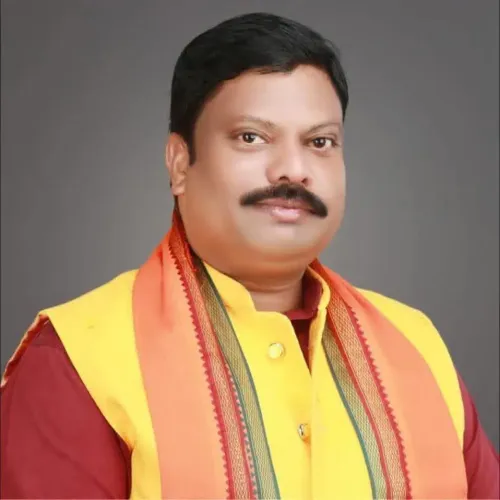
CM Vishnu Deo Sai held a courtesy meeting with Vikas Markam , Chairman of the Chhattisgarh Adivasi, Local Health Tradition and Medicinal Plants Board , on 30 May 2026 .
The meeting took place at the Chief Minister's official residence in Raipur .
Discussions covered various departmental subjects related to the board's mandate.
The board is tasked with promoting tribal health traditions, documenting local medicinal knowledge and supporting medicinal plant resources in Chhattisgarh.
India's National Medicinal Plants Board was established in 2000 , providing the national framework within which the state body operates.
Chhattisgarh's large Scheduled Tribe population and rich biodiversity make tribal health policy a recurring governance priority for successive state administrations.
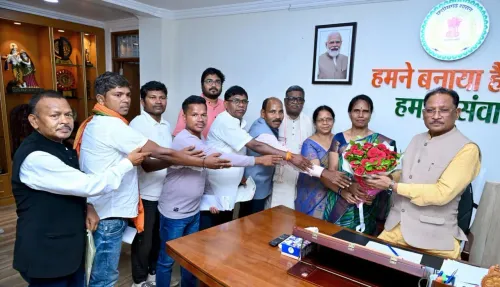
Chhattisgarh Chief Minister Vishnu Deo Sai received Vikas Markam, Chairman of the Chhattisgarh Adivasi, Local Health Tradition and Medicinal Plants Board, at his Raipur residence on Saturday, 30 May 2026. The courtesy call provided an occasion to discuss a range of departmental matters connected to the board's mandate of promoting tribal health traditions and medicinal plant resources across the state.
Context
CM Sai shared the meeting on X, writing: 'रायपुर स्थित निवास में आज छत्तीसगढ़ आदिवासी, स्थानीय स्वास्थ्य परंपरा एवं औषधि पादप बोर्ड के अध्यक्ष श्री विकास मरकाम जी ने शिष्टाचार भेंट की।' ('Today at my Raipur residence, Shri Vikas Markam, Chairman of the Chhattisgarh Adivasi, Local Health Tradition and Medicinal Plants Board, paid a courtesy visit.'). He added that various departmental subjects related to the board were discussed during the occasion. Markam is a BJP affiliate and heads the state body responsible for documenting indigenous medicinal knowledge and supporting sustainable use of plant resources.
Policy Backdrop
The Chhattisgarh Adivasi, Local Health Tradition and Medicinal Plants Board operates within a broader national framework that dates to 2000, when India established the National Medicinal Plants Board to coordinate conservation, cultivation and promotion of medicinal plants across the country. The creation of the Ministry of AYUSH in 2014 further mainstreamed tribal and traditional health practices into public health policy. Chhattisgarh, with one of the largest Scheduled Tribe populations in India and exceptional forest biodiversity, has long positioned these boards as a bridge between indigenous knowledge systems and formal health governance.
Successive state administrations have sought to document and protect traditional healing knowledge while encouraging the cultivation and sustainable harvesting of medicinal plants. The current BJP-led government under CM Sai continues that approach through dedicated institutional bodies and regular coordination with domain officials.
Stakeholders and Impact
Tribal communities, traditional healers, and medicinal plant growers across Chhattisgarh are the primary stakeholders of the board's work. For these communities, institutional recognition of local health traditions can translate into livelihood support, intellectual property protections for indigenous knowledge, and access to state-backed cultivation programmes. The board's coordination with the state government is therefore closely watched by forest-dependent populations in the state's predominantly tribal districts.
What's Next
Observers will watch for possible state budget provisions or scheme guidelines targeting medicinal plant clusters and traditional knowledge documentation in the coming fiscal cycle. Regular high-level engagement between the Chief Minister's office and the board signals that tribal health and medicinal plant policy remains an active priority for the Sai administration. Concrete programme announcements, if any, are expected to emerge through official government orders in the months ahead.
Point of View
An area where the party has sought to distinguish its governance record since taking office in December 2023. Chhattisgarh's large Scheduled Tribe population makes tribal health and forest-linked livelihoods a politically salient issue, and sustained engagement with dedicated boards helps the administration demonstrate programmatic seriousness beyond electoral cycles. The meeting also fits a broader national pattern under which AYUSH-aligned and traditional knowledge bodies have gained greater administrative visibility. How these discussions translate into budgetary allocations or scheme guidelines will determine whether the engagement yields tangible outcomes for tribal communities.
NationPress
15 Oct 2026
Frequently Asked Questions
What is the Chhattisgarh Adivasi Local Health Tradition and Medicinal Plants Board?
It is a state-level body in Chhattisgarh tasked with promoting tribal health traditions, documenting indigenous medicinal knowledge and supporting the conservation and cultivation of medicinal plants across the state.
Who is Vikas Markam?
Vikas Markam is a BJP affiliate who serves as Chairman of the Chhattisgarh Adivasi, Local Health Tradition and Medicinal Plants Board.
Why did Vikas Markam meet CM Vishnu Deo Sai?
Markam paid a courtesy visit to CM Sai at his Raipur residence on 30 May 2026, during which various departmental subjects related to the board's work were discussed.
What is India's National Medicinal Plants Board?
Established in 2000, the National Medicinal Plants Board coordinates conservation, cultivation and promotion of medicinal plants at the national level and provides the broader policy framework within which state bodies like Chhattisgarh's operate.
How does Chhattisgarh's tribal population relate to medicinal plant policy?
Chhattisgarh has one of India's largest Scheduled Tribe populations and rich forest biodiversity, making the documentation and protection of indigenous medicinal knowledge a long-standing governance and livelihood priority for the state.