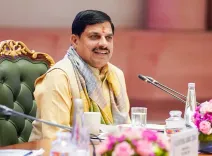
CM Sai joins National Mango Festival 2026 in Raipur
Synopsis
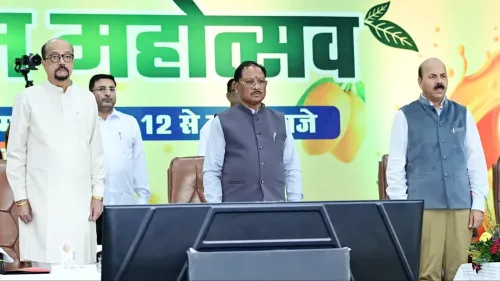
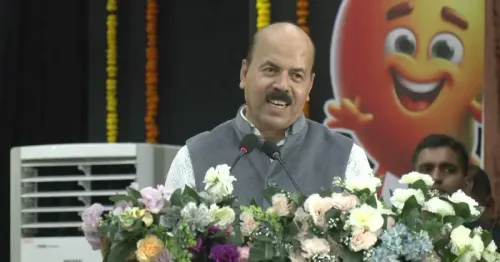
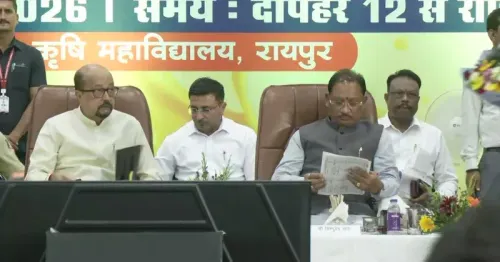
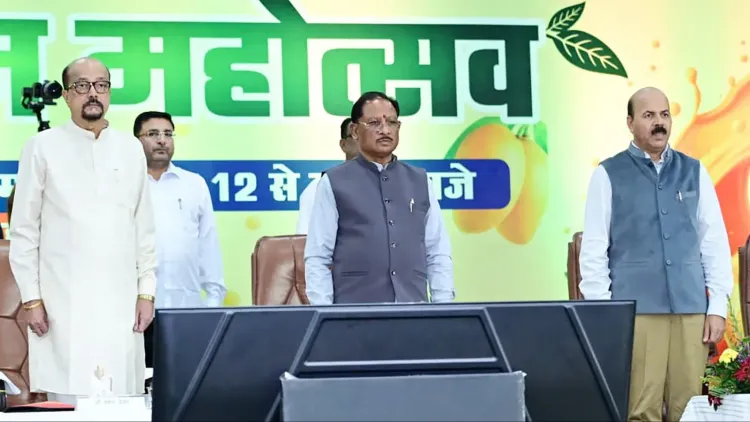
Chhattisgarh Chief Minister Vishnu Deo Sai and Governor Ramen Deka attended the three-day National Mango Festival-2026 at Raipur's Agriculture College on 29 May. The event displays over 250 mango varieties and aims to connect farmers with new technologies and better market opportunities.
Key Takeaways
Chief Minister Vishnu Deo Sai and Governor Ramen Deka jointly attended the National Mango Festival-2026 in Raipur on 29 May 2026 .
The festival is a three-day event hosted at the Agriculture College, Raipur .
An exhibition of more than 250 mango varieties is on display, highlighting India's horticultural diversity.
The event is positioned as a platform to connect mango farmers with new technologies, innovations, and market opportunities.
The festival falls within the broader framework of the central government's Mission for Integrated Development of Horticulture (MIDH) , active since 2014 .
State follow-up on technology transfer and market tie-ups after the festival will be closely watched by the horticulture sector.
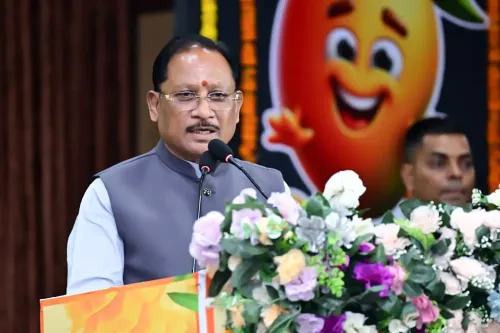
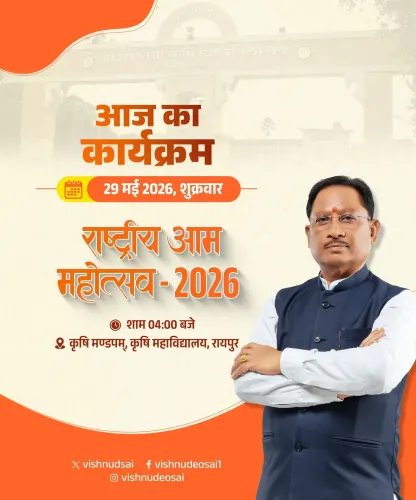
Chhattisgarh Chief Minister Vishnu Deo Sai attended the three-day National Mango Festival-2026 at the Agriculture College, Raipur, on Friday, 29 May 2026, alongside Governor Ramen Deka. The festival, hosted on the college grounds, showcases over 250 mango varieties drawn from across the country and the state.
Context
Chief Minister Sai shared his participation on social media, noting that the exhibition presents mango varieties of 'विविध स्वाद, गुणवत्ता और विशेषताओं' ('diverse flavours, quality, and characteristics'), reflecting the country's rich horticultural heritage and the hard work of farmers. He described the festival as a 'powerful medium' to connect mango-growing farmers with new technologies, innovations, and better market opportunities.
Governor Ramen Deka, who oversees ceremonial state functions and regularly participates in agriculture-linked events in Chhattisgarh, joined Chief Minister Sai at the inauguration. The Agriculture College in Raipur, the state capital, serves as a natural institutional anchor for such agri-horticultural gatherings.
Policy Backdrop
The festival aligns with the central government's Mission for Integrated Development of Horticulture (MIDH), launched in 2014, which promotes production, technology adoption, and marketing of fruit crops — including mango — across Indian states. Chhattisgarh has increasingly positioned crop-specific exhibitions within its broader push for value addition in fruit cultivation.
Indian states have long used such festivals to move beyond cereal-dominated agriculture and diversify farmer incomes through high-value horticultural crops. Mango, as India's most commercially significant fruit, regularly anchors these state-level showcases.
Stakeholders and Impact
The primary beneficiaries of the National Mango Festival-2026 are mango-producing farmers across Chhattisgarh, who gain direct exposure to improved cultivation techniques, post-harvest management, and linkages with buyers and agri-businesses. The three-day format allows for demonstrations, expert interactions, and potential market tie-ups that a single-day event cannot accommodate.
The horticulture sector more broadly stands to benefit if the festival catalyses state follow-up on technology transfer commitments. Farmers attending from different districts also get a rare comparative view of varietal diversity, which can inform planting decisions for subsequent seasons.
What's Next
The festival runs for three days, concluding in early June. Observers will watch whether the Chhattisgarh government announces concrete follow-up measures — such as technology-transfer programmes, market-linkage agreements, or budgetary allocations for horticulture — in the weeks after the event closes. Chief Minister Sai's public framing of the festival as a vehicle for raising farmer incomes signals that the state administration regards it as more than a ceremonial showcase.
Point of View
Alongside the Governor, signals that the Chhattisgarh government is treating horticulture as a political as well as an economic priority. Crop-specific festivals have become a standard tool for state governments to demonstrate farmer-first credentials without requiring immediate budgetary outlays. The emphasis on market linkages and technology access fits neatly into the BJP's national narrative of doubling farmer incomes through diversification beyond cereals. The real test will be whether the festival translates into concrete post-event programmes or remains a well-attended but consequentially thin showcase.
NationPress
19 Sept 2026
Frequently Asked Questions
What is the National Mango Festival-2026 in Raipur?
The National Mango Festival-2026 is a three-day event held at the Agriculture College in Raipur, Chhattisgarh, displaying over 250 mango varieties from across India. It aims to connect mango-growing farmers with new technologies, innovations, and market opportunities.
Who attended the National Mango Festival-2026?
Chhattisgarh Chief Minister Vishnu Deo Sai and Governor Ramen Deka attended the festival on 29 May 2026.
How many mango varieties are displayed at the Raipur mango festival?
More than 250 mango varieties of diverse flavours, quality, and characteristics are on display at the National Mango Festival-2026.
What is the Mission for Integrated Development of Horticulture (MIDH)?
MIDH is a central government scheme launched in 2014 to boost production, technology adoption, and marketing of fruit crops including mango across Indian states.
How does the mango festival help Chhattisgarh farmers?
The festival provides mango farmers direct access to improved cultivation techniques, post-harvest management knowledge, and linkages with buyers and agri-businesses, which can help raise their incomes.