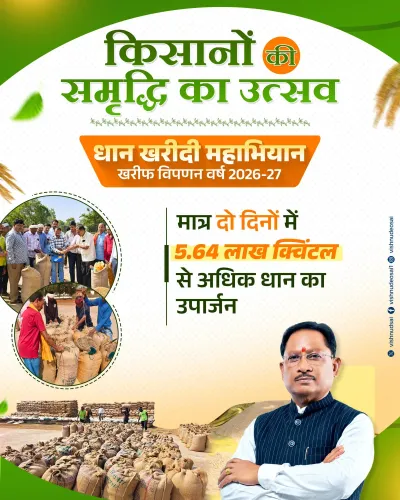
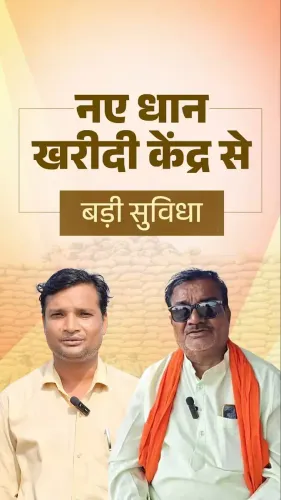
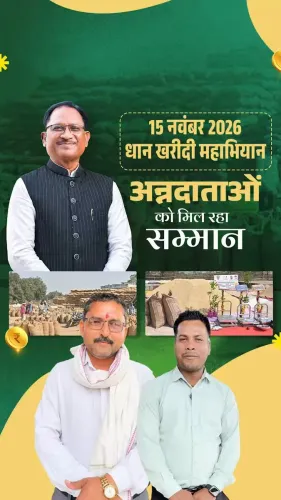
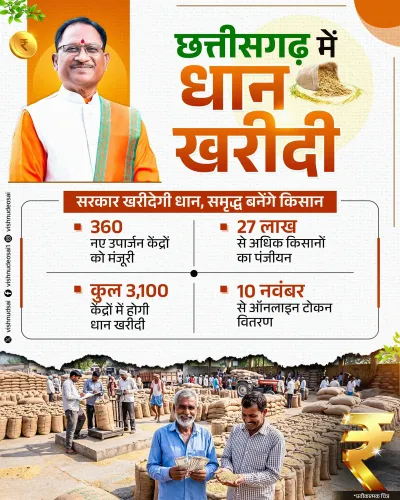
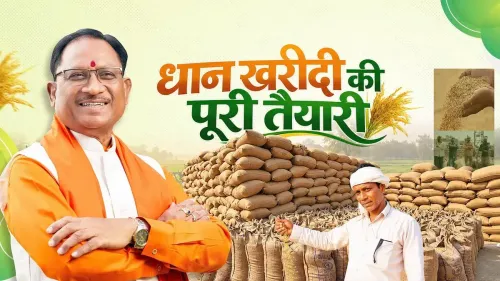
CM Sai's Dhan Kharidi Abhiyan Picks Up Pace in Chhattisgarh
Synopsis
Chief Minister Vishnu Dev Sai's Dhan Kharidi Mahabhiyan is in full swing in Chhattisgarh, with the CMO pledging fair MSP pricing and transparent paddy procurement for farmers in the 2026-27 kharif season.
Key Takeaways
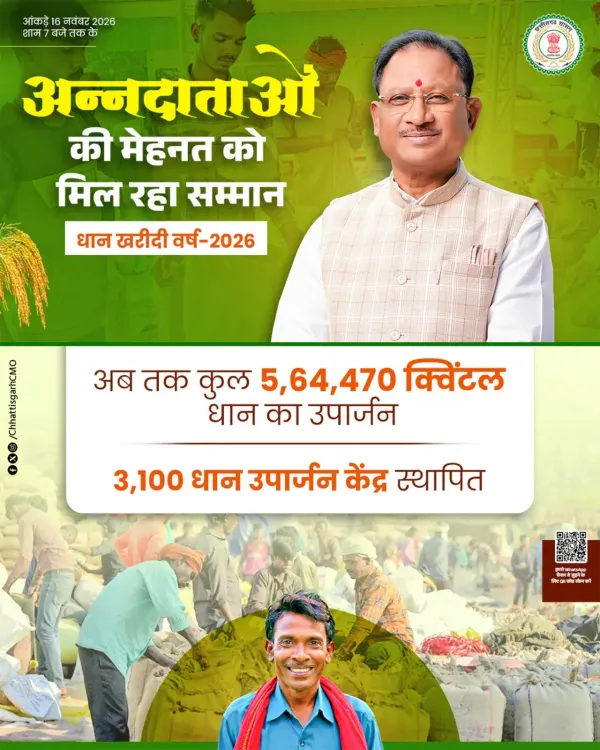
The Chief Minister's Office of Chhattisgarh confirmed on 17 November 2026 that the Dhan Kharidi Mahabhiyan has picked up pace under CM Vishnu Dev Sai .
The government has pledged fair MSP (Minimum Support Price) payments, respect for farmers' labour, and a transparent procurement system.
Chhattisgarh has run annual paddy procurement at MSP every year since the state's formation in 2000 .
The state positions itself alongside major procurement states like Punjab and Telangana in India's decentralised foodgrain support system.
The drive is branded under the BJP government's 'Sushasan Sarkar' (Good Governance Government) and 'Viksit Chhattisgarh' framework.
Key metrics to watch: purchase volumes, payment speed, and digital transparency tools for the 2026-27 kharif season.
Chhattisgarh's paddy farmers are at the centre of a renewed government push — the Chief Minister's Office of Chhattisgarh confirmed on Tuesday, 17 November 2026 that the Dhan Kharidi Mahabhiyan (Paddy Procurement Grand Drive) under Chief Minister Vishnu Dev Sai has gathered significant momentum, with the administration reaffirming its commitment to fair pricing and transparent procurement for the state's farming communities.
The CMO's post, hashtagged #DhanKharidi2026 and #SushasanSarkar (Good Governance Government), declared the administration is 'committed to honouring farmers' hard work, ensuring fair value for their produce and a transparent procurement system.' The language signals that this year's kharif procurement cycle is well underway as the post-harvest season peaks.
A State Built on Paddy — and the MSP Promise
Chhattisgarh, carved out as a separate state in 2000, has run annual paddy procurement at the Minimum Support Price (MSP) every year since its formation. The state is one of central India's largest rice-producing zones, and successive governments — across party lines — have treated MSP procurement as the cornerstone of rural income support. What has changed over the decades is the architecture: a gradual shift toward direct-benefit payments, reduced middlemen, and digital tracking of purchase volumes.
The current BJP government under CM Sai, in office since December 2023, has branded this drive under its broader 'Sushasan Sarkar' (Good Governance Government) narrative, connecting paddy procurement to a wider promise of accountability and farmer dignity. The hashtag #ViksitChhattisgarh (Developed Chhattisgarh) placed alongside #KisanKalyan (Farmer Welfare) is a deliberate rhetorical frame — development measured at the farm gate, not just in GDP figures.
Where Chhattisgarh Fits India's MSP Landscape
Nationally, Chhattisgarh sits in the company of states like Punjab and Telangana that use large-scale government procurement as a primary income-floor mechanism for paddy growers. India's decentralised foodgrain system means these state-level campaigns do the heavy lifting — keeping farmgate prices from collapsing post-harvest when supply floods local markets. The emphasis on 'transparent procurement' in the CMO's messaging also hints at the perennial challenge: ensuring procurement centre access reaches small and marginal farmers, not just larger aggregators.
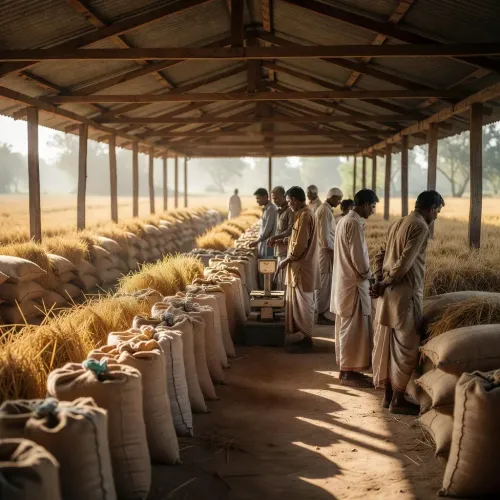
The 2026-27 kharif procurement season — the specific campaign window the post references — is the annual race against time: grain must be purchased, weighed, and paid for before farmers feel pressure to sell cheap to private traders. Speed of payment and coverage of procurement centres are the two metrics that will define whether this season's drive delivers on its stated promise.
What the 'Mahabhiyan' Label Signals
Calling this a mahabhiyan — a 'grand campaign' — rather than routine procurement is itself a political choice. It telegraphs scale and urgency: more centres, faster disbursal, visible government presence at the village level. Whether the operational rollout — purchase volumes, payment timelines, any new digital transparency tools — matches that billing will be the real scorecard as the season progresses.
For CM Sai, who leads a state where paddy farmers are a decisive electoral constituency, the momentum of this drive carries consequences well beyond the harvest season.
Point of View
And the speed and coverage of MSP purchases directly shapes government approval ratings at the village level. By framing this year's drive as a 'mahabhiyan' under the 'Sushasan Sarkar' banner, CM Sai's administration is tying governance credibility to a measurable, season-bound deliverable. If disbursal is slow or procurement centres fall short, that branding becomes a liability. The broader national context — an ongoing political debate over MSP legislation — gives Chhattisgarh's proactive state-level procurement added salience as a demonstration of what active government intervention looks like on the ground.
NationPress
17 Nov 2026
Frequently Asked Questions
What is the Dhan Kharidi Mahabhiyan in Chhattisgarh?
The Dhan Kharidi Mahabhiyan is Chhattisgarh's annual paddy procurement grand drive, under which the state government purchases rice directly from farmers at the Minimum Support Price (MSP) to protect their income and reduce dependence on private traders.
Who is leading the Dhan Kharidi Abhiyan 2026 in Chhattisgarh?
Chief Minister Vishnu Dev Sai, who has been in office since December 2023, is leading the 2026 paddy procurement drive under the BJP government's 'Sushasan Sarkar' governance framework.
Since when has Chhattisgarh been running MSP paddy procurement?
Chhattisgarh has conducted annual paddy procurement at MSP since the state was formed in 2000, making it a consistent feature of successive governments' farmer-support policy.
What does MSP mean for paddy farmers in Chhattisgarh?
MSP, or Minimum Support Price, is a government-guaranteed floor price at which the state purchases paddy directly from farmers, preventing prices from crashing after the kharif harvest when market supply peaks.
What is 'Sushasan Sarkar' in Chhattisgarh?
'Sushasan Sarkar' translates to 'Good Governance Government' and is the brand label the Vishnu Dev Sai-led BJP administration uses to frame its policy initiatives, including the Dhan Kharidi Mahabhiyan.