CM Sai Plants Sapling Under Ek Ped Maa Ke Naam 2.0 in Raipur
Synopsis
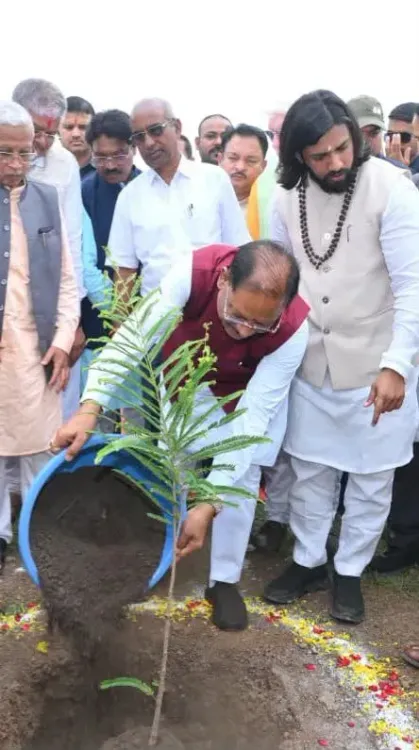
Chief Minister Vishnu Deo Sai planted an amla sapling at a Swami Atmanand Government School in Samoda, Raipur on 9 July 2026 under the 'Ek Ped Maa Ke Naam 2.0' campaign, reinforcing Chhattisgarh's alignment with India's national afforestation push during the monsoon season.
Key Takeaways
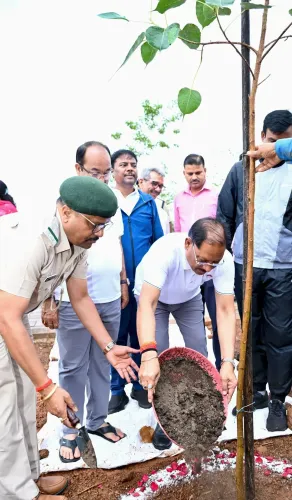
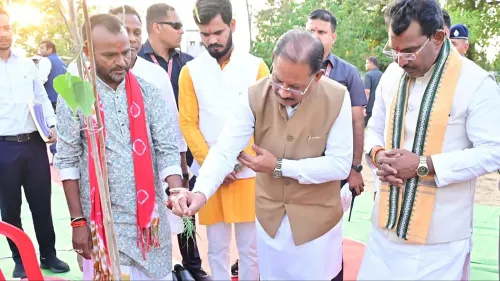
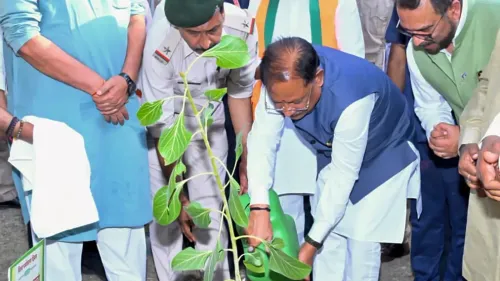
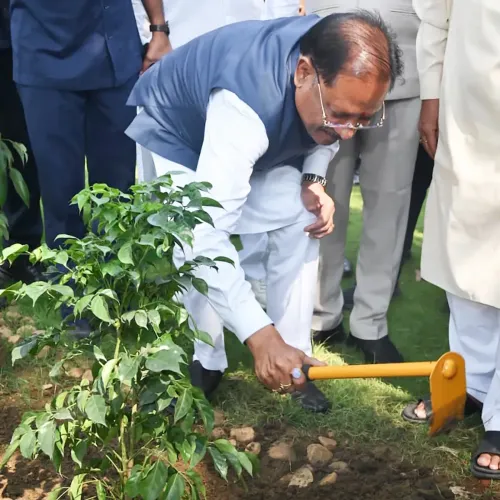
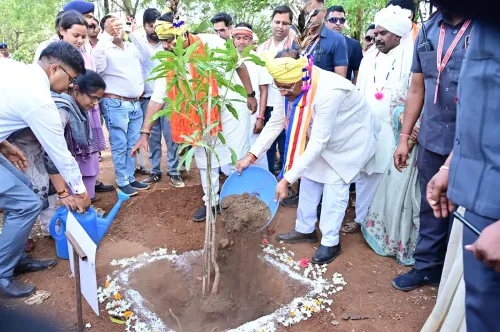
CM Vishnu Deo Sai personally planted an amla (Indian gooseberry) sapling on 9 July 2026 at a government school campus in Samoda, Raipur .
The event was conducted under the Ek Ped Maa Ke Naam 2.0 campaign, the second phase of a national tree-plantation initiative first launched on World Environment Day 2024 .
The venue — a Swami Atmanand Shasakiya Vidyalaya — reflects Chhattisgarh's policy of combining environmental drives with its flagship school infrastructure.
Nagar Panchayat Samoda , a local urban body in Raipur district , hosted the event, extending the campaign to semi-urban communities.
The campaign hashtags #HariyaliSeSamriddhi ('prosperity through greenery') signal integration with the state's broader rural development and afforestation narrative.
Chief Minister Vishnu Deo Sai planted an Indian gooseberry (amla) sapling on 9 July 2026 at the Swami Atmanand Government School campus in Nagar Panchayat Samoda, Raipur, as part of the 'Ek Ped Maa Ke Naam 2.0' campaign, sending what his office described as an 'inspiring message of environmental conservation.'
Context
The Chief Minister's Office of Chhattisgarh announced the event on X, stating that CM Sai personally participated in the tree-plantation drive under the campaign banner 'Ek Ped Maa Ke Naam 2.0' — translated as 'One Tree in Mother's Name 2.0.' The choice of an amla (Indian gooseberry) sapling carries symbolic weight, as the fruit is widely regarded in Indian tradition as a plant of health and longevity, reinforcing the campaign's emotional appeal to honour mothers through green acts.
The event was held within a Swami Atmanand Shasakiya Vidyalaya campus, the Chhattisgarh government's flagship school network designed to deliver quality education in rural and semi-urban communities, linking environmental messaging directly with the state's educational infrastructure.
Policy Backdrop
The Ek Ped Maa Ke Naam campaign was first launched nationally on World Environment Day 2024 by the Government of India to accelerate green cover expansion across the country. State governments, including Chhattisgarh, subsequently adopted and localised the initiative, embedding it within existing afforestation programmes such as Hariyali Mahotsav and aligning it with targets under the National Action Plan on Climate Change.
The '2.0' iteration signals a second phase of the campaign, extending the plantation drive beyond its initial rollout. Chhattisgarh has consistently used school campuses as sites for such drives, a strategy that simultaneously builds green assets on public land and exposes students to conservation practices from an early age.
Stakeholders and Impact
The immediate beneficiaries of such plantation drives include school students who witness and participate in the events, local panchayat bodies such as Nagar Panchayat Samoda that maintain the planted saplings, and urban and semi-urban residents of Raipur who stand to gain from improved local green cover. Tree-plantation campaigns on school grounds also serve a pedagogical function, embedding environmental awareness in younger generations.
Across India, BJP-governed states have aligned similar events with the national campaign since 2024, creating a pattern of coordinated, high-visibility plantation drives that combine political messaging with measurable ecological outcomes — provided saplings are maintained and survival rates are tracked.
What's Next
Attention will now turn to whether the Ek Ped Maa Ke Naam 2.0 campaign is rolled out across additional districts of Chhattisgarh, particularly as the monsoon season — the optimal window for sapling survival — is under way in July 2026. Integration with state-level afforestation targets and tracking mechanisms for sapling survival will determine the campaign's long-term ecological impact beyond its symbolic launch events.
Point of View
Not a one-time event. By having the Chief Minister personally plant a sapling, the administration elevates what could be a routine bureaucratic exercise into a visible leadership signal on climate action. Whether the campaign translates into measurable green-cover gains will depend on post-planting maintenance protocols — an area where similar drives across India have historically faced scrutiny.
NationPress
9 Jul 2026
Frequently Asked Questions
What is the Ek Ped Maa Ke Naam campaign?
'Ek Ped Maa Ke Naam' — meaning 'One Tree in Mother's Name' — is a national tree-plantation campaign launched by the Government of India on World Environment Day 2024, encouraging citizens and public figures to plant trees as a tribute to their mothers. States including Chhattisgarh have adopted and extended it in localised phases.
Where did CM Vishnu Deo Sai plant the sapling on 9 July 2026?
CM Vishnu Deo Sai planted the sapling at the Swami Atmanand Government School campus in Nagar Panchayat Samoda, located in Raipur district, Chhattisgarh.
What type of tree was planted under Ek Ped Maa Ke Naam 2.0 in Raipur?
An amla (Indian gooseberry) sapling was planted by CM Sai at the Samoda school campus during the event.
What is a Swami Atmanand Shasakiya Vidyalaya?
Swami Atmanand Shasakiya Vidyalayas are Chhattisgarh government-run schools established to provide quality education in rural and semi-urban areas of the state. The school network has also been used as a venue for state-sponsored environmental and awareness programmes.
What does Ek Ped Maa Ke Naam 2.0 mean for Chhattisgarh's environment policy?
The '2.0' phase signals a continued state commitment to afforestation targets under India's National Action Plan on Climate Change, with the Chhattisgarh government using the monsoon season to maximise sapling survival rates across districts.