CM Sai releases 32nd instalment of Mahtari Vandan Yojana
Synopsis
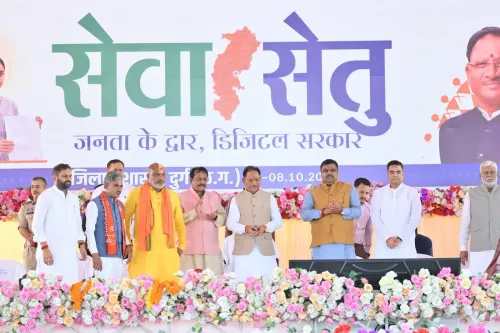
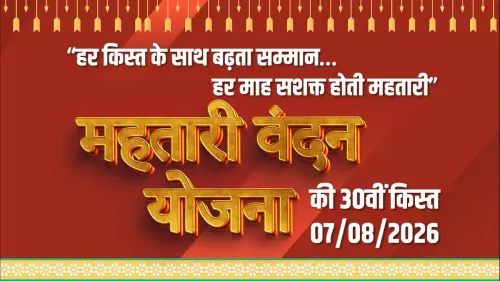
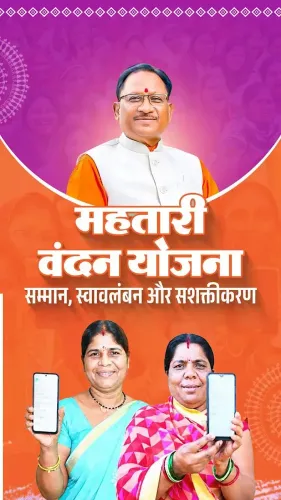
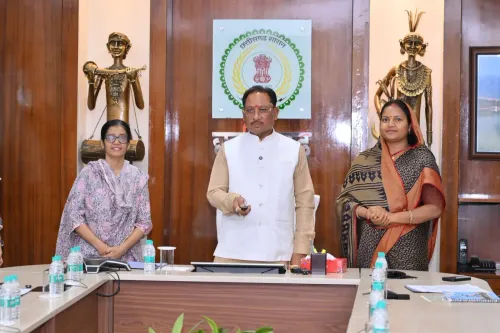
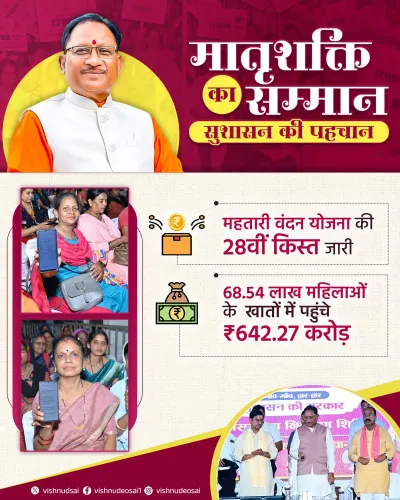
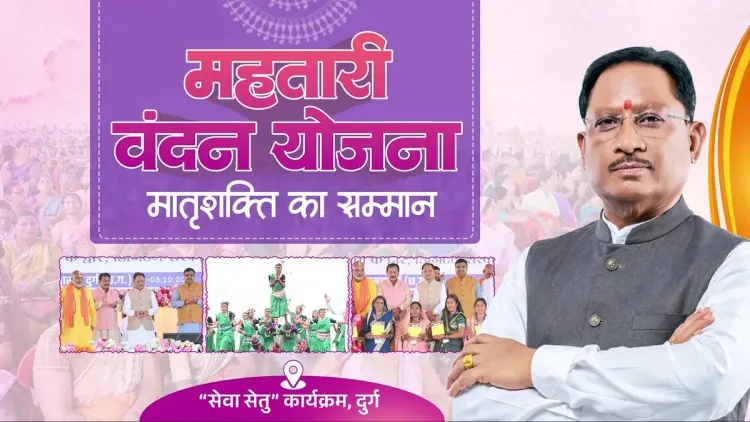
Chhattisgarh CM Vishnu Deo Sai announced the 32nd consecutive monthly instalment of the Mahtari Vandan Yojana on 8 October 2026, reaffirming the BJP government's ₹1,000 monthly cash transfer to eligible women in the state as a pillar of financial empowerment and social dignity.
Key Takeaways
The 32nd instalment of Mahtari Vandan Yojana was released on 8 October 2026 .
The scheme provides ₹1,000 per month (₹12,000 annually) directly to eligible married women in Chhattisgarh .
It was launched after the BJP returned to power in Chhattisgarh in December 2023 and was a key pre-election commitment.
CM Vishnu Deo Sai framed the release around economic support, respect for women, and expanding self-reliance opportunities.
Thirty-two unbroken monthly disbursements signal sustained operational delivery — a governance metric the ruling party is actively highlighting.
Every month, a direct cash transfer lands in the accounts of millions of women across Chhattisgarh — and on Thursday, 8 October 2026, that cycle completed its 32nd consecutive instalment under the Mahtari Vandan Yojana, the state's flagship scheme for women's financial empowerment. Chhattisgarh Chief Minister Vishnu Deo Sai marked the occasion on X, framing it not just as a transfer of funds but as a continuing commitment to the dignity and self-reliance of the state's mothers and sisters.
In his post, CM Sai wrote: 'Mahtari Vandan Yojana ki 32vi kist ke saath Chhattisgarh ki mataon-bahnon ke sashaktikaran ki yatra nirantar aage badh rahi hai' — ('With the 32nd instalment of Mahtari Vandan Yojana, the journey of empowerment of Chhattisgarh's mothers and sisters moves continuously forward'). He added that strengthening the role of women in family and society, and expanding opportunities for self-reliance, remain the government's core purpose. Signing off as 'aapka Vishnu Bhaiya' — 'your brother Vishnu' — he underscored the personal, familial register his government has deliberately cultivated with this scheme.
What Mahtari Vandan Yojana delivers each month
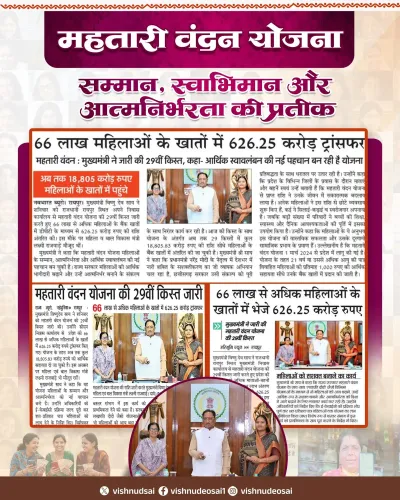
Launched by the BJP government after it returned to power in Chhattisgarh in December 2023, the Mahtari Vandan Yojana provides a monthly cash transfer of ₹1,000 — amounting to ₹12,000 per year — directly to eligible married women in the state. The scheme targets economic support for women within households, positioning regular income as a foundation for broader social standing and independent decision-making. It was among the BJP's most prominently advertised pre-election commitments in the state.
32 instalments and the rhythm of consistent delivery
Reaching a 32nd unbroken monthly release is itself a governance signal. Beneficiary schemes in India have historically struggled with delayed disbursements, exclusion errors, and mid-term budget constraints. Each consecutive instalment release is, in that context, a data point the ruling party is keen to highlight — proof of operational continuity rather than just policy intent. CM Sai's post fits a pattern of regular public acknowledgements that serve both accountability and political communication: telling beneficiaries the money has moved, and reminding the broader electorate that the promise holds.
The Chief Minister's framing — economic support, respect for 'matrishakti' (the power of motherhood), stronger roles in family and society, and expanded self-reliance — maps closely to the vocabulary the BJP has used nationally around women-centric welfare, from the PM Ujjwala Yojana to the Lakhpati Didi initiative. Chhattisgarh's version anchors that language in a monthly, tangible delivery.
For the women receiving these transfers, the 32nd instalment means another ₹1,000 — small by urban benchmarks, significant in rural Chhattisgarh's household economies. The quiet accumulation of those transfers, month after month, is precisely the story the Chief Minister is asking voters to remember.
Point of View
Keeping the scheme visible and associating the ruling party with tangible household benefit. Reaching a 32nd unbroken instalment matters in a political environment where rivals can point to implementation failure; it forecloses that line of attack. The 'Vishnu Bhaiya' sign-off is also deliberate — it softens the transactional into the familial, a register that tends to resonate strongly with the rural women who form the scheme's core constituency.
NationPress
8 Oct 2026
Frequently Asked Questions
What is Mahtari Vandan Yojana in Chhattisgarh?
Mahtari Vandan Yojana is a Chhattisgarh government scheme that provides ₹1,000 per month (₹12,000 per year) directly to eligible married women in the state as financial support, launched after the BJP came to power in December 2023.
When was the 32nd instalment of Mahtari Vandan Yojana released?
The 32nd instalment was released on 8 October 2026, as announced by Chief Minister Vishnu Deo Sai on X.
Who is eligible for Mahtari Vandan Yojana?
The scheme targets eligible married women residing in Chhattisgarh, though specific eligibility criteria (age, income, domicile) are set by the state government. The post does not detail exclusions.
How much money do women get under Mahtari Vandan Yojana?
Beneficiaries receive ₹1,000 per month, totalling ₹12,000 per year, transferred directly into their bank accounts.
What is the BJP's Mahtari Vandan Yojana political significance?
The scheme was a prominent BJP election promise before the December 2023 Chhattisgarh assembly polls and is positioned as evidence of the party's commitment to women's welfare and financial empowerment in the state.