CM Sai Releases Mahatari Vandan Yojana's 33rd Instalment
Synopsis
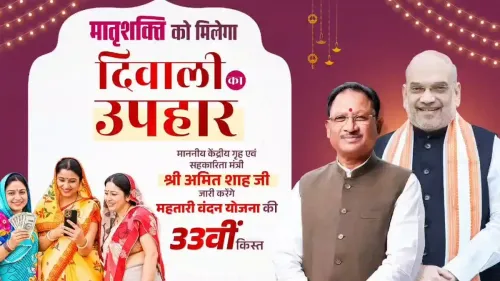
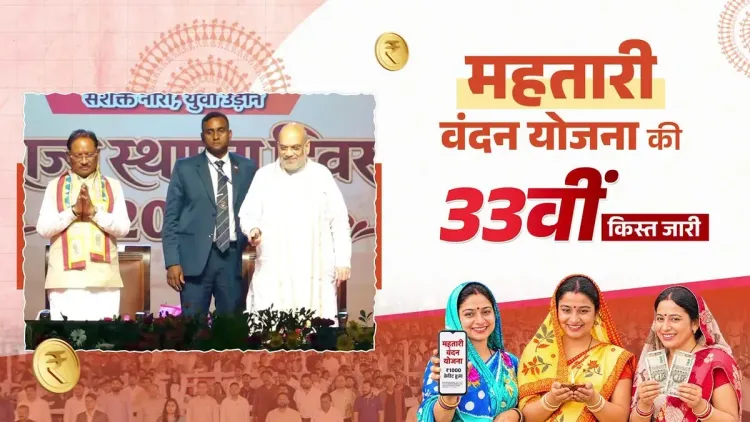
At Chhattisgarh's Rajyotsav-2026 closing ceremony, Union Minister Amit Shah released the 33rd instalment of Mahatari Vandan Yojana, transferring over ₹632 crore to more than 67 lakh women beneficiaries — CM Vishnu Deo Sai called it a Diwali gift for the state's mothers and sisters.
Key Takeaways
33rd consecutive monthly instalment of Mahatari Vandan Yojana disbursed on 3 November 2026 .
Over ₹632 crore transferred directly to the bank accounts of more than 67 lakh women in Chhattisgarh.
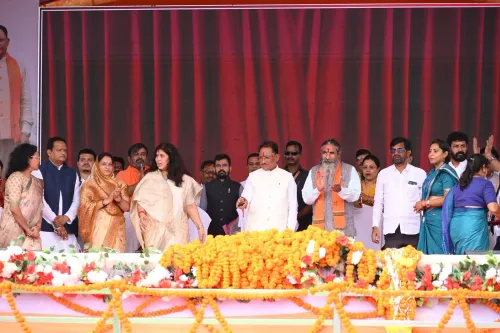
Union Home Minister Amit Shah formally released the instalment at the closing ceremony of Rajyotsav-2026 .
CM Vishnu Deo Sai framed the disbursal as a Diwali gift, citing household happiness as the benchmark of good governance.
The scheme, launched post the December 2023 BJP election victory, is part of a broader trend of women-targeted direct cash transfers in BJP-governed states.
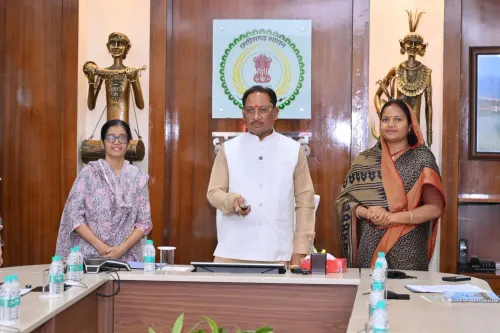
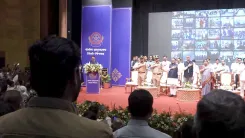
A Diwali gift for over 67 lakh women across Chhattisgarh — that is how Chief Minister Vishnu Deo Sai framed Tuesday's landmark disbursal, as Union Home and Cooperation Minister Amit Shah formally released the 33rd instalment of the Mahatari Vandan Yojana, transferring more than ₹632 crore directly into the bank accounts of mothers and sisters across the state on 3 November 2026.
Rajyotsav-2026 as the stage — and the symbolism behind it
The disbursal was timed to the closing ceremony of Rajyotsav-2026 — Chhattisgarh's annual state foundation day — lending the event a double weight: the pride of statehood and a very concrete cheque. Shah's presence at the ceremony was deliberate. Central ministers routinely attend state-level welfare events in BJP-governed states, underlining the narrative of centre-state coordination on welfare delivery. Choosing the state's biggest annual celebration as the backdrop amplified the message considerably.
What Mahatari Vandan Yojana does — and why the 33rd instalment matters
Launched after the BJP swept Chhattisgarh's December 2023 assembly elections, the Mahatari Vandan Yojana provides monthly direct cash transfers to women beneficiaries through direct benefit transfer. With 33 consecutive monthly instalments now disbursed, the scheme has moved well past its pilot phase into a settled rhythm of welfare delivery — a fact the Sai government is keen to highlight. CM Sai described the smiles on beneficiaries' faces and the happiness in their households as the 'true measure' of good governance.
The wider pattern: women-targeted cash transfers reshaping state politics
Chhattisgarh is not alone. Across India, BJP-governed states — most notably Madhya Pradesh — have anchored welfare politics around monthly cash transfers to women since the early 2020s. These programmes borrow from a broader playbook: direct, named, traceable benefits that arrive in a woman's own account, bypassing intermediaries. The political dividend, analysts note, is equally direct. With each instalment, the scheme's name and the party behind it are refreshed in 67 lakh households simultaneously. That arithmetic is not lost on anyone at Rajyotsav.
The next question is straightforward: whether upcoming state budget discussions bring a revision upward to the monthly assistance quantum — a move that would keep the scheme competitive with similar programmes in neighbouring states.
Point of View
Maximising both visibility and political credit. At 33 uninterrupted monthly instalments, the scheme has graduated from a campaign promise to an entrenched fiscal commitment, making any future disruption politically costly. The framing as a 'Diwali gift' is textbook festive-season welfare optics, designed to embed the scheme in household memory at a high-emotion moment. The real test ahead is whether the monthly quantum gets revised upward — that move, if it comes, will signal whether the government is in consolidation mode or still in expansion mode ahead of the next electoral cycle.
NationPress
3 Nov 2026
Frequently Asked Questions
What is Mahatari Vandan Yojana in Chhattisgarh?
Mahatari Vandan Yojana is a Chhattisgarh government scheme that provides monthly financial assistance to women through direct bank transfers, launched after the BJP came to power in December 2023.
How much money was transferred in the 33rd instalment of Mahatari Vandan Yojana?
More than ₹632 crore was transferred to over 67 lakh women beneficiaries across Chhattisgarh in the 33rd instalment released on 3 November 2026 .
Who released the 33rd instalment of Mahatari Vandan Yojana?
Union Home and Cooperation Minister Amit Shah formally released the instalment at the closing ceremony of Rajyotsav-2026 in Chhattisgarh.
What is Chhattisgarh Rajyotsav?
Rajyotsav is Chhattisgarh's annual state foundation day celebration, held in early November each year to mark the state's formation.
How does Mahatari Vandan Yojana compare to similar schemes in other states?
It is part of a broader pattern of women-targeted monthly direct cash transfer schemes in BJP-governed states such as Madhya Pradesh, all aimed at financial empowerment through direct benefit transfers.