CM Sai Honours Journalists at Hindi Press Bicentenary Event
Synopsis
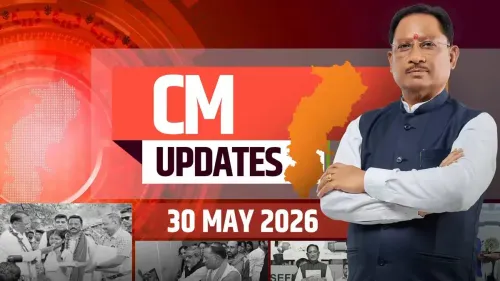
Chhattisgarh Chief Minister Vishnu Deo Sai attended the Raipur Press Club's bicentenary felicitation event on 30 May 2026, honouring journalists on Hindi Journalism Day and saluting 200 years of Hindi press since the founding of Udant Martand in 1826.
Key Takeaways
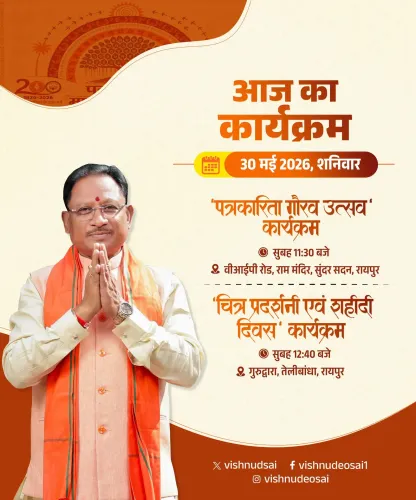
CM Vishnu Deo Sai attended the Patrakarita Gaurav Martand Utsav organised by the Raipur Press Club on 30 May 2026 .
Hindi Journalism Day marks the 200th anniversary of the launch of Udant Martand , India's first Hindi newspaper, founded on 30 May 1826 .
The newspaper was established by Pandit Jugal Kishore Shukla in Kolkata .
CM Sai personally honoured journalists for outstanding contributions to the profession at the ceremony.
The Chief Minister credited Hindi journalism with strengthening mass awakening, national consciousness, and democratic values over two centuries.
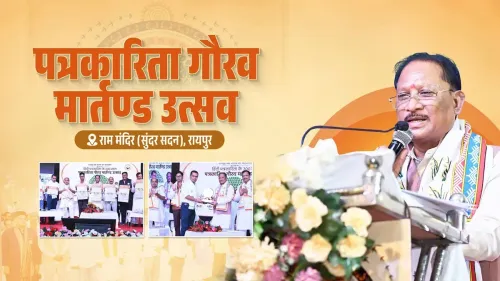
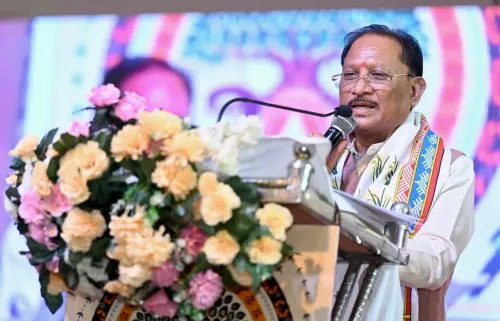
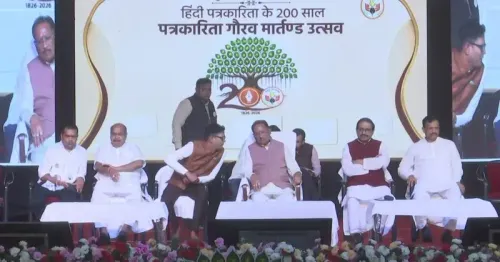
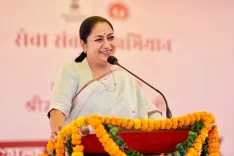
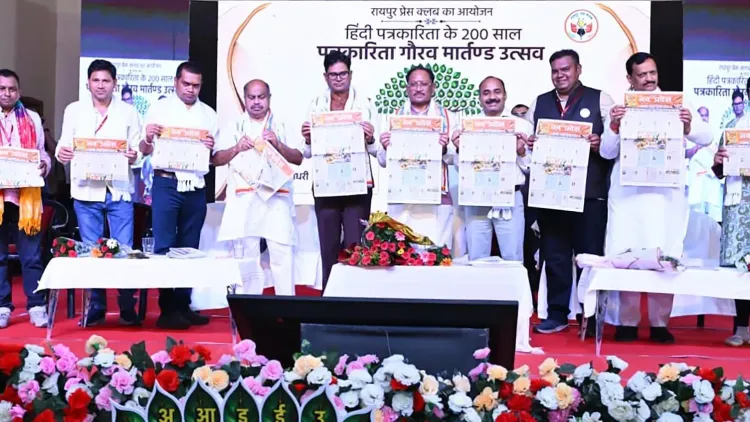
Chhattisgarh Chief Minister Vishnu Deo Sai attended the 'Patrakarita Gaurav Martand Utsav' organised by the Raipur Press Club on 30 May 2026, honouring journalists for outstanding contributions to the field on the occasion of 200 years of Hindi journalism.
Posting on X, CM Sai wrote: 'कलम की दो शताब्दियों को नमन' ('Saluting two centuries of the pen'), adding that Hindi journalism has played a vital role in mass awakening, national consciousness, and strengthening democratic values. He extended warm congratulations to all journalist colleagues on Hindi Journalism Day.
Context
Hindi Journalism Day is observed every year on 30 May to mark the anniversary of the launch of Udant Martand, India's first Hindi newspaper. Pandit Jugal Kishore Shukla founded the weekly in Kolkata on 30 May 1826, establishing a date that has since become the symbolic origin point of Hindi-language press in the country. The 2026 edition marks exactly 200 years since that milestone.
The Raipur Press Club, the principal journalists' body in Chhattisgarh's capital, organised the Patrakarita Gaurav Martand Utsav — a felicitation ceremony — to mark the bicentenary. CM Sai participated in the event and personally honoured journalists recognised for their distinguished service to the profession.
Policy Backdrop
Successive state governments across Hindi-speaking India have periodically convened centenary and bicentenary commemorations of Hindi journalism, framing vernacular media's historical role in social reform and the independence movement as a matter of public pride. Such official recognition events are part of a broader pattern of state engagement with regional press institutions.
The Udant Martand bicentenary in 2026 carries particular symbolic weight, coinciding with India's own Amrit Kaal — the 25-year period leading to the centenary of independence in 2047 — a frame that several state administrations have used to anchor cultural and historical commemorations.
Stakeholders and Impact
The primary beneficiaries of the event are working journalists in Chhattisgarh, whose contributions were formally acknowledged by the state's highest elected official. Recognition from a sitting Chief Minister carries institutional weight and signals the government's stated commitment to a free and vibrant press.
Regional media organisations across the Hindi belt, along with journalism educators and press freedom advocates, regard such bicentenary observances as opportunities to highlight both the legacy and the contemporary challenges facing vernacular journalism. The Raipur Press Club's decision to stage a dedicated awards ceremony elevates the occasion beyond a routine commemorative event.
What's Next
Observers will watch for any follow-up announcements from the Chhattisgarh government regarding journalist welfare measures — a recurring demand at such felicitation events — that could be tabled in subsequent legislative or administrative sessions. The Patrakarita Gaurav Martand Utsav is expected to become an annual fixture in the state's press calendar, with future editions potentially expanding the scope of recognition. The bicentenary year also sets a high benchmark for how Hindi-speaking states institutionalise their engagement with the regional press going forward.
Point of View
He aligns the BJP-led government with a narrative of cultural continuity and press patronage. The event fits a broader pattern among Hindi-belt administrations of using landmark press anniversaries to reinforce their credentials as champions of vernacular culture. Whether the symbolism translates into concrete journalist welfare policy remains the question that the media community in Chhattisgarh will press in the months ahead.
NationPress
24 Sept 2026
Frequently Asked Questions
What is Hindi Journalism Day and why is it celebrated on 30 May?
Hindi Journalism Day is observed on 30 May each year to commemorate the launch of Udant Martand, India's first Hindi newspaper, by Pandit Jugal Kishore Shukla in Kolkata on 30 May 1826.
What is the Patrakarita Gaurav Martand Utsav?
The Patrakarita Gaurav Martand Utsav is a felicitation ceremony organised by the Raipur Press Club in Chhattisgarh to honour journalists for distinguished contributions to the profession, held on Hindi Journalism Day.
Why is 2026 significant for Hindi journalism?
2026 marks the bicentenary — 200 complete years — of Hindi journalism, dating from the founding of Udant Martand on 30 May 1826.
What did CM Vishnu Deo Sai say about Hindi journalism?
CM Sai stated that Hindi journalism has played an important role in mass awakening, national consciousness, and strengthening democratic values, and extended congratulations to all journalists on Hindi Journalism Day.
Who founded Udant Martand, the first Hindi newspaper?
Udant Martand was founded by Pandit Jugal Kishore Shukla in Kolkata on 30 May 1826 and is conventionally regarded as the origin point of Hindi journalism in India.