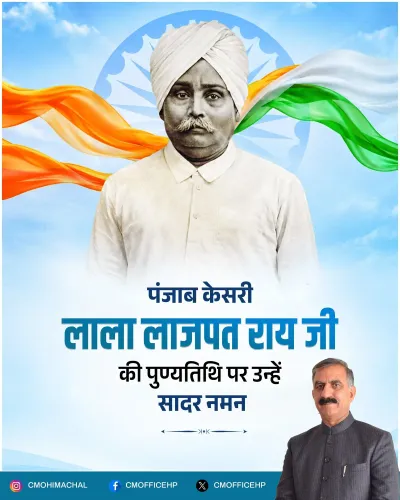
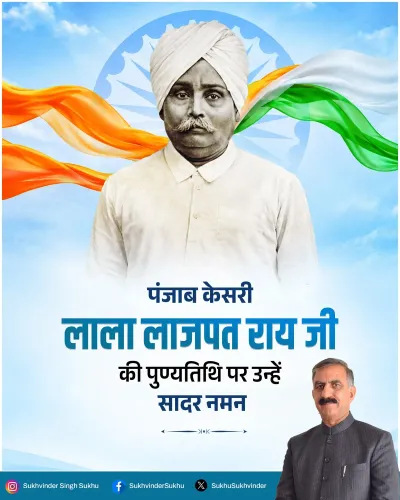
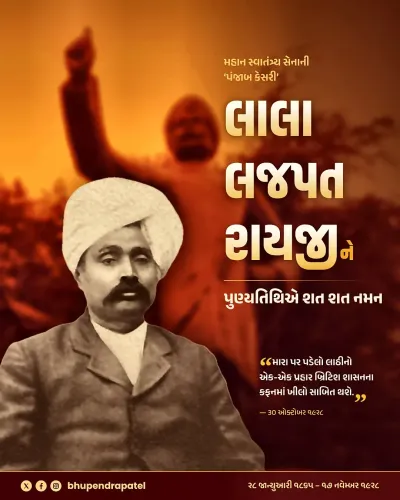
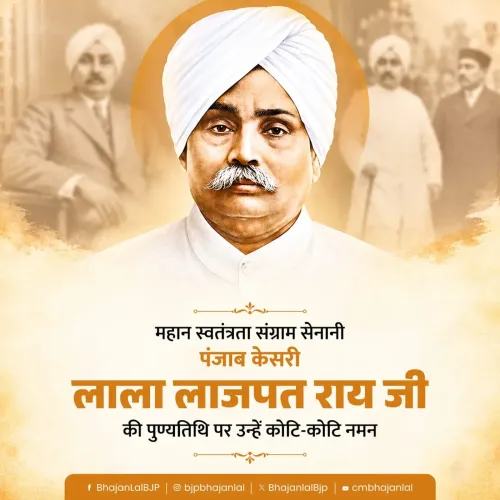
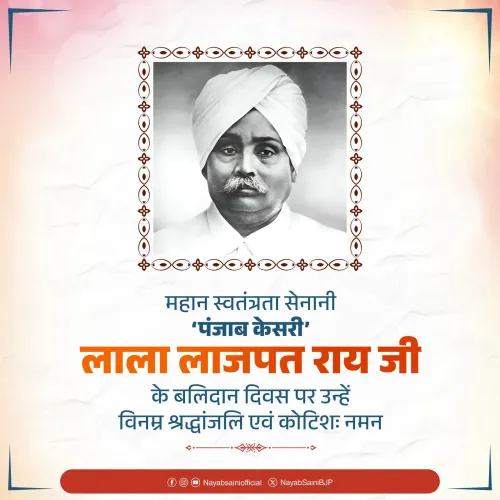
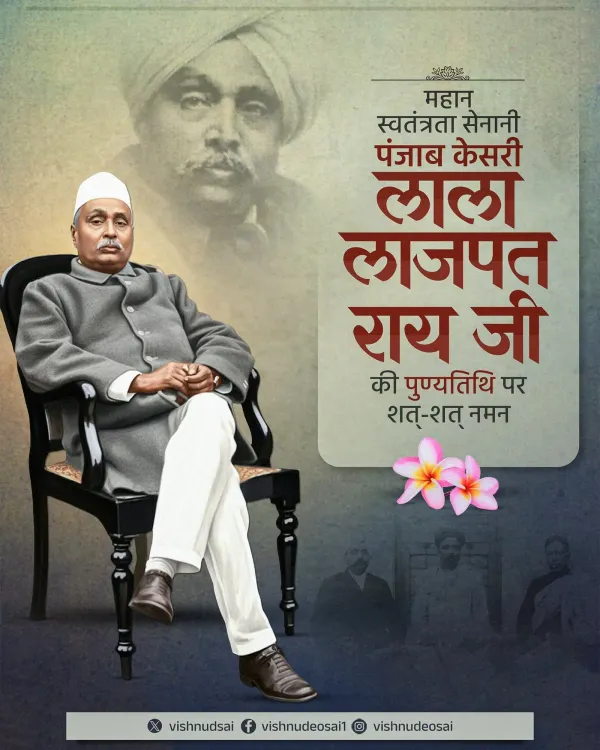
CM Sai pays tribute to Lala Lajpat Rai on death anniversary
Synopsis
Chhattisgarh Chief Minister Vishnu Deo Sai on 17 November 2026 paid solemn tribute to Lala Lajpat Rai, the 'Punjab Kesari', on his death anniversary, calling the freedom fighter's selfless life a timeless inspiration for national service.
Key Takeaways
CM Vishnu Deo Sai posted a tribute on X on 17 November 2026 , marking Lala Lajpat Rai's death anniversary.
Lala Lajpat Rai died on 17 November 1928 from injuries sustained during a protest against the Simon Commission in Lahore.
Rai was known as 'Punjab Kesari' (Lion of Punjab) and formed part of the celebrated Lal-Bal-Pal nationalist trio.
CM Sai described Rai's life of sacrifice as an enduring inspiration to serve the nation 'with complete dedication.' Such tributes to independence-era icons on key anniversaries are a consistent feature of Indian political culture across parties.
Ninety-eight years after Lala Lajpat Rai succumbed to injuries on 17 November 1928, his sacrifice continues to draw solemn remembrance from across the political spectrum. Chhattisgarh Chief Minister Vishnu Deo Sai marked the freedom fighter's death anniversary on Tuesday, 17 November 2026, with a heartfelt tribute on X, calling Rai's life of selfless dedication a timeless inspiration for national service.
In his post, CM Sai wrote: 'महान स्वतंत्रता सेनानी, 'पंजाब केसरी' लाला लाजपत राय की पुण्यतिथि पर उन्हें विनम्र श्रद्धांजलि।' — 'Humble tribute to the great freedom fighter, 'Punjab Kesari' Lala Lajpat Rai, on his death anniversary.' He added that Rai's life of sacrifice would 'forever inspire us all to serve the nation with complete dedication.'
Who was 'Punjab Kesari' — and why the title endures
Lala Lajpat Rai earned the sobriquet 'Punjab Kesari' — Lion of Punjab — for his fierce, uncompromising opposition to British rule at a time when open defiance carried mortal risk. He was a central pillar of the celebrated Lal-Bal-Pal trio, alongside Bal Gangadhar Tilak and Bipin Chandra Pal, whose radical nationalist politics electrified early-twentieth-century India.
His death on 17 November 1928 became one of the defining moments of the independence movement. Rai had led a protest march in Lahore against the all-British Simon Commission, which had arrived in India to review constitutional reforms with no Indian representation. Police baton-charged the demonstrators; Rai suffered severe blows and died from his injuries within weeks. His final public words — that every blow struck against him was a nail in the coffin of British rule — passed into nationalist legend.
A tradition of remembrance in Indian public life
Tributes to independence-era icons on their birth and death anniversaries are a consistent thread in Indian political culture, cutting across parties and states. For CM Sai and the BJP, invoking figures like Lala Lajpat Rai underscores a broader ideological emphasis on nationalist sacrifice and the idea that public service is a continuation of that founding spirit.
The gesture, brief as it is, connects a serving chief minister's daily work to nearly a century of struggle — a reminder that the institutions these leaders now steward were purchased at considerable cost.
As long as leaders pause to name the people who made the republic possible, the republic keeps its memory alive.
Point of View
Particularly those associated with assertive resistance to colonial rule — a tradition that reinforces the party's self-image as the inheritor of that sacrificial spirit. Lala Lajpat Rai's legacy, rooted in both social reform and fierce political defiance, makes him a figure with cross-ideological resonance, lending such tributes broader public legitimacy. The invocation of 'complete dedication to national service' also carries an implicit normative message: public office is a form of continued national duty. For a first-term chief minister like Sai, aligning himself with that lineage is as much about political identity as historical remembrance.
NationPress
17 Nov 2026
Frequently Asked Questions
Who was Lala Lajpat Rai and why is he called Punjab Kesari?
Lala Lajpat Rai was a prominent Indian independence activist and social reformer who earned the title 'Punjab Kesari' (Lion of Punjab) for his fearless opposition to British rule. He was part of the influential Lal-Bal-Pal nationalist trio alongside Bal Gangadhar Tilak and Bipin Chandra Pal.
How did Lala Lajpat Rai die?
Lala Lajpat Rai died on 17 November 1928 from injuries sustained when British police baton-charged a protest march he led in Lahore against the Simon Commission, an all-British body reviewing India's constitutional future with no Indian representation.
What was the Simon Commission?
The Simon Commission was a statutory commission sent to India in 1928 to review constitutional reforms. Its all-British composition, excluding Indian members entirely, sparked widespread protests across the country, most famously the march led by Lala Lajpat Rai in Lahore.
Why did CM Vishnu Deo Sai post a tribute to Lala Lajpat Rai?
Chhattisgarh Chief Minister Vishnu Deo Sai posted the tribute on 17 November 2026, the death anniversary of Lala Lajpat Rai, following a long-standing tradition in Indian public life of honouring independence-era icons on their birth and death anniversaries.
What does 'Lal-Bal-Pal' mean in Indian history?
'Lal-Bal-Pal' refers to the trio of radical nationalist leaders — Lala Lajpat Rai (Lal), Bal Gangadhar Tilak (Bal), and Bipin Chandra Pal (Pal) — who championed an assertive, confrontational approach to India's independence struggle in the early twentieth century.